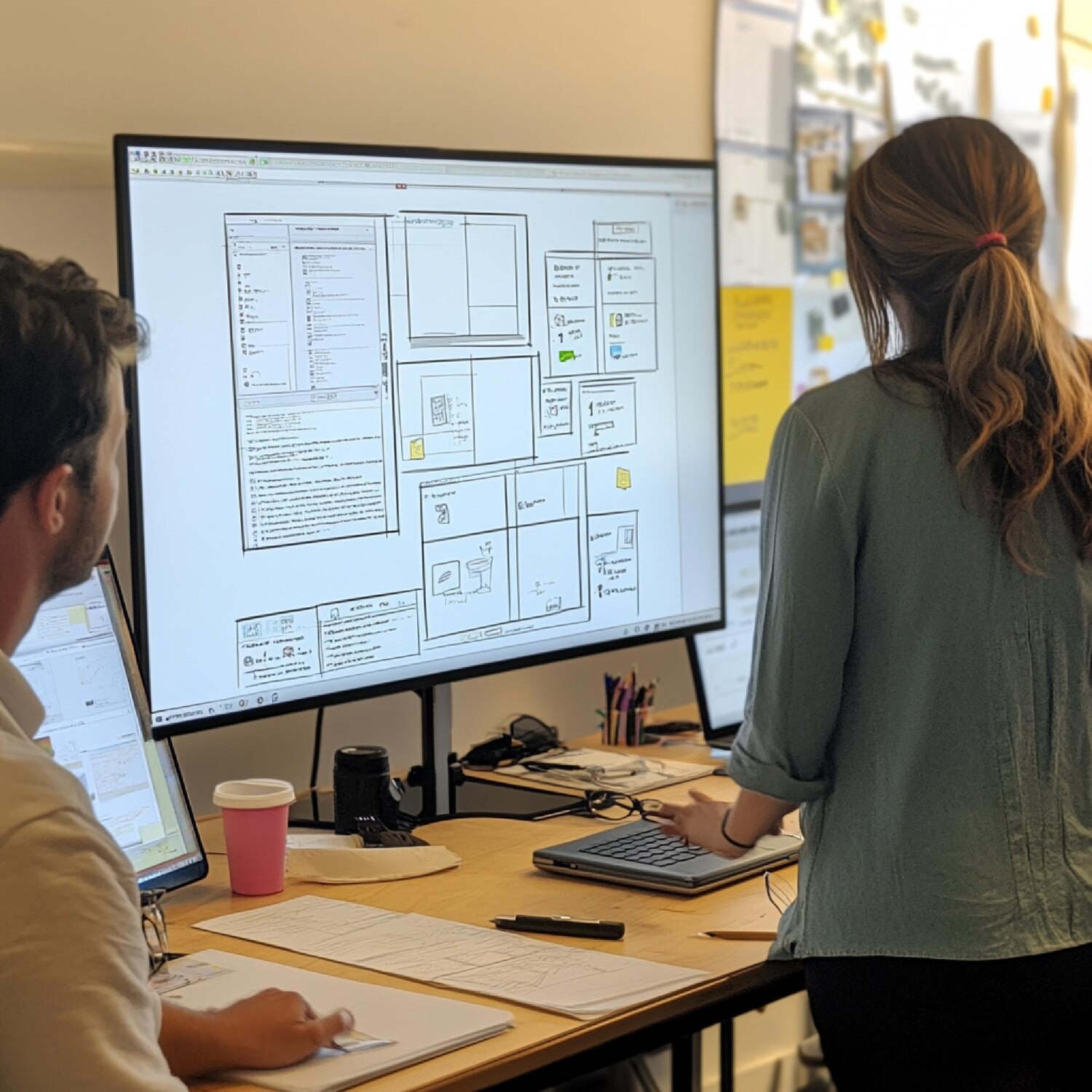
If you’ve been burned by software that looked great in slides but limped in production, you’re in good company. Custom software development isn’t about hunting for clever frameworks or memorizing acronyms. It’s about bending technology to serve the grain of your business, not the other way around. I’ve shipped products for startups that had four weeks of runway and for enterprises that had more steering committees than users. The patterns that actually work are stubbornly practical: define outcomes, protect the critical path, and design for your next release, not just the first one. That’s where custom software development pays, because the real leverage shows up in the seams—workflows, integrations, and data—where off‑the‑shelf tools can’t follow your playbook.
Why Custom Software Development Pays Off When Off-the-Shelf Fails
Buying software can feel like a safe bet. Vendors promise quick wins and glossy dashboards, and legal gets a neat contract. Then reality arrives. Your process doesn’t quite match their workflow, the integration sits on someone’s backlog, and a once-efficient team now spends Fridays exporting CSVs. In contrast, custom software development pays off when the work depends on unique flows, regulatory nuance, or high-volume operational friction that generic tools were never designed to handle.
Real leverage looks like cutting a reconciliation cycle from two days to twenty minutes, or shrinking onboarding from ten steps to three. Those aren’t hypothetical benefits; they’re compound interest on domain fit. Custom work also gives you control of the roadmap. Instead of lobbying a vendor to prioritize your “idea” alongside 500 others, you can ship improvements that match seasonal demand, marketing campaigns, or a new region’s rules.
Risk is the counterweight everyone cites. Fair. But risk comes in different flavors. There’s delivery risk—can you ship?—and there’s dependency risk—will a vendor change pricing, deprecate features, or get acquired? A disciplined approach mitigates delivery risk: involve the people doing the work, model the domain, and test with production-like data early. Meanwhile, reducing dependency risk by owning the core logic of your business is often the quieter, smarter hedge.
Finally, custom software becomes an asset. It shapes how teams think and operate, codifying what makes you competitive. That doesn’t mean build everything. It means build the pieces that differentiate you, and wire the rest together so the whole machine hums.
Scoping with Outcomes, Not Wishlists
Most scope documents read like a shopping list from people who’ve never cooked together. Features pile up because nobody wants to be the one who says “not now.” The way out starts with outcomes. Anchor the scope in measurable changes to time, cost, risk, or revenue. Replace “needs a dashboard” with “reduce time to approve a claim from 3 hours to 30 minutes.” That clarity spares you from bikeshedding the shade of blue on a chart while ignoring the blocked API that actually moves the needle.
Work backward from outcomes into jobs-to-be-done, the actors, and the systems they touch. Map your happy path and the three ugliest exceptions; that’s where software reveals its true cost. Then classify every requirement into one of three buckets: differentiators (your secret sauce), table stakes (must-haves to be viable), and conveniences (nice-to-haves that can wait). Differentiators get engineered. Table stakes lean on proven components or services. Conveniences get timeboxed or deferred.
Scope should be visual, not a wall of text. Sequence a thin vertical slice of the workflow that delivers end-to-end value, even if it’s imperfect. Ship it to a small cohort with production-like constraints and learn with them. That thin slice also creates alignment between product, design, and engineering, making it easier to say “no” without drama because you’re all defending the same outcome. If you’re aligning scope with a services partner, be explicit about change control and iteration rhythms. Done well, scoping becomes a focusing exercise, not a political negotiation. When you need a partner who works this way, start with a discovery conversation anchored in outcomes, like the approach described at Custom Development.
Architecture Choices That Survive Version Two
Version one can be built with duct tape if you’re willing to throw it away. Most teams aren’t. They carry their early shortcuts into a second release and suddenly every change feels like defusing a bomb. Architecture should anticipate the first serious pivot: a surge in data, a new channel, or a workflow you thought was rare becoming common. Start with a modular monolith unless you have scale or team topology that clearly demands microservices. Fewer deployables mean simpler operations, clearer debugging, and faster learning. Carve explicit module boundaries and guard them through code reviews, not just boxes in a diagram.
For integration-heavy systems, treat the boundary as a product of its own. Domain events and idempotent commands are boring by design and will save you at 3 a.m. Pick a persistence strategy you understand deeply, and resist chasing novelty. Teams that know their database tradeoffs ship cleaner code than teams wrestling a fashionable datastore they barely grasp.
Team structure shapes architecture more than the other way around. Conway’s Law is real; organizations design systems that mirror their communication structures. If your teams are functionally siloed, your architecture will be too, with all the friction that implies. Reshape teams around cohesive domains and you’ll usually get cleaner seams in the code. The lesson: choose patterns your people and process can sustain, not ones that score likes on social media. For a short primer on organizational influence, see Conway’s law.
Delivery Playbook: From Discovery to Incremental Releases
Discovery isn’t a workshop; it’s a thread running through the entire engagement. Begin with field interviews where the work happens. Screenshots of the real tools, sample data, and the “five minutes before something breaks” stories matter more than aspirational wireframes. From there, run design spikes to de-risk the nastiest unknowns. Prototypes that hit live APIs and a skeleton data model beat pixel-perfect but disconnected mockups.
Delivery cadence should be predictable and boring. Weekly planning with a tight backlog, guarded WIP limits, and working software every two weeks gives stakeholders many small chances to course-correct instead of one big opportunity to panic. Instrument everything from the first usable build. If you can’t explain what users did and why the system behaved the way it did, you’re driving blind.
Developers often treat UX as a later step. That’s how you bake in rework. Pull design forward and pair it with engineering early. It’s not just buttons and whitespace; it’s how cognition, data density, and error recovery shape productivity. When web experiences or brand extensions are in play, align with dedicated specialists. A partner focused on front-end quality, like Website Design and Development, prevents aesthetic decisions from undermining usability. Likewise, maintaining a coherent brand system pays dividends across touchpoints; consider Logo and Visual Identity to keep interfaces consistent.
Finally, practice release hygiene. Feature flags, safe migrations, and progressive rollouts make launches uneventful. Celebrate boring releases; drama is expensive. By the time a big bang cutover feels tempting, you should have a kill switch, a rollback plan, and a team that’s already rehearsed both.
Build vs Buy: A Decision Framework for Pragmatists
Buying saves time until it doesn’t. Building costs more until it doesn’t. The trick is separating commodity from differentiator with a sober view of total cost and control. Start by mapping your process to the market’s default workflow. Every mismatch is a future workaround, a manual step, or a “customization” that ties you to a vendor’s roadmap—and support queue. Meanwhile, building everything is a great way to starve what matters.
Use a simple, brutal scoring model across five factors:
Strategic fit: If it defines how you win, lean build. If not, buy or assemble.
Process variance: Lots of unique edge cases tilt toward build. Standardized processes favor buy.
Integration criticality: Systems that must orchestrate others often need bespoke logic.
Compliance and data gravity: Sensitive data or strict audit needs can push toward build for control.
Time to impact: If speed is king, consider buy now with a path to replace later.
Blends are common. You might build a thin orchestration layer that owns your unique logic while buying a specialized engine underneath. In commerce, for example, a custom checkout flow tied to your pricing rules can sit on a proven platform. If that’s your world, evaluate partners with experience in tailored commerce stacks like E‑Commerce Solutions. Document your exit strategy even when you buy; the day will come when a license change or feature deprecation makes “temporary” permanent unless you’ve planned an escape hatch.
Integration as a First-Class Citizen: APIs, Events, and Automations
Integrations are where projects get real. A glossy UI with a dead-end data flow is just theater. Treat integrations as products with their own backlogs, SLAs, and observability. Start by classifying interactions: synchronous calls for reads and tight feedback loops, events for decoupled workflows, and batch for heavy or legacy moves. Each comes with different failure modes, which you should model explicitly before writing code.
Auth and identity trip up many teams. Decide early on where trust originates and how tokens propagate. Don’t smuggle business semantics into transport layers; keep messages boring and explicit. For external partners, test against sandbox instability and rate limits, not just happy-path docs. Nothing breaks like a dependency that silently changes a field name on Friday night.
Automations should buy time for humans to think, not just move data faster. Point automations at the ugliest handoffs—reconciliations, approvals, state synchronization—and give operators clear visibility when they stall. That means dashboards with stuck messages, dead-letter queues, and circuit breakers that trigger alerts a human actually reads. When you want help building an integration strategy that’s maintainable, lean on a team that lives in the plumbing, such as Automation and Integrations. Done right, integrations make your system a platform. Done sloppy, they turn it into a haunted house.
Custom Software Development Budgeting and ROI Reality
Budgets die from fuzziness. “Phase one” becomes an elastic band that never snaps, and finance loses patience. Start by tying spend to business outcomes in language a CFO respects: reduced cycle time, lower error rates, churn improvement, upsell conversion, saved headcount. Then quantify cost of delay. A project that returns $100,000 a month in savings loses that value every month it slips. Suddenly, that extra engineer looks cheap.
In custom software development, the first dollars should go to certainty. Spend early on discovery, data modeling, and integration spikes because they derisk the project’s physics. After that, allocate budget to thin vertical slices that deliver measurable value every few weeks. Avoid the trap of pouring money into broad foundations nobody can use yet. Executive patience runs out when all they see are diagrams.
ROI math improves when you build less. Ruthless pruning beats heroics. Defer admin conveniences, keep reports skeletal, and avoid speculative features. Where possible, rent undifferentiated capabilities—auth providers, document storage, analytics infrastructure—so you can spend where it counts. When planning larger initiatives, forecast run costs, not just build costs. Cloud bills, observability, incident response, and vendor fees have a way of surprising the unprepared. Fold these into your business case and you’ll avoid sticker shock when the system succeeds and grows.
Quality Without Theatre: Testing, Observability, and SLAs
Quality isn’t more meetings or elaborate templates. It’s early feedback, crisp boundaries, and telemetry that tells the truth. Aim for tests that protect the domain first. Property tests on core calculations and contract tests on your interfaces often pay back more than brittle end-to-end suites that fail because someone moved a button. Add a few golden E2E paths to catch wiring regressions, but don’t worship them.
Observability should arrive with the first deploy. Structured logs, traces across service boundaries, and high-signal metrics beat a wall of dashboards nobody understands. When something goes wrong at 2 a.m., you need to see the shape of the problem, not a blinking Christmas tree. Incident reviews must be blameless and brutally honest. Change the system so the same error can’t recur, and memorialize the lesson in runbooks and alerts.
Agree on SLAs and, more importantly, SLOs with error budgets that reflect business reality. Perfection is unaffordable; choose where to be excellent and where “good enough” protects velocity. Performance belongs here too. Profile early and often, and treat “it feels slow” as a solvable problem, not a vibe. If you lack the instrumentation to pinpoint bottlenecks, bring in help. Specialists in performance and data can light up the dark corners fast; consider a focused engagement like Analytics and Performance to tighten the feedback loop.
Post-Launch: Analytics, Iteration, and Product Governance
Launch day is not the finish line; it’s the first real usability test. Instrument the product so adoption, activation, engagement, and retention are measurable. Funnel analysis isn’t just for marketing. It reveals where users fall off, where help text is missing, and where your model fights how people think. Tie product metrics to business KPIs so prioritization isn’t a tug-of-war between anecdotes.
Iteration should target friction you can name. Watch sessions, shadow support, and sift error logs for recurring patterns. Design a cadence that ships improvements in small, reversible changes. Larger bets deserve A/B or multivariate tests with guardrails on performance and error rates. Replace opinion fights with experiments you can roll back by lunch. Complement quantitative data with qualitative interviews; numbers show what, voices tell you why.
Governance sounds bureaucratic; it doesn’t have to be. Create a lightweight forum where product, engineering, design, and ops decide what enters the next cycle, what waits, and what dies. Publish decisions with the rationale so you don’t refight the same battle every sprint. Managing data and performance over time matters just as much. If you need help building the analytics muscle, partner with teams that specialize in measurement and tuning, like Analytics and Performance. With disciplined iteration, your custom software development investment keeps compounding instead of decaying.
Selecting a Partner: Red Flags and Proof Points
Choosing a partner is a leverage decision. You’re handing them your constraints, your politics, and your customers’ patience. Look for teams that sell outcomes, not hours. Ask how they handle scope cuts without finger-pointing, and how they de-risk integrations before writing volume code. Demand to see working software they shipped recently, not just case studies airbrushed by marketing.
Red flags are consistent across contexts. Beware of proposals that inflate discovery but can’t articulate how decisions are made. Be cautious when demos obsess over tech stack fashion rather than how the architecture will support your version two. Watch for teams that treat QA and observability as end-game tasks. And avoid anyone who promises a big-bang launch with no incremental path; that’s a résumé-driven project waiting to happen.
Proof points are equally reliable. You want battle scars: rollback stories, incidents resolved, integrations untangled. You want references who will take your call and tell you what went sideways and how the team handled it under pressure. For specialized needs—commerce, integrations, analytics, brand-consistent UIs—expect access to dedicated practices, not generalists dabbling. If you’re ready to explore a pragmatic partnership, start with an outcome-focused conversation at Custom Development and, where relevant, fold in adjacent capabilities like E‑Commerce Solutions, Automation and Integrations, and Website Design and Development. A good partner amplifies your strengths and reduces your risk; a bad one gives you a new mess to manage.
If you treat custom software development as a shopping list of features, you will spend a lot and accomplish very little. After years of shipping products and platforms across startups and enterprises, I’ve learned that the winners do something different: they choose their battles, design for change, and align teams to outcomes instead of tickets. The goal is not to build more; the goal is to build less—but better—so the business can move faster where it matters and lean on commodities where it doesn’t.
Custom Software Development: Where It Excels—and Where It Fails
Custom software development shines when your differentiator lives in workflow nuance, data models, or proprietary logic that packaged tools can’t express. Think underwriting engines with nonstandard risk signals, supply chains that pivot hourly, or marketplaces with pricing models that aren’t textbook. In these spaces, bespoke code can become a competitive moat because it captures the very edge the business is betting on.
It fails when teams build custom versions of commodity functions. Identity, billing, CMS, analytics pipelines, and even broad e‑commerce catalogs rarely justify ground‑up engineering anymore. The market has strong platforms and service ecosystems. Reinventing them dilutes focus and invites an endless maintenance tax. The best leaders treat custom software development as a scalpel, not a sledgehammer, carving out the precise surface area where uniqueness pays back and integrating everything else.
There’s another failure mode: assuming speed comes from heroics. It doesn’t. Repeatable throughput comes from clear non‑goals, internal platform boundaries, and choosing a technical stack teams can actually support at 2 a.m. Many organizations think they need microservices when what they really need is modular monolith discipline and a release pipeline that’s boring on purpose. With custom software development, boring is good—boring means deploys, metrics, and security checks behave predictably, so the hard problems get attention.
One final caution: governance doesn’t mean bureaucracy. Decision memos, ADRs, and a crisp “definition of done” protect delivery. Endless steering committees do the opposite. If you find yourself spending more time in alignment meetings than in design reviews and customer calls, it’s a signal you’re padding risk instead of reducing it. Build the least system that accomplishes the most outcome, then iterate in daylight with users.
Outcomes, Non‑Goals, and Guardrails Before a Single Line of Code
Projects get into trouble early—usually before the first commit—because the team starts with features, not outcomes. I push for a one‑page product brief that captures the business objective, target users, and the measurable behaviors we need to change. If revenue uplift is the point, say by how much and through which funnel steps. If cost reduction is the win, quantify the manual time we’ll retire and the SLA we’ll hit. Tie these to a 90‑day horizon so decisions carry weight.
Next, define non‑goals. If you’re building a quoting tool, are you also taking on invoicing? Probably not. If the MVP includes mobile, does it mean native or responsive web only? Write down the cliffs you won’t sail off. Engineers are creative; they’ll fill gaps with elegant solutions that accidentally expand scope. Non‑goals ensure creative energy stays on the right problem.
Guardrails come last: the technical and operational boundaries we won’t cross. Decide on uptime SLOs, data residency constraints, and what “good enough” looks like for observability, access control, and latency. Document the target deployment cadence and batch size so the release train has a rhythm from day one. Set a standing change budget—how many major pivots can we afford in this phase? With these norms, custom software development becomes a judgment exercise under constraints, not a wish list unfurling into the horizon.
Finally, lay out the first three decisions you’ll need to make in public: build vs. buy on auth, internal platform vs. vendor for notifications, and schema evolution strategy. Put your decision principles next to each, so later, when tradeoffs get messy, you can reference the original intent. It sounds dull. It saves months.
Architecture and Stack Choices That Age Well
Boundaries Over Frameworks
Frameworks come and go; boundaries endure. Your first architectural asset isn’t a Kubernetes cluster, it’s a clear separation of concerns: the core domain where your competitive logic lives; the supporting domains that are specific but not unique; and the generic services you should rent instead of build. Start with well‑named modules, explicit interface contracts, and a thin adapter layer around external platforms. This makes movement possible later—framework swaps, incremental rewrites, or partial vendor replacements—without tearing out the heart of your system.
Build vs. Buy With a Sunset Plan
Don’t ask “build or buy?” in isolation. Ask “build now, buy later?” or “buy now, build later?” and write down the sunset plan for each path. If you buy, capture which capabilities must remain behind stable internal APIs so you can replace the vendor later. If you build, identify the commodity functions that will eventually move to a service. In custom software development, reversible decisions are cheap; one‑way doors are not. Reduce one‑way doors by isolating dependencies and documenting the exit ramps before you need them.
Data Modeling Is a Product Decision
Bad schemas ossify bad assumptions. Invest in a domain model with business language, event logs that tell the story of what happened (not just the current state), and a change strategy that won’t break consumers. Favor immutable events and derived read models where speed matters. Keep the write path boring and correct. You’ll move faster by optimizing for comprehension first and performance second, then profiling hotspots with real traffic. And don’t skip data ownership. Ambiguity there invites conflicting sources of truth and costly reconciliation headaches later.
Delivery Model, Cadence, and Accountability in Custom Software Development
Nothing derails custom software development faster than a delivery model that hides risk until the demo. Great teams surface uncertainty immediately and work in small, inspectable batches. That starts with team topology: one cross‑functional squad that owns a thin vertical slice end to end. Product, design, backend, frontend, QA, and DevOps share a single outcome metric. Hand‑offs die; outcomes live.
Cadence and Rituals That Matter
Weekly planning, daily standups under 10 minutes, and a real definition of ready keep flow healthy. Each story must state the user behavior change, acceptance criteria, a test strategy, and any observability hooks. No ticket, no work. Demos happen mid‑sprint as well as at the end, with real users or proxies who can say “yes, that solves it” or “no, that’s not it.” Release often, but with guardrails: feature flags, dark launches, and canary rollouts are cheaper insurance than rollback scripts you pray you never need.
Definition of Done Is Not Negotiable
Done means code merged, tests passing in CI, security checks green, telemetry emitting, documentation updated where it matters, and the change live behind a flag or in production. Anything less is inventory, not value. To make this realistic, invest in a developer platform early: templates, scaffolds, linting, and pre‑baked pipelines. You want engineers spending brain cycles on domain problems, not YAML spelunking. Uptake increases when the golden path is the easiest path.
Accountability rides on visibility. A simple deployment dashboard, error budgets, and a metric or two tied to the business outcome will outperform vanity burndown charts. When something drifts, fix the system, not the person. Throughput improves when the next right action is obvious and safe to take.
Integration and Automation Are Product Features, Not Afterthoughts
Integrations either power the product or paralyze it. Treat them like first‑class citizens in planning. For each external system—CRM, ERP, payments, marketing automation—document the contract, idempotency rules, retry strategy, and failure semantics. If an upstream system throttles or changes schema without warning, how will you degrade gracefully? Users don’t care whether the outage was “their fault.” They care that your system behaves predictably.
Use asynchronous patterns as defaults. Webhooks, event buses, and queues absorb variability and help you decouple release schedules. When synchronous APIs are required, keep timeouts strict and provide user feedback that something is in progress. Think of integration surfaces as products: versioned, observable, and with a clear deprecation path. That mindset turns dependency management from reactive chaos into proactive design.
If you don’t have internal automation for deployments, migrations, and rollbacks, your integrations will become the excuse not to ship. Bake automation steadily into the platform so releases stay small and verifiable. If you’re mapping a complex integration landscape, consider partnering around proven accelerators; our approach to automation and integrations focuses exactly on that—shrinking the highest‑risk surfaces while keeping flexibility where the product differentiates.
Finally, treat downstream dashboards and alerts like part of the product UI. Operators are users too. Clear runbooks and signal‑to‑noise‑balanced alerts turn midnight incidents into measured responses instead of firefights.
Quality, Security, and Compliance Without Paralyzing Delivery
A Practical Testing Strategy
You don’t need 100% test coverage; you need meaningful coverage. Protect domain invariants with unit tests, wire up critical user journeys with a handful of end‑to‑end tests, and keep contract tests at integration boundaries to catch drift. Deadly slow test suites are self‑inflicted wounds. Fail fast, parallelize, and quarantine flaky tests the moment they appear—then fix them or delete them. Confidence is the asset here, not a number in a report.
Application Security Basics That Scale
Security is a habit loop, not a hardening sprint. Make threat modeling part of planning, not a checkbox at the end. Automate SAST and dependency scanning in CI, rotate secrets, enforce MFA, and least‑privilege IAM. Add lightweight secure code reviews that focus on misuse and abuse cases. If you’re looking for community standards, OWASP publishes pragmatic guidance that maps well to day‑to‑day engineering. Custom software development forces you to own the blast radius; shrink it with sane defaults and visible controls.
Observability, SLIs, and Error Budgets
Logs, metrics, and traces reveal reality. Instrument key paths early so you can state SLIs—latency, availability, and correctness for core user actions. Tie them to error budgets and decide up front what happens when they’re exhausted. Do you pause feature work to pay down reliability debt? Great teams do, because chasing outages erodes trust faster than missing a feature. Pair this with runbooks and incident postmortems that focus on learning, not blame. The strongest signal of maturity is how quickly you close the loop after something breaks.
Measuring ROI and Total Cost of Ownership That Finance Will Respect
ROI is not mysterious. It’s disciplined math plus believable assumptions. Start with the value story: revenue lift from conversion improvements, retention impacts from speed or reliability, or cost savings from automation. Then capture the real costs: engineering time all‑in, platform spend, support overhead, third‑party fees, and the opportunity cost of what the team didn’t build. Treat rework and incident response as part of the ledger. When leaders see the full picture, good decisions follow.
Instrumentation makes or breaks this conversation. If you can’t connect features to changed user behavior, you’re negotiating, not managing. A lightweight analytics stack—events with stable semantics, dashboards the team actually uses, and goals that tie to dollars—keeps everyone honest. If you need help turning data into operating leverage, our analytics and performance work aims right at that intersection of measurement and speed.
Don’t forget TCO over time. Custom software development compounds maintenance costs. Plan for refactors, version upgrades, and cloud waste audits. Right‑size environments, kill unused services, and budget for deprecations. Be explicit about capital vs. operational expenses so finance doesn’t get surprised. When possible, prefer incremental modernization strategies like the Strangler Fig pattern to replace legacy safely without stalling the business.
Finally, define what “returns” mean beyond dollars: lead time reduction, risk mitigation, and strategic option value. Those show up later, but they matter. Protect them by writing decisions down and reviewing them with the same rigor you apply to revenue metrics.
Design, Brand, and Experience: The Invisible Multipliers
Engineering often overestimates how much technical elegance can compensate for poor UX or brand incoherence. It can’t. Customers judge speed by perceived latency, not just server response times. Clear affordances, fast feedback, and consistent visuals deliver wins your infra budget never will. Involving design early shortens the path to useful. Co‑creation sessions, clickable prototypes, and shared component libraries keep scope grounded and reduce the odds of expensive rework two sprints before launch.
For product‑led growth or marketing‑sensitive applications, bring brand into the core build. Voice and tone guidelines, visual systems, and logo usage are not post‑launch chores; they’re constraints that accelerate decisions. If you need support aligning identity with product reality, explore logo and visual identity services alongside your build plan. Paired with strong UX, they convert a capable system into a memorable one.
Front‑of‑house matters, too. If your initiative includes a public site or customer portal, don’t duct‑tape it to the backend. A decoupled, performance‑tuned front end avoids mutual hostage situations between marketing timelines and core releases. We often couple custom software development with dedicated website design and development tracks so each surface moves at the right speed with the right specialists.
Choosing the Right Level of Customization Across Commerce and Operations
Commerce platforms and operational tools tempt teams to over‑customize. Resist. Most stores do not need bespoke catalog management or a custom tax engine. What they need is a clear extension strategy: use hosted checkout for speed, extend the product detail page where differentiation lives, and integrate fulfillment events for operational clarity. The trick is selecting the thin slice that genuinely moves the needle and keeping the rest standard so upgrades are boring.
When commerce is strategic, invest where the brand story meets the transaction—guided selling, personalization, pricing models that reflect your moat—and integrate everything else with platform-native mechanisms. If your roadmap points that way, pair your backbone build with proven e‑commerce solutions to spare months of yak‑shaving. Custom software development should highlight advantages, not rebuild battle‑tested commodity workflows at great expense.
Operations follow the same logic. Instead of engineering an entire WMS or CRM, push your unique logic to well‑bounded edges: routing heuristics, approvals with domain‑specific rules, or analytics that blend proprietary signals. Keep upstream and downstream systems happy through stable contracts and event‑driven sync. That balance—custom at the edges, standard in the middle—tends to age gracefully.
When to Partner—and How to De‑Risk the Engagement
Partnering isn’t surrender; it’s focus. Bring in experts where your team lacks runway or specialized depth, but maintain product ownership. Start with a small, high‑leverage scope: an integration spike, a release pipeline overhaul, or the first vertical slice of your core domain. Make success measurable and time‑bound. If the partner can’t work in your repo, your cadence, and your review rituals, keep looking.
Choose partners who reduce decision fatigue, not increase it. They should arrive with proven accelerators, a sane default architecture, and strong opinions they’re willing to change when data contradicts them. Our stance on custom development is exactly that: fewer moving parts until the product demands otherwise, boring delivery plumbing, and clear exit ramps for every dependency. If you need complementary capabilities, combine with web design or integration services under one operating rhythm so communication overhead stays low.
Contract for outcomes, not hours. Set acceptance criteria, availability expectations, and joint governance rhythms. Insist on knowledge transfer from day one so internal teams can take over sustainably. A shared backlog and transparent metrics make trust cheap and renewal an easy decision. The right partner will make your team faster, not dependent.
Putting It All Together: A Playbook for the First 90 Days
Week 0–2: Intent and Interfaces
Write the one‑page brief, define non‑goals, and confirm guardrails. Map the core domain and identify integration boundaries. Choose the smallest technical stack that can ship value fast. Establish the golden path for repos, pipelines, and environments. Custom software development momentum starts with clarity, not code volume.
Week 3–6: The First Vertical Slice
Deliver a thin thread that spans UI, API, data, and integration to at least one external system. Instrument it end‑to‑end. Ship behind a flag, observe real usage, and close the loop through design tweaks and small refactors. Keep stories small and demos honest. Resist the urge to generalize abstractions until you have two real use cases.
Week 7–12: Scale the Boring, Sharpen the Edge
Harden the release path, expand test coverage where confidence is thin, and codify runbooks. Introduce performance budgets, stabilize contracts, and chip away at tech debt that threatens flow. Invest energy where differentiation lives—features that exploit your unique data or process—and keep commodity areas standard. At the end of 90 days, the system should be modest in scope but strong in bones, with a visible roadmap and a team that ships predictably.
Stay ruthless about tradeoffs. Every hour spent hardening a commodity surface is an hour not spent making the product special. The discipline to say “not now” is often the difference between an MVP that learns and a project that lingers.
If you want a partner that balances pragmatism with strong engineering taste, we’re happy to talk. Whether it’s a new platform, a modernization push, or targeted help on integrations and performance, the playbook here is how we operate: build the few things only you can own, stitch the rest with care, and ship value sooner than your competitors expect.
Custom software development is not a vanity project; it’s a strategic lever when your business model, workflows, or scale make off‑the‑shelf tools bend until they break. I’ve seen teams ship fast and win markets with the right bespoke systems, and I’ve watched others drown under bloated scope, brittle integrations, and fragile deployments. The gap isn’t talent alone. It’s the discipline to choose custom where it matters, the courage to say no where it doesn’t, and the operational maturity to carry what you build through the messy realities of production.
If you’re considering custom software development to unlock a moat—unique customer experiences, specialized data flows, proprietary algorithms—great. Just be clear-eyed about the tradeoffs. You’re accepting ongoing accountability for architecture, operations, and evolution. When you get that balance right, custom pays back every sprint in quality and speed. When you don’t, you’re buying future constraints at a steep price. If you need execution support from a partner that’s done this at scale, explore our approach to custom development.
Custom Software Development: When It’s the Right Choice
Not every problem deserves custom software development. The projects that earn their keep share one trait: a tight link between code and competitive advantage. If a capability directly shapes your revenue, margins, risk posture, or differentiation, I want it under our control—designed to fit context rather than forcing the business to twist around a generic tool. Conversely, if we’re talking commodity features like password resets or invoice PDFs, I’ll rent before I build, every time.
Three questions frame the call. First, will building unlock outcomes that packaged software can’t approach—like sub‑second personalization at the edge or a regulated workflow that off-the-shelf tools oversimplify? Second, does your team have the patience and maturity to operate what you ship? Third, will the asset improve with time, learning, and data, such that the compounding value outruns the carrying costs? If any answer is no, pause and reevaluate.
Custom shines in complex integrations, domain-heavy workflows, and places where latency, data model fidelity, or customer experience must be tailored. It also shines when your org chart needs software that reflects it. Be mindful of Conway’s law; your architecture will mirror communication paths. Custom software development can encode the right boundaries if you design them deliberately. Finally, be honest about hard edges: compliance constraints, seasonal spikes, and support models. If custom will simply reimplement a commodity feature worse than a vendor does it, don’t build it.
Scoping Without Regret: From Problem Framing to Roadmap
Scope is where most teams quietly sabotage themselves. They name features, not outcomes, rush into solutioning, and end up arguing about UI pixels while missing the bigger goal. Before stories or screens, I want a crisp articulation of the business problem, target users, and measurable success criteria. Translate that into a thin-slice roadmap: the smallest viable surface that proves the thesis and can survive production’s chaos.
Start with a problem statement the team can rally around: who’s blocked, why current tools fail, and what “better” looks like in numbers. Anchor this with a north-star metric and two or three supporting KPIs. Now identify your critical path—workflows that must be right for the product to be credible. For a commerce platform, that’s catalog integrity, pricing rules, checkout speed, and reconciliation. For an internal ops tool, it might be task assignment accuracy, SLA adherence, and auditability.
Only then derive features. I push teams to define the “version one” like a professional: accessible, testable, observable, and deployable. Ensure you can integrate data, authenticate users, and measure behavior from day one. This is where I involve design as a multiplier, not decoration. If you need partner support to shape the front door and user flows in parallel with the stack, our website design and development team works lockstep with engineering. Finally, make scope tradeoffs explicit: if we add a reporting slice now, what slips? Put it on the wall, re-baseline weekly, and defend the critical path like it’s oxygen.
Architecture That Survives Production: Monolith, Services, and Boundaries
Architecture choices aren’t fashion statements. They’re commitments to failure modes, staffing models, and time-to-market. I ignore hype and ask: what’s the simplest architecture that meets today’s load, security, and team constraints while leaving room for growth? For many new initiatives, a modular monolith wins. It’s easier to observe, faster to build, and avoids early network complexity. Encapsulate domains with clear module contracts, keep the database schema disciplined, and expose external interfaces thoughtfully.
As scale or autonomy needs grow, you can tease modules into services behind stable boundaries. Do it for the right reasons: independent deployability, resilience, and clarity of ownership—not because someone read a blog post about microservices. Where services make sense, embrace event-driven patterns for decoupling and audit trails. Be ruthless about data ownership: a single source of truth per domain, with downstream read models as needed. Keep cross-service calls shallow and predictable.
Two non-negotiables carry across architectures. First, observability baked into the first commit—structured logging, metrics with SLIs and SLOs, and traces that follow a user action across layers. Second, a deployment strategy that makes rollbacks boring and safe. Custom software development fails not at code review but at 2 a.m. during an incident you can’t see. If a design complicates on-call, rethink it. For ML-inflected systems, plan for feature stores, model registries, and drift monitoring early; otherwise, accuracy erodes silently.
Build vs. Buy with Custom Software Development ROI Math
Build vs. buy is not a philosophy debate; it’s cash flow and risk. I quantify total cost of ownership across a five-year horizon and compare it to the business value curve. When custom software development is on the table, I want a pro forma that covers initial build, ops headcount, cloud spend, licensing offsets, integration complexity, compliance, and expected iteration velocity. Then we model expected impact: conversion lift, cycle time reduction, error rate improvements, or margin expansion.
If your payback period stretches past 24 months without credible strategic benefits, I scrutinize aggressively. If a vendor can get you 80% there at a fraction of the timeline and you don’t differentiate on the remaining 20%, rent the capability. On the other hand, if the last mile defines the experience—domain rules, data models, performance envelopes—buying usually means contorting the business around someone else’s roadmap. That’s where custom earns its keep, especially when we can capture learnings and compounding improvements sprint over sprint.
I also factor integration debt. Many teams underestimate the glue code, data pipelines, and workflow choreography needed to make SaaS sing together. If 60% of the effort will be stitching tools and 40% building the actual differentiator, consider flipping the ratio. Finally, document your assumptions. If the market shifts or costs diverge, you’ll know which bet failed. That discipline doesn’t kill speed; it protects it.
Delivery Mechanics That Actually Work: Teams, Cadence, and Risk
Execution is where strategy becomes reality. I build teams around outcomes, not functions: a small cross-functional unit that owns discovery, delivery, and operations for a slice of the product. Give them a single backlog tied to business goals, not a grab bag of feature requests. Keep dependencies low and decision latency lower. If approvals stack like nesting dolls, you’re toast before sprint one.
Cadence matters. I prefer weekly planning and release trains with trunk-based development, feature flags, and a tight CI/CD loop. Short cycles expose weak scope and brittle code quickly. They also demand excellent engineering hygiene: code review with intent, green builds as a gating factor, and test suites that matter (smoke, integration, and a few high-value end-to-end flows). Done right, you ship smaller bets more often and sleep better at night.
Risk deserves a front‑row seat. Surface unknowns early with spikes and thin proofs. Run non-functional tests—load, chaos, and recovery—before customers find the edge. For integrations, test against real environments as soon as contracts exist. If automation is a key theme, coordinate with a partner who lives in the pipes; our automation and integrations practice hardens those seams so features don’t topple under real traffic. Remember: custom software development stops being fun the moment the pager goes off. Invest to make that rare.
Integrations and Automation: Making Systems Talk Without Tears
Integrations look innocent on a whiteboard and become gnarly in production. APIs drift, rate limits bite, ID semantics don’t line up, and error handling turns into a choose-your-own-adventure. I design integration layers as first-class citizens with explicit contracts, circuit breakers, idempotency, and replay. If multiple systems publish events, adopt consistent schemas and versioning; you’ll save months of rework when an upstream team decides to rename a field during quarter close.
Automation should eliminate toil, not entrench fragility. Start with the runbook: what must happen, in what order, with which preconditions and compensations if something fails? Then encode it with clear observability—each step emits metrics and logs you can reason about. For data movement, treat pipelines like software: lint transforms, test joins, and assert row counts and distributions. If downstream accuracy drives revenue, wire anomaly alerts to a channel the team actually watches.
I also separate integration glue from core domain logic. Keep the system’s heart clean and let the edges translate. When vendor APIs change, you’ll update adapters without bleeding into core modules. A partner comfortable with messy real-world seams shortens your path to value; if you need one, we’ve built and rescued pipelines across CRMs, ERPs, and bespoke services in our automation and integrations work. The payoff is simple: fewer incident retrospectives about “surprise” payloads at 3 a.m.
Data, Observability, and Performance Budgets
Features win demos; observability wins production. I instrument from the start: user journeys traced end-to-end, domain events logged with context, and metrics aligned to service-level indicators. Without that, you’re flying blind and incident triage turns into folklore. Decide now what “good” means—p95 latency, error budgets, freshness targets—and hold the line. When a rushed feature threatens a budget, escalate and renegotiate scope before it rolls to customers.
Performance is product. I set explicit budgets per screen and endpoint. For frontends, everything above the fold must be interactable before a user can blink; defer the rest. For backends, isolate hot paths, cache aggressively where correctness allows, and protect downstreams with bulkheads and timeouts. The trick isn’t wizardry; it’s discipline. Most slow systems are simply doing too much in series or chatting too much across the network.
Data deserves the same rigor. Define sources of truth, model schemas intentionally, and decide which data powers experiences versus analysis. If analytics will drive iteration, wire events with governance from day one. Our analytics and performance team often joins early to prevent accidental complexity that lands in the warehouse six months later. Remember, technical debt includes data debt. Pay attention before the interest rate spikes.
Designing for Users and Brand Without Design Theater
Great design isn’t a veneer; it’s an accelerant for adoption, support, and iteration. I push for paired design and engineering from the start so workflows, states, and empty cases are shaped together. The fastest way to a polished app is a well-understood job-to-be-done and a UI that exposes system boundaries with clarity. When a user hits a constraint, they should understand why—and what to do next—without a help desk.
Brand also matters, even for back-office tools. Visual identity anchors trust and coherence across touchpoints. Set type, color, motion, and tone early, then codify them in a design system shared with engineering. That system becomes a speed multiplier instead of a style guide no one reads. If you’re building a public-facing surface or refreshing your product’s first impression, coordinate with a dedicated brand crew; our logo and visual identity practice tightens that thread so product and brand speak the same language.
For web properties that pull double duty—marketing funnel and authenticated experience—align design with the content model and performance goals. Server-side rendering, asset budgets, and accessibility aren’t afterthoughts. A cohesive partnership with our website design and development team reduces handoffs and closes the loop from campaign to conversion to in-product success. The result isn’t pretty pictures; it’s a product that explains itself.
E‑Commerce, Pricing Rules, and the Custom Edge
Commerce reveals the build‑versus‑buy calculus clearly. Many stores thrive on best‑in‑class platforms with smart extensions. Others rely on idiosyncratic catalogs, contract pricing, marketplace dynamics, or fulfillment promises that mainstream vendors struggle to express. If your differentiation is how you price, bundle, or deliver, custom software development may be the only way to tell that story without awkward hacks that crumble on Black Friday.
Start with your economic engine. Do you win with curation, logistics, or dynamic pricing? Model that first, then decide which platform pieces to rent. You can still anchor on a reliable cart while owning the catalog intelligence and rules engine. Keep tax, fraud, and compliance in specialized services if possible—no medals for rebuilding those. Meanwhile, demand observability around checkout speed and payment failures; those percentages are your margin in disguise.
When custom makes sense, define the edges crisply. Where does your rules engine end and your storefront begin? Which events matter for reconciliation and returns? If you want a partner to blend custom logic with proven rails, our e‑commerce solutions practice exists for exactly this hybrid. Treat the storefront as a conversation with a user who’s in a hurry. Everything else should help that conversation, not interrupt it.
Security, Compliance, and the Cost of Being Trusted
Trust isn’t a feature; it’s a posture. Security and compliance must be present from the first story, not tacked on the week before launch. Threat-model the critical paths, classify data, and adopt least-privilege across services and humans. Automate what you can: dependency checks, container scanning, policy-as-code, and secrets management. If a developer can pull prod data to debug locally, your blast radius is already too large.
Compliance is process heavy but automatable. Map your control objectives to evidence early: logs that prove access reviews, test reports that demonstrate resilience, deployment records that show change management. You’re building a system that can pass an audit while still moving weekly releases. That balance is possible when you treat controls like product requirements instead of paperwork.
Finally, assume breach. Design for containment and recovery. Keep encryption in transit and at rest table stakes, segment networks, and set alert thresholds that teams actually respond to. The best security teams enable speed by giving developers paved roads. In custom software development, speed and safety are not opposites; they are outcomes of the same engineering rigor.
After Launch: Operate, Iterate, and Avoid the Second‑System Trap
Launch isn’t the finish line; it’s the first real test. Operations is where ideas meet entropy. Stand up a cadence of post-release reviews rooted in data: error trends, latency budgets, onboarding friction, and user behavior. Use that to steer the roadmap, ruthlessly killing low‑impact work and reinvesting in what moves the needle. When a feature doesn’t land, don’t cling to sunk costs. Rewrite small; refactor often; retire code bravely.
Be wary of the second‑system syndrome—the temptation to rebuild with every lesson learned. Resist the clean slate unless the economics are overwhelming. Instead, evolve architecture along stable interfaces. Extract a service when the module’s boundaries are crisp and the benefits of independent deployability exceed the integration and ops overhead. If you do greenfield, treat migration as a product with stages, fallbacks, and clear success criteria.
Partnerships help here. As you harden processes and grow ambitions, tap specialists rather than ballooning permanent headcount too early. Whether it’s tuning performance, expanding data intelligence, or integrating a new sales channel, we can extend your team selectively through custom development and adjacent practices like analytics and performance. Sustainability beats speed theater. Keep your feedback loops tight, your debt visible, and your release trains moving.
Most teams don’t need more software. They need the right software, shaped around their advantage, their constraints, and their customers. That’s where custom software development earns its keep. Off-the-shelf tools can take you to “good enough,” but when the last mile is mission-critical—how you price, fulfill, personalize, or govern—custom work becomes the shortest path to durable value. After twenty years building platforms across startups and enterprises, I’ve learned the difference between a bespoke system that compounds and a bespoke system that drifts. The former is framed around outcomes, built to change, and shipped in slices that matter. The latter is a feature list on a runway you can’t afford.
What follows is a field guide for leaders who are responsible for results, not demos. We’ll cover decisions that lock in speed—or friction—for years: when to build versus buy, how to architect for change without gold-plating, how to shape teams and cadences that actually deliver, and how to measure ROI beyond the first release. Along the way, I’ll point to practical moves you can make this quarter to lower risk and increase throughput without inflating headcount.
Why Custom Exists: Differentiation, Control, and Speed
Custom doesn’t mean reinventing the wheel; it means owning the part of the wheel that makes you faster. Differentiation comes from the workflows, rules, and experiences that generic platforms can’t capture without contortions. If your revenue engine depends on pricing heuristics, fulfillment guarantees, or compliance guardrails that are unique to your market, custom software development gives you control over those levers. Control is not about micromanaging code—it’s about controlling your roadmap, your data model, and your release calendar so you’re not waiting months for a vendor backlog to move one column.
Speed is often misunderstood. Teams assume custom equals slow. In reality, well-run custom teams ship faster than enterprise SaaS change queues once you get past the ramp. The trick is slicing the problem along value seams instead of technical layers. Deliver an internal tool that cuts a recurring two-hour task to five minutes, and you just funded the next sprint. Do that a dozen times and you have a compounding engine.
There’s also the matter of integration and data gravity. Your business logic lives across billing, CRM, partner systems, and analytics. Stitching those into a coherent, fault-tolerant flow is rarely plug-and-play. Owning the orchestration layer pays for itself the first time an upstream API changes and you don’t lose a weekend. If you’re evaluating where to start, look for high-volume, high-variability processes that bottleneck decisions or revenue. Those are custom candidates.
Custom Software Development vs Off-the-Shelf: A Decision Lens
Deciding to build or buy is less a philosophy and more a portfolio question. Use commodity platforms for commodity problems. Use custom software development for your strategic differentiators, data orchestration, and where time-to-change beats time-to-first-demo. A practical lens: if the requirement is stable and non-differentiating—payroll, basic CMS, generic chat—buy it and integrate. If the requirement touches pricing, core workflow, customer experience, or proprietary data models, that’s a build or extend call.
Beware the false economy of heavy customization inside a vendor product. When you graft unique logic into a platform not designed for it, you pay twice: once to implement, then forever in upgrade tax. Extensions are fine when the vendor supports the surface area you need and the integration contract is stable. When the platform’s mental model fights yours, you will lose. At that point, it’s cheaper to own a thin, well-architected service that does exactly what you need and integrates cleanly.
If you’re still on the fence, run a 6–8 week discovery and spike. Map the outcome you want, test the riskiest assumptions with working software, and size the build against a buy-plus-customize path. Bring TCO into the light: licenses, usage-based fees, customization, change-ticket delays, and the lost opportunity from features you can’t ship. When in doubt, pilot with a narrow slice that hits a real workflow, not a sandbox toy. If that slice proves the economics and agility of custom, you have your direction. If not, you’ve contained risk to a small, useful experiment. For partners able to run this play with you, start with a conversation at our custom development practice.
Shaping the Work: Outcomes, Scope, and Roadmaps
Great software starts with a problem dossier, not a feature list. State the measurable outcomes first: reduce quote cycle time by 40%, increase conversion on mobile checkout by 8%, eliminate manual re-entry for partner orders. Then model the smallest release that changes those numbers. Anything that doesn’t move an outcome is parked. Too many programs burn months on scaffolding that never connects to impact.
Scope is an economic decision. Constrain by the riskiest assumptions, not by committee priorities. If identity is the riskiest piece, start there with a vertical slice: auth, role rules, a screen that uses both, and a deployable pipeline. If pricing is risky, ship a service that calculates one plan end-to-end for a real customer type. That level of slicing makes progress visible and keeps architecture honest. Your roadmap becomes a chain of outcome-driven bets rather than a Gantt chart of wishful thinking.
Experience design is part of scope, not an afterthought. Customers feel seams. Involve design early, and wire up real journeys even if your first screens are spartan. A sharp UX on a correct workflow beats a glossy interface on a broken one. When you need visual polish or a design system that scales with the product, bring in specialists who can align brand and usability. If you’re building the public face of your product, explore website design and development alongside the application work, and consider strengthening brand foundations with logo and visual identity support so behavior and look grow together.
Architecting for Change: From Modular Monolith to Services
Architecture is a set of trade-offs you’ll live with for years. Start simple, but not simplistic. A modular monolith gives you cohesion, transactional clarity, and speed in the early sprints. By separating modules cleanly—domain-driven boundaries, internal contracts, and a well-tested integration layer—you preserve an escape hatch to extract services later. Jumping into microservices on day one is like reorganizing a city before anyone has moved in. Complexity will outrun your team’s ability to keep observability and reliability honest.
Data is the center of gravity. Model the core concepts—customers, contracts, pricing, entitlements—so they’re owned once and referenced cleanly. Where you need asynchronous edges, use eventing with explicit schemas and idempotent handlers. Synchronous APIs are fine within a performance budget, but keep a plan to decouple hot paths as traffic grows. Don’t over-index on patterns from blogs; optimize for your latency targets, change cadence, and team maturity. The axioms are familiar: minimize coupling, maximize cohesion, avoid shared mutable state, and instrument everything.
As you evolve, learn to split by pain. When a module changes too often or deploys block unrelated work, carve it out behind a stable interface. A service should be small enough for one team to own end-to-end and large enough to deliver meaning. That boundary forces discipline on versioning, SLAs, and runbooks. If you need a north star, study Conway’s Law and shape architecture to your team topology, not against it. For background, see the Conway’s Law entry, then make a plan that supports your hiring reality rather than an imaginary org chart.
Teams, Vendors, and the Cadence of Delivery
Velocity is a property of the system, not just the sprint. Cross-functional, outcome-owning squads outperform function-siloed teams every time. Put product, design, and engineering in the same room—literal or virtual—and give them a single, measurable target for the quarter. Keep the team stable; swapping people mid-flight for capacity optics is how you pay twice.
When you bring in a vendor, expect leadership, not staff augmentation. The right partner embeds into your rituals, proposes slices, highlights risks before they bite, and leaves your codebase better than they found it. Demand shared dashboards: deployment frequency, change failure rate, lead time, mean time to restore. If those numbers aren’t visible, you’re not managing delivery—you’re managing vibes.
Cadence matters. Weekly demos to real stakeholders create pressure for finished work. Monthly releases to a subset of real users tell you whether the bet pays off. Quarterly “big rocks” keep the strategy on track. Align ceremonies to outcomes, not calendars. Tooling supports cadence: trunk-based development, short-lived branches, CI that runs in minutes, and automated checks for accessibility, performance, and security gates. As a rule, anything you have to remember during a deploy will be forgotten during an incident. Turn it into code.
Custom Software Development for Integration and Automation
Most value hides in the seams between systems. Your CRM knows the customer, billing knows the plan, the data warehouse knows behavior, and support knows pain. Custom software development earns its cost by owning the orchestration: pulling the right data at the right time, applying your rules, and writing back events that other systems can trust. Done well, this integration layer becomes an enabling platform, not a ball of scripts under someone’s desk.
Integrations justify themselves when they eliminate swivel-chair work or reduce cycle time. Map the end-to-end flow—order to cash, lead to customer, ticket to resolution—and mark every human handoff. Then replace the handoffs with APIs, queues, and rule engines. Track outcomes like hours saved and error rates reduced. If your market has specialized commerce needs, combine this with tailored storefront logic; generic carts break under complex pricing or entitlement models. When you’re building those flows, consider the relationship between core systems and revenue channels. If you need specialized commerce capabilities along with platform work, pair it with e-commerce solutions that respect your architecture rather than fighting it.
Automations are living software. They need observability, retries, DLQs, and clear ownership. Avoid hidden cron jobs with undocumented credentials. Build dashboards for throughput, latency, and failure modes so operators can triage quickly. If you’re starting to stitch systems together or want to institutionalize integration practices, we’ve packaged proven patterns in our automation and integrations service to accelerate setup and reduce operational risk.
Quality at Speed: Testing, Tooling, and DevOps
Quality is not a phase; it’s a property of every commit. Aim for a test pyramid that favors unit and contract tests, with a small, meaningful layer of end-to-end coverage for golden paths. Contract tests are your friend in distributed systems; they keep services talking without freezing change. Static analysis, security scanning, and performance budgets run in CI so developers get feedback while the context is warm.
Deployment is where quality meets reality. Favor immutable builds, environment parity, and one-button releases. Feature flags let you ship “off” and dial up risk in daylight. Blue/green or canary strategies protect the customer when you push a sharp change. Instrumentation isn’t optional—trace IDs, structured logs, and SLOs give you eyes when things go sideways. Keep on-call humane by investing in operability features early. Incidents are tuition; write the postmortem while the facts are fresh and make the fix part of normal work, not a side quest.
Performance belongs with the team that writes the code. Bake budgets into the pipeline and stop regressions before they ship. Capture real-user metrics and funnel them back into the backlog. If you need help turning telemetry into decisions, fold in tooling and practice from analytics and performance experts who can align dashboards with the outcomes you claim to care about. The payoff isn’t vanity charts; it’s faster cycles and fewer surprises when traffic spikes or product changes expose slow paths.
Security, Privacy, and Governance Without the Theater
Security theater looks like policy PDFs no one reads and vulnerability scans no one triages. Real security shows up in design and defaults: least privilege, secrets management, key rotation, input validation, and well-scoped APIs. Start with a threat model for your core flows—authentication, payments, data export—and make mitigation part of the acceptance criteria, not a postscript. If you store personal or financial data, map it explicitly. You can’t protect what you can’t locate.
Governance is a lightweight framework that keeps the team fast and aligned. Establish decision records for architecture choices, define what “done” means at each layer, and codify review practices that scale with team size. The goal is autonomy with guardrails, not approvals by committee. Invest early in auditability: who changed what, when, and why. Regulators, customers, and your future self will thank you.
Look to industry frameworks for inspiration, not dogma. OWASP Top Ten is a useful baseline for web risks; put a mapping in your backlog and close the gaps deliberately. If you’re in a regulated space, translate requirements into automated checks wherever possible. Paper compliance decays; testable controls persist. For accessible references, the OWASP Top Ten provides a pragmatic start that pairs nicely with CI gates and code review checklists.
Experience, Brand, and the Edges Customers Notice
Users don’t care about your architecture diagrams; they care that your product remembers them, respects their time, and never makes them think about systems. Custom software development pays off when it eliminates seams in journeys: consistent identity across channels, coherent entitlements, and clear feedback loops. Keep your UX copy crisp, your error states helpful, and your performance snappy in the moments that matter—search, add to cart, quote, approve.
Brand is not just a logo; it’s a promise delivered through behavior. Your design language should reflect the product’s intent—calm for financial decisions, playful for discovery, precise for operations. When you align the brand system with product interactions, the whole feels trustworthy and deliberate. If your public surface needs to communicate as well as it operates, pair product work with website design and consider visual identity support so motion, typography, and tone reinforce what the product already proves.
Don’t neglect accessibility. It is a legal and ethical obligation and a market expansion. Accessible components speed teams up, reduce rework, and improve overall quality. Bake accessibility checks into CI, and include assistive tech users in your testing strategy. The habit of designing for edge cases tends to surface core cases you hadn’t noticed.
Data, Analytics, and the Feedback Loop
Data turns hunches into decisions. Instrument your product with events that map to user intents and business outcomes, not just clicks. Define a canonical event dictionary—names, properties, and ownership—so analysis remains stable as the product evolves. Data quality beats data volume every day of the week. If an event can’t be trusted, remove it or fix it fast; dashboard theater is worse than no dashboard at all.
Analytics should answer questions the team asks repeatedly: Where do users abandon? Which customers need intervention this week? Which experiment beat control for real revenue? Close the loop by piping insights back into the product. If you detect churn risk, trigger outreach. If you find a slow path in checkout, ship an optimization behind a flag and test in production with a guardrail. The engine works when insights lead to code and code leads to measurable change.
Don’t roll your own everything. Choose a warehouse, a metrics layer, and a visualization tool that your team can actually run. Keep PII handling conservative and reversible. If you’re unsure where to begin, lean on practitioners who specialize in turning telemetry into action; our analytics and performance practice is built for exactly this loop.
Economics and ROI: From First Dollar to Total Cost
Executive patience is finite. Your custom program needs to earn trust quickly and keep compounding. Start with a few high-confidence, low-scope bets that produce measurable wins within a quarter. That creates cover to tackle harder, higher-upside work. Track the basics relentlessly: time-to-value, cost per outcome point, and the runway of maintenance you’re adding each sprint. Buried operational costs will surface; put them in the plan up front.
Model total cost of ownership with brutal honesty: build and run, observability, security, backups, on-call, documentation, and the human cost of context switching. Compare it to the buy path including license creep, usage-based surprises, customization tax, and vendor lead time. Many organizations underestimate the opportunity cost of not owning change. If a critical feature takes six months to appear on a vendor roadmap—and only arrives half-right—that delay dwarfs line-item savings.
ROI isn’t just revenue. Faster cycle times free people to tackle higher-value work. Better data reduces wasted spend. Reliable systems reduce incidents and customer churn. To keep the compounding effect, reinvest a portion of every win into platform health: refactors, test coverage, and observability upgrades. The maintenance you skip today will invoice you—with interest—right when you can least afford it. If you’re weighing options or need a partner to navigate the economics with you, reach out through our custom development services; we structure engagements around measured outcomes, not vanity milestones.
There’s a clean line between projects that quietly deliver and projects that become cautionary tales. The difference rarely comes down to raw talent or frameworks. It’s discipline, sequencing, and ruthless focus on outcomes. When I talk about custom software development, I’m not talking about heroics or wishful estimates. I’m talking about a way of building that protects the business from risk while giving engineers the room to do their best work. If you want systems that last, teams that learn, and stakeholders who sleep at night, you need a playbook that’s opinionated about discovery, architecture, delivery, and sustainability—because most constraints are self-inflicted. We can do better by design.
In the following sections, I’ll share how experienced teams remove drama from delivery without removing ambition. Expect hard-won tactics, plain-language trade-offs, and patterns we’ve used to ship repeatedly in production. If you need a partner to execute on this approach, our team supports end-to-end initiatives through custom development services and complementary offerings across design, integration, analytics, and brand.
Custom software development without the chaos
Projects descend into chaos for predictable reasons: vague goals, brittle architectures chosen too early, and a delivery cadence that overwhelms learning. Seasoned teams treat custom software development as a sequence of bets, not one giant commitment. Each bet is scoped to a measurable outcome, instrumented to learn, and reversible if reality disagrees with our assumptions. That mindset changes everything, from how we break work down to how we talk about risk with executives.
Start by carving clarity. Product objectives should be anchored in user and business outcomes that a non-technical sponsor can verify. “Reduce onboarding churn by 20%” is better than “implement SSO.” The former leaves room for experiments; the latter pre-selects a solution. With outcomes defined, invest in an executable path: a thin vertical slice that proves the riskiest assumptions first—usually data model boundaries, permissioning, and a hard integration. Avoid painting the system corner-first with UI scaffolding.
Architecture follows from constraints. Over-abstracting early magnifies cost; under-abstracting invites a rewrite. In practice, a modular monolith carries you further than you think when the problem space is still malleable. Split for team autonomy or non-functional isolation, not fashion. Finally, establish a delivery rhythm that drives decisions: short planning horizons, a visible risk register, and demos that expose uncomfortable truths. When you run custom software development as a portfolio of de-risked bets, momentum replaces bravado.
Discovery that de-risks delivery
Great delivery starts with discovery that is narrow, time-boxed, and purpose-built to kill uncertainty. Skip the 100-page requirement novels. What you need is just enough shared understanding to choose a sensible architecture, estimate credibly, and commit to outcomes. That means real users in the room, domain maps, and cheap prototypes that are good enough to be wrong fast. Discovery is successful when it makes the next decision obvious.
Traceable outcomes over features
Write objectives in the language of the business. For a marketplace, that might be “increase fill rate by 8% in Q3.” Translate those outcomes into a map of capabilities and a thin path that tests risk. Use lightweight artifacts: domain event lists, context maps, clickable flows. Keep fidelity low until the high-risk parts—like pricing rules or reconciliation—are proved. By tying every feature to a measurable outcome, you prevent scope from expanding into “nice-to-haves” that look cheap but create compound complexity.
Bring design early, but not to polish screens. Bring design to expose ambiguity. Clickable prototypes beat user stories when it comes to revealing missing states and policy gaps. When we run discovery alongside website and application design, the objective is not beauty; it’s comprehension. You want stakeholders to recognize their own processes and edge cases on screen and to correct them before code exists.
Assumption mapping and risk burndown
List assumptions in plain language—legal constraints, security posture, integration behaviors, cost envelopes, and expected volumes. Tag each with a risk level and a test you can run in days, not weeks. For integrations, that test might be pulling a realistic payload from a sandbox and measuring latency under load. For policy-heavy flows, it’s a tabletop exercise walking through failure states. You eliminate risk by confronting it, not by adding buffers to estimates.
Capture these findings visibly. Maintain a living risk register and show it at demos. Executives don’t mind surprises; they hate late surprises. When the path forward is clear, discovery hands off to a delivery plan with scope grouped by outcome, not component. That handoff is also the right moment to align on experience and brand considerations, especially if new surfaces need a visual system. If that’s in play, partner with visual identity specialists who can scale from prototype to production.
Architecture choices you can live with
Architecture earns trust when it’s honest about trade-offs and staged for evolution. Many teams default to microservices by reflex and discover too late they’ve traded code tangles for network tangles. Others cling to a single codebase that mixes concerns until deploys become hostage situations. The right move depends on team size, change cadence, performance targets, and the price of a mistake. You don’t need purity; you need proportion.
Monolith first, modular always
For most greenfield efforts, begin with a modular monolith: one deployable unit with clear domain modules, internal interfaces, and an explicit boundary around reporting and batch jobs. Version your internal contracts as if they were external. Document seams so extraction is cheap later. When a single capability’s non-functional needs start to diverge—say, a hit to latency SLOs or a drastically different scaling pattern—split it behind a stable API and keep the rest intact. This sequence optimizes for learning while preserving an exit ramp.
Data strategy matters more than service count. Normalize where integrity rules demand it; denormalize where read performance is king. Event logs can carry truth across boundaries without forcing premature distribution. If the business needs near-real-time insights, build append-only streams and materialized views rather than piling logic into the request path. These tactics give you performance without locking you into brittle coupling. For a primer on the broader discipline, the software development entry offers a neutral overview of methodologies and trade-offs.
Evented where it matters
Event-driven ecosystems shine when teams own capabilities end to end and can tolerate eventual consistency. They fail when used to dodge hard domain decisions. Before you publish a single event, write down the canonical facts your business recognizes, the invariants you must enforce synchronously, and the failure semantics you’ll accept. Not every interaction is an event; some are commands that deserve a transactional boundary. Get that wrong and you’ll spend quarters unpicking phantom states.
Tooling should follow clarity. Choose a stack your team can operate at 3 a.m. Invest in “observability by default”: structured logs, trace IDs across services, and a log line you can paste into a dashboard to see request history. Pair this with progressive delivery: feature flags, dark launches, and traffic shaping. You’ll ship faster because you fear less. When in doubt, measure, don’t guess—and ensure your measurement stack is part of your plan, not an afterthought that arrives post-incident.
Team topology and workflow that scale
People ship software, not diagrams. Team shape and workflow either create flow or create friction. Cross-functional squads with clear missions deliver faster because they can decide faster. Organize around capabilities that map to business outcomes, not around layers like “frontend team” and “backend team.” Then, make the happy path to production the safest path: trunk-based development with short-lived branches, automated tests that actually fail, and CI/CD that makes rollbacks boring.
Shallow coordination, deep ownership
Coordination should be shallow: a weekly architecture sync, a shared ADR log, and conventions that reduce choice where choice doesn’t matter. Ownership should be deep: each squad maintains their runtime dashboards, on-call rotations, and backlog. That combination reduces surprise handoffs and eliminates the “throw it over the wall” smell. Give leads the authority to say no to scope that violates the team’s operating constraints and the responsibility to communicate trade-offs clearly to non-technical stakeholders.
Reviews exist to level up, not to gatekeep. Adopt small PRs with fast feedback. If reviews regularly block for days, you have a staffing or process issue, not a rigor issue. Write linters and formatters to enforce nits automatically and keep review energy for real design concerns. In parallel, set a standard for ADRs that are short and alive. Design decisions fossilize fast; by writing down “why now” with options considered, you can revisit them with context when the system or the business changes.
CI/CD as a budget line
Continuous delivery is not free. Budget for build minutes, staging environments that mirror production where it matters, and test data management that doesn’t summon privacy nightmares. Make it visible in your plan. When custom software development is expected to move the needle, the pipeline is part of the product. Treat flaky tests as defects with SLA. Tie every deploy to an observable change in user behavior or system health, and you’ll earn the right to deploy more often. That cadence compounds into quality.
Estimation, pricing, and scope control in custom software development
Budgets are promises to a business. Break the promise and you lose political capital, even if the product eventually succeeds. The way you protect the promise is by decoupling scope from outcomes and by exposing uncertainty early. Estimate in ranges and anchor to outcomes that deliver value alone. If one capability slips, you can still ship and declare victory because your target metric moved. Honest constraints earn trust, and trust buys you runway.
Set outcome-based milestones. Anchor phases to measurable goals, not checklists. “Reduce support tickets by 15%” is ship-worthy even if two admin screens move to the next sprint.
Use three-point estimates. Provide optimistic, most likely, and pessimistic ranges to reveal variance. Executives can plan; they can’t plan with single numbers that lie.
Keep a visible risk register. Quantify risk in days and dollars. When a dependency slips, pull it forward in status updates so leadership sees cause, not just effect.
Define a negotiation backlog. Maintain a list of scope candidates that can be dropped or deferred without breaking outcomes. Pre-negotiate with stakeholders so changes aren’t political at crunch time.
Instrument value. Tie features to analytics from day one. If a feature doesn’t move the needle, stop investing. Connect delivery telemetry to analytics and performance dashboards so progress is visible and self-correcting.
For commercial clarity, agree on change thresholds: if an assumption breaks and pushes effort beyond an agreed band, you pause and replan. Fixed-fee doesn’t mean fixed-reality. With transparent rules, custom software development stays aligned with business outcomes rather than clinging to outdated scope.
Build vs buy: when custom is worth it
“We could build that in a sprint.” Maybe. The better question is whether you should. Custom code is a liability you must continuously service; value accrues when that liability protects your differentiation. Everything else is a candidate for buying or integrating. The trick is knowing your strategic core and designing a system that composes vendor strengths without handing them your crown jewels. Opportunity cost, not license cost, usually decides the winner.
Strategic core vs commodity
Define the core in a sentence your CFO would accept. If a capability directly impacts your moat—pricing logic, matching algorithms, fraud detection—own it. If it doesn’t—CMS, help desk, analytics UI—seriously consider buying. For commerce-heavy initiatives, leverage proven platforms and extend only where you differentiate. We routinely pair custom engines with a managed storefront or checkout from partners similar to those in our e-commerce solutions, then focus engineering time on the unique value creation layers. That focus keeps timelines honest.
Vendor lock-in is a risk, but so is “engineer lock-in” when only two people understand your bespoke scheduler. Evaluate exit paths for both. Prefer products with clean APIs, export mechanisms, and sane rate limits. If an external system becomes a bottleneck, isolate it behind your own anti-corruption layer to preserve domain purity and optionality.
Integration leverage
Integrations amplify capability when they’re treated as products with owners, SLOs, and roadmaps. Assign stewardship and build internal contracts that can survive a vendor change. Use message catalogs and schema registries so downstream teams aren’t surprised by payload shifts. Not every integration deserves real-time coupling. For reporting or enrichment, nightly batch via managed pipelines is often safer and cheaper. If your initiative requires serious orchestration, make time for process automation; it pays off quickly. Teams lean on our automation and integrations practice for this reason: orchestration is a capability, not glue.
Ultimately, the right portfolio blends owned differentiation with rented acceleration. Custom software development shines where you cannot rent your advantage and where latency, policy, or risk sensitivity make generic tools a liability. Everywhere else, buy speed and focus your team on what only you can do.
Quality gates: security, performance, and observability
Quality is an economic choice, not a moral one. The cost of missing a defect must exceed the cost of preventing it or detecting it fast. Mature teams treat security, performance, and observability as first-class backlog residents with budgets and SLOs. You don’t need “perfect”; you need visible thresholds and fast feedback. When those guardrails exist, change stops being scary.
Prevent, then detect
Security starts with sane defaults. Enforce least privilege at the data store, use short-lived tokens, and rotate secrets automatically. Bake static and dynamic analysis into CI. If a dependency scanner yells, it should block the build unless there’s a written exception with an expiry. Train engineers to think like attackers during design reviews—what could an insider do, what can an untrusted integration send, what happens if a queue floods? Those questions are cheaper than a postmortem. For user-facing experiences, frictionless auth and strong session handling go hand in hand; defaults matter more than banners.
Performance is a product feature. Set a performance budget early and protect it. If the UI crosses the budget, reduce bloat before adding features. On the backend, isolate hot paths, cache deliberately, and measure tail latencies. Fold these metrics into a visible performance dashboard so regressions show up before the sales team hears about them. It’s amazing how many “mystery” bugs disappear when you track cold starts, queue depths, and GC pauses in the same panel.
Measure what users feel
Observability matters because humans are bad at guessing. Ship with traces, logs, and metrics that share correlation IDs by default. Make it simple to jump from a user session to the exact backend requests it triggered. Define service SLOs around the experience users actually feel—p95 latency for critical interactions, error budgets for retries, success rates for flows that drive revenue. When SLOs burn, you pause feature delivery and pay back the debt. Tie on-call health to sustainable rotations and blameless reviews so engineers can improve the system rather than defend themselves.
In custom software development, these practices convert fear into speed. Teams ship more often when they can see and undo their impact. That confidence compounds across quarters and becomes your competitive pace.
Shipping and sustaining value
Launch is a beginning, not a victory lap. Sustained value comes from an operational discipline that treats releases as rehearsed events, user enablement as a feature, and roadmaps as living artifacts. The goal is to make improvement the default state. With the right rhythms—weekly demos, monthly metrics reviews, quarterly architecture checks—you avoid the boom-and-bust cycle that burns teams and budgets.
Operational readiness
Before go-live, run cutover drills. Practice failure: database failovers, dependency timeouts, and rolling back a bad config. Write runbooks that a tired human can follow at 2 a.m. Prepare customer-facing comms and help content so support isn’t cornered. If the product introduces new brand surfaces or messaging, align them with experts who can scale the visual and narrative system; our identity team often pairs with engineering to keep product shifts coherent. After launch, review logs for silent errors, not just loud ones, and pay attention to adoption cliffs—features found but not kept.
Ownership must be clear. Post-launch, a product manager steers outcomes, an engineering lead steers system health, and the squad steers change velocity. Keep the roadmap thin with one or two big bets and a handful of small ones. Reserve capacity for defects and discovery so you don’t mortgage next quarter for this quarter’s applause.
Roadmap without regret
Every roadmap is a set of bets with learning in between. Schedule learning explicitly: A/B tests, interviews, and instrumentation reviews. Cull work that doesn’t move metrics and reinvest where it does. Treat technical debt like product debt—some powers revenue, some just taxes movement. Track it and pay it back intentionally. When custom software development runs on evidence and clear choices, it earns compounding advantage: faster cycles, calmer teams, and value that sticks.
Custom software development is not an art project, nor is it a wish-fulfillment machine. It is a business instrument that must earn its keep. Over two decades and more programs than I care to admit, I’ve learned that the teams who ship value reliably all do the same unglamorous things well: they define outcomes with surgical precision, make boring architecture choices on purpose, and manage risk like adults. Shiny tech can wait. Results cannot.
If you want a blueprint you can take to the boardroom and to the stand-up, you’re in the right place. I’ll walk through the hard choices, trade-offs, and real practices that separate successful custom software development from expensive theater. Expect strong opinions, scar tissue, and steps you can use this quarter—not hand-wavy platitudes.
Custom Software Development Starts with Ruthless Clarity
Projects succeed or fail before any code is written. Clarity is not a nice-to-have; it is the cheapest risk reducer you can buy. Start by naming the business outcome without euphemisms. “Improve conversion” is vague; “lift checkout success from 71% to 84% by Q3” is a target. When we tie custom software development to measurable outcomes, prioritization stops being opinion and becomes arithmetic.
Stakeholders rarely agree on definitions. Instead of chasing consensus in meetings, force clarity on paper. Draft a one-page product brief: the problem, the users, the outcome metric, non-negotiable constraints, and what we’ll intentionally ignore for the first release. Add a small annex for the vocabulary you’ll use to avoid misinterpretation. You’re not creating ceremony; you’re buying speed for delivery week.
Next, ask what must be true for success. If marketing needs self-serve content edits, lock that into scope and consider pairing with a robust website and CMS foundation. If brand matters at first impression, secure a design lane and prepare artifacts with a partner aligned on visual identity. Scope creeps when we dodge trade-offs; scope stabilizes when trade-offs are explicit and signed.
Finally, establish success checkpoints. Define a 30-day validation, a 90-day adoption goal, and a 180-day ROI checkpoint. Embed analytics from day one so you can observe real behavior instead of arguing about it later. Teams say they want data; winning teams wire it in and read it weekly.
The Architecture You Can Actually Operate
Architecture isn’t a résumé. It’s the set of choices you can afford to live with at 2 a.m. on a holiday weekend. Favor the architecture your team can operate, patch, back up, and observe—boring and proven over fragile and fashionable. I’ve seen “modern” stacks buckle under trivial load because the team couldn’t trace basic failures through five new services and two flavors of state.
Start with non-functionals as first-class citizens: availability targets, latency budgets, data durability, audit needs, and cost ceilings. Once these are explicit, evaluate whether a simple monolith with clear boundaries or a modest modular design beats a sprawl of microservices. Unless you have a platform team, a monolith you can scale horizontally is often the right opening move in custom software development.
Make observability mandatory. Baseline logs, metrics, traces, and a shared dashboard before the first real feature ships. If you cannot explain how to detect and triage an incident, you don’t have an architecture—you have a diagram. Pair observability with basic runbooks so new engineers aren’t guessing during incidents. Document the paved path for data migrations and backups; rake away the sharp edges early.
Security and privacy sit alongside operability. Apply least privilege, rotate secrets, and segment blast radius. Choose frameworks with long-term support and ecosystems that won’t strand you. Modern doesn’t mean experimental. It means maintained, well-understood, and predictable under stress.
Build vs Buy in Custom Development
Every product has a core—the differentiator—and a context—the plumbing that must exist but won’t win the market. Build your core. Wherever possible, buy or assemble the context. The moment you conflate the two, your burn rate funds abstractions that customers never see. Ask one question ruthlessly: will owning this component increase our market multiple or speed?
Decision frameworks help, but they can’t think for you. TCO matters more than sticker price: licensing, integration, customization, hosting, support, compliance, and exit costs. Assess reversibility—can we switch later without rewriting the rest? Consider time-to-first-value: a compliant payment flow built in two weeks on a platform may be better than a bespoke solution six months out.
Custom software development shines where your workflows are atypical or your moat is workflow intelligence. Commerce engines, CRMs, and auth providers are often better bought, then wrapped with your experience. If you do buy, keep the coupling loose: treat vendors as replaceable components behind interfaces you control. If you do build, slice aggressively and deliver the smallest useful workflow so you can test real behavior without betting the farm.
Estimation, Sizing, and the Honest Roadmap
Estimation is not fortune-telling. It’s risk arithmetic plus scope hygiene. I don’t fixate on story points; I focus on throughput, variability, and buffers. Give executives ranges, not single numbers, and attach explicit assumptions. When assumptions change, dates change. That’s not failure—that’s math being honest.
Start by decomposing features into thin vertical slices. If something can’t be sliced, it’s a signal the requirement is still fuzzy. Use small spikes to retire risks early—prototype the integration, test the data model, or run the performance micro-benchmark. Replace fluffy epics with measurable outcomes tied to the roadmap, then order by value and risk reduction.
Roadmaps deserve quarterly horizons and monthly checkpoints. Publish a public view that communicates themes and outcomes, and keep an internal plan with dependencies, staffing assumptions, and technical enablers. When the data shows throughput shifting, adjust scope before dates. When new opportunities surface, trade something out rather than squeezing more in. A credible plan is a negotiation, not a wish list.
The healthiest teams publish an explicit buffer and defend it. Buffers are not slush funds; they’re insurance for unknowns. Without them, you’re shipping miracles, not software, and miracles don’t compound.
Financing Custom Software Development: ROI Over Vanity
If funding doesn’t reflect reality, delivery won’t either. Treat each release as a capital allocation decision, not a sunk-cost march. Tie budget tranches to milestones with teeth: adoption, retention lift, operational savings, or sales velocity. A cold-eyed ROI lens sharpens the roadmap and throttles vanity projects that please insiders but starve outcomes.
Think in options, not obligations. Stage investments so that each increment buys you information, not just code. If the first release proves a weak signal, pivot the plan rather than doubling down. Kill criteria sound harsh, but they protect runway and morale. Teams that know when to stop building are trusted to start the next thing.
Model costs beyond engineering. Content, brand cohesion, analytics pipelines, and compliance all carry weight. If your go-to-market depends on polished web presence, align with a partner who can execute design and development as one motion. If your growth engine is data-driven, allocate budget to analytics and performance from the start, not as a post-launch patch. Custom software development pays back when the whole system—from click to ledger—moves together.
Above all, avoid infinite projects. Fund clear objectives, deliver, measure, decide, and move. Money respects clarity the way delivery respects focus.
Delivery Without Drama: Team Topologies and Flow
Structure determines behavior. If you want predictable delivery, shape teams for flow, not silos. Stream-aligned teams should own a customer-facing slice end to end, with enabling and platform teams reducing cognitive load. Every handoff is a tax; organize to minimize them. Keep communication paths short and responsibility lines clear.
Flow thrives on constraints. Limit WIP, merge early, and keep lead times tight. Trunk-based development with a healthy continuous integration habit catches errors when they’re still cheap. Automate what hurts—tests, deployments, schema migrations—until the pain fades. Measure deployment frequency, change failure rate, MTTR, and lead time, then improve a little each week instead of planning a mythic rewrite.
Cultures drift. Guardrails keep them honest. Define the paved path: frameworks, libraries, CI templates, and observability defaults. Encourage deviation only when there’s a specific, explainable ROI. In custom software development, “consistency over cleverness” is a feature, not a compromise. It reduces onboarding time, makes incidents boring, and lets you hire pragmatists instead of unicorns.
Finally, showcase progress. Demo real increments to stakeholders every two weeks and highlight trade-offs made. Visibility buys trust; trust buys runway.
Integrations, Data, and the Real Cost of “Just Connect It”
Integrations are never “just” anything. Every API brings data contracts, failure modes, rate limits, version drift, and support dependencies. Point-to-point spaghetti will grind you down; invest early in patterns that pay back later. Treat integrations like products with owners, SLAs, and observability baked in.
Start at the seams. Define canonical events and schemas you control, then adapt vendor payloads at the boundary. Favor webhooks and event streams over fragile polling. For complex workflows, introduce an orchestration layer so you can regulate retries, idempotency, and compensation logic instead of sprinkling it across services. Document what “done” means: success paths, backoff strategies, alert thresholds, and an exit plan if the vendor stumbles.
Analytics aren’t a luxury add-on. If your system makes money, your data is a product. Wire tracking and outcome metrics from day one, and partner where appropriate on automation and integrations so your team isn’t reinventing plumbing. Commerce operations benefit from leveraging proven platforms with custom wrappers; if that’s your lane, explore e‑commerce solutions that let you differentiate in experience while standardizing the ledger and tax logic beneath.
When integration becomes your differentiator, revisit the build vs buy calculus. Owning the orchestration may be the moat, even if endpoints are commodity. But if the integration is pure context, don’t be a hero—abstract it and move on.
From MVP to Scale: When to Reinforce the Hull
Minimum viable is not minimum professional. An MVP should be small, real, and instrumented. The point is to learn what the market values, not to seed a lifetime of technical debt. As signals strengthen, graduate the system deliberately: pick the few stress points that throttle growth and reinforce them first.
Scaling is mostly about knowing where the pressure is. Start with observability: where do requests pile up, which queries dominate latency, what errors recur in clusters? Strengthen the data model before it ossifies. Cache the expensive reads. Partition the hot tables. Move the nightly jobs off the main highway. You don’t need to break the monolith to scale; you need to understand it and peel load strategically.
Team scale mirrors system scale. As the surface area grows, formalize interfaces and documentation. Create a “paved path” for new services if and when you genuinely need them. Align roadmaps so refactors coincide with product milestones—users rarely reward invisible improvements unless they enable visible ones. Custom software development that scales gracefully looks boring from the outside and delightful from the inside.
Most importantly, retire features. Sunsetting frees ops, reduces cognitive load, and clears roadmap debt you didn’t know you were paying.
Governance, Security, and Compliance Without Killing Velocity
Security is cheaper than regret. Bake it in from the first commit: secret management, dependency scanning, SAST/DAST, and least privilege defaults. Train engineers to threat-model features the same way they model data. A two-hour exercise before sprint planning surfaces more risk than a twelve-page policy document no one reads.
Compliance is a constraint you can manage, not a monster under the bed. Map your obligations—PII handling, data residency, audit trails, consent—and wire them into your architecture choices. If auditors need event trails, capture them once at the platform layer so teams don’t re-implement logging ad hoc. If retention rules matter, codify them as policies with automated enforcement instead of relying on checklists.
Governance should accelerate, not stall. Define a light approval lane for reversible changes and a stricter lane for high-blast-radius moves. Keep posture visible: monthly risk registers, patch currency dashboards, and clear owners for key controls. Tie governance to real incentives—fewer incidents, faster onboarding, cleaner audits—not fear.
The goal is stable speed. When teams can deploy with confidence, stakeholders stop fearing change and start asking for it.
Measuring Outcomes: Analytics as the Operating System
Shipping code is not the finish line. Impact is. Wire product analytics, operational metrics, and business outcomes into a single weekly rhythm. Track the funnel you actually care about and align teams to improve it. Dashboards should answer questions, not decorate slide decks.
Establish leading indicators for value and risk. Watch time-to-first-value for new users, onboard task completion, and feature adoption curves. Pair them with operational health: error budgets, p95 latency, and availability measured the way users experience it. If you don’t have a shared language for outcomes, your roadmap is a mood board.
Invest in the data exhaust deliberately. A robust foundation for analytics and performance shortens debates and accelerates iteration. Treat event schemas like versioned contracts; breaking them is a production incident. When you learn faster than competitors, you don’t need to outspend them—you can out-decide them.
Custom software development pays for itself when every release is a measured bet. If your instrumentation can’t prove or disprove the bet, fix the instrumentation before adding more features.
Choosing the Right Partner—and When to Call Us
Finding a delivery partner is like hiring a senior engineer: you’re trading cash for judgment. Look for scar tissue and specificity. Ask for architectures they decided against and why. Probe their operability stance, their definition of done, and how they handle incident retros. Vendors who thrive on ambiguity invoice well and deliver poorly.
Ask for proof they can move from concept to craft without handoffs. Can they unify brand, UX, and build under one umbrella when needed? A partner strong in design and development, who can extend into custom development, integrations, and e‑commerce logic, will remove friction you didn’t know you had. The right shop will also tell you when not to build, and how to buy smartly without boxing yourself in.
Expect outcome fluency. A credible partner will wire analytics on day one, set up reliable delivery mechanics, and leave you with an architecture you can operate. If you need automation across tools, ensure they have a sharp point of view on automation and integrations so you’re not paying bespoke prices for commodity plumbing. If you want measurable speed, insist on a stance around CI/CD, observability, and performance culture.
When stakes are real, pick teams who balance taste with durability. Custom software development is a long game; the right partner keeps you shipping, learning, and compounding.
Custom software development is where strategy meets execution, and where weak assumptions are punished fast. After two decades building products across startups and enterprises, I’ve learned that technology isn’t the bottleneck—clarity, trade-offs, and delivery discipline are. The point is not to ship code; the point is to ship leverage. Teams that understand this design systems that advance the business every quarter, not just the day they launch.
Here’s the blunt truth: off-the-shelf tools will get you to 60–70% of what you need. They rarely deliver the last mile of differentiation. That last mile—your rules, your workflows, your moat—is where custom software development pays back. But it only pays back if you treat it as a product with a balance sheet, not as an engineering fantasy. Outcomes, constraints, and continuity matter more than any framework war.
Custom Software Development: When It’s the Right Call
Custom software development makes the most sense when you’re turning proprietary processes into scalable advantage. If you can describe a set of decisions that your business repeatedly makes—pricing rules, compliance workflows, underwriting guidelines, fulfillment logic—that’s the heart of your system. Every time your people resolve edge cases, capture exceptions, or handle nuanced customer promises, you’re defining code. Encoding those judgments is how you unlock margin and consistency at scale.
Still, “we’re unique” is not a strategy. Be honest about where you need differentiation and where you can standardize. Identity, payment, content management, and email rarely justify bespoke builds. Your fraud checks, fee structures, marketplace matching, or inventory constraints likely do. Tie the call back to ROI: which capabilities will compress cycle time, reduce risk, or create experiences competitors can’t easily replicate? If you can’t quantify the value, it’s not a custom problem yet. If you can, you’re in the right territory to invest.
Use discovery to map options, not to inflate scope. Run side-by-side feasibility checks with your cross-functional team and, when appropriate, a partner who lives and breathes custom development. Reserve customization for the elements that compound. Everything else can ride standard services such as robust website design and development to move faster without sacrificing quality.
Scoping That Survives Reality
Most plans die in contact with the first integration or legal review. Scoping that survives reality starts with well-formed outcomes, measurable signals, and hard constraints documented up front. What has to be true for this project to be declared successful? Which metrics will move? Which compliance obligations, data residency requirements, or SLAs are non-negotiable? Put those on the table early and ruthlessly trim everything that doesn’t serve them.
Instead of feature lists, tell capability stories. “Approve a loan within 6 minutes with audit trail” is a capability; “add button X on screen Y” is a guess. Capabilities help you right-size architecture and inform your choice of buy, configure, or build. They also help non-technical leaders anchor trade-offs. When a stakeholder asks for more features, you can ask which capability the feature strengthens. If it doesn’t, it waits. That is not stonewalling; it’s protecting ROI.
Great scope statements include a risk register and a plan to burn it down: unclear data ownership, volatile third-party APIs, dependencies on internal teams, and talent gaps. Quantify risk exposure and put it into the schedule with explicit experiments. One-week spikes that answer “build vs. integrate” questions are cheap compared to quarter-long detours. Finally, timebox complexity. If a decision drags beyond a sprint, ship a smaller slice that gives you real usage data. The worst scope is hypothetical; the best scope is validated in production under controlled blast radius.
Architecture Is a Business Decision
Architecture is how your organization makes and enforces decisions at scale. Choosing a modular monolith, microservices, or event-driven approach is not a religious debate; it’s a financing decision about latency, coupling, and change management. If your team is small and the domain is still evolving, a well-structured monolith often beats a premature microservices sprawl. Conway’s Law reminds us that systems mirror communication structures; reorganize teams if you want different seams in your software (Conway’s Law).
Document trade-offs explicitly. For each major component, write down its responsibility, its dependencies, and the cost of change. Define your data ownership model early: which service is the source of truth and which consumers read derived data? This clarity prevents cascade failures and governance chaos later. If you opt for asynchronous workflows, invest in idempotency, retries with backoff, and dead-letter queues from day one. Building these patterns later is neither cheap nor fun.
Security, privacy, and observability are not add-ons. Encrypt data in transit and at rest, limit blast radius with least-privilege IAM, and establish traceability across services before bugs go live. Include resource cost as a first-class concern in design reviews; accidental complexity has a cloud bill. If you lack the in-house muscle to frame these decisions, pull in an experienced partner for an architectural baseline and handoff. A crisp assessment plus clear runway beats a silver-bullet replatform pitch every time.
Team Topologies and Vendor Models That Work
Teams build systems that look like them. A single-layered, ticket-taking team will generate a brittle backlog and a grumpy ops channel. A product trio—product, design, engineering—plus platform support will build systems that can evolve. Keep squads small, domain-aligned, and accountable for outcomes. Shared services like security and data engineering should be enablers, not gatekeepers, with paved roads that make the secure, observable path the easiest one.
As for vendors, choose models that respect ownership. Staff augmentation can help you surge, but you still need a clear lead accountable for outcomes. Project-based outsourcing works when the surface area is well-defined, integrations are stable, and acceptance criteria include operability, not just features. A hybrid model—core domain in-house, specialized capabilities with a partner—often provides the best velocity. If a vendor resists pairing, code reviews, or open documentation, you’re buying opacity, not expertise.
Insist on continuity plans. Knowledge should live in docs, ADRs (architecture decision records), and well-structured repositories, not only in people’s heads or vendor portals. Ask for explicit transition milestones and shared ownership of deployment pipelines. If you want a partner that can flex from discovery to delivery without dropping the baton, explore dedicated custom development support that’s comfortable operating alongside your internal squads rather than “over them.” Clear roles and transparent collaboration protect schedules and morale.
Delivery Without Theater: Roadmaps, Sprints, and Proof
Roadmaps should allocate time to reduce risk, not just add features. I prefer quarterly roadmaps expressed as bet statements: the outcome we’re chasing, the confidence we have, and the evidence we need to raise or lower that confidence. Each sprint then becomes a vehicle for producing that evidence. Instead of demo theater, prioritize production-grade increments with real telemetry. A demo feels good; usage analytics and error budgets tell the truth.
Break initiatives into vertical slices that include front end, workflow, data, and analytics. Hard cuts on scope should always preserve a usable end-to-end flow. When risk is high, run parallel tracks: a spike to answer a technical unknown and a slimmed feature to keep momentum. To avoid acceptance churn, anchor stories in measurable acceptance criteria and non-functional requirements: performance thresholds, accessibility levels, and operational runbooks. It’s astonishing how much rework vanishes when teams define “done running in production” as part of “done.”
Instrument everything. Build dashboards for business outcomes and technical health before launch, not after. Tie this to an observability stack and a clear performance baseline—partnering with specialists in analytics and performance can compress months of guesswork into days. And keep the roadmap honest: if the data contradicts your plans, the data wins. The goal is steady, defensible progress, not a perfect burn-down chart.
Integrations, Data, and Automation Done Responsibly
Integrations are where beautiful roadmaps meet messy reality. Design around volatility. Third-party APIs change, rate limits sting, and auth tokens expire at 2 a.m. Treat external systems as unreliable until proven otherwise and wrap them with retries, timeouts, and circuit breakers. Define clear SLAs for upstream dependencies and design graceful degradation for customer experiences. If a partner fails, your product should limp, not crash.
Data flow deserves the same rigor. Establish ingestion patterns that tag lineage and ownership. Model PII handling explicitly—mask where possible, tokenize where needed, and segregate duties by role. Teams often underplay GDPR or SOC2 obligations until auditors come calling. Don’t. Build consent, retention, and erasure processes into the platform plumbing. The cost of a retrofitted privacy model dwarfs the cost of getting it right upfront.
Automation is leverage, not magic. Use it to remove toil: environment setup, smoke tests, schema checks, and deployment gates can all be automated without turning teams into button-pushers. Invest in a robust integration layer and workflow orchestration that can evolve as partners change. If you need experienced hands to align APIs, event flows, and data contracts quickly, collaborate with a team focused on automation and integrations. They’ll help you keep the blast radius small while shipping measurable value in each iteration.
Custom Software Development for E‑commerce and Beyond
E‑commerce is a textbook case where the last mile differentiates winners. Catalog normalization, pricing strategy, promotions logic, tax rules, and post-purchase orchestration are rarely plug-and-play. Custom software development shines when you’re composing these elements to hit margin targets and brand promises without treating operations like a choose-your-own-adventure. Generic carts can’t resolve the nuance behind your inventory, bundling, or regional compliance.
Start with your value equation. If conversion is already healthy, focus on AOV drivers and fulfillment accuracy. If conversion struggles, your search, discovery, and merchandising logic likely need attention before you chase exotic features. Embed analytics from day one. Tie experiments to business metrics, not vanity KPIs. If your pipeline needs a higher-gear partner, look at dedicated e‑commerce solutions backed by engineers who understand real operations, not just storefront themes.
Beyond retail, the pattern repeats in marketplaces, logistics, fintech, and healthcare. Every regulated workflow and every two-sided network has hard edges that require code, not just configuration. Keep your storefront or patient portal approachable with proven website design and development, but lock in your differentiation behind the scenes: routing algorithms, reconciliation jobs, and compliance audits that run predictably. That is where the moat lives—and where the returns compound.
Performance, Observability, and Cost Control
Performance is a product feature, and customers won’t wait for your story to load. Define and track critical paths—TTFB, LCP, p95 latency for core APIs, job queue saturation—and set error budgets. Then enforce them. If you blow the budget, features slow until stability returns. That discipline feels strict in the moment and generous later when your product absorbs traffic spikes without a war room.
Observability is your debugging camera crew. Logging, metrics, and tracing must work together to answer two questions: what is broken, and why now? Correlate business events with technical signals. If customers report slow checkouts, you should see traces pointing to a specific downstream service and a suspicious database query, not a vague CPU spike graph. Standardize dashboard hygiene and alert routing so people respond to meaningful pages, not noise.
Cloud cost is a technical debt with compound interest. Tag resources, review usage monthly, and hold design reviews that include cost as a criterion. Right-size instances, turn on autoscaling with sensible guards, and avoid unnecessary data egress. If your team lacks time to build a tight loop, bring in specialists for analytics and performance to baseline and optimize. The best performance work reduces spend and improves experience at the same time; waste is rarely fast.
Brand, UX, and the Edges Customers Remember
Customers remember edges: first impressions, nasty errors, and the one affordance that made a task effortless. Custom platforms often underinvest in UX because the back-office workflows feel more urgent. It’s a trap. Behavior-guided interfaces speed up training, cut support tickets, and surface your differentiation without shouting. Use design systems that encode your brand and accessibility standards so every new feature inherits quality instead of negotiating for it.
Brand isn’t just color and tone; it’s how your product behaves under pressure. Friendly failure states, understandable permission errors, and stable responsive layouts turn near-misses into trust. Document your foundational UI tokens, reusable patterns, and editorial voice. If you need a tune-up, partner with teams that can align identity and flows in one move—smart logo and visual identity work layered with decisive UX sweeps compounds over releases.
The best brand investments reduce the number of choices users must make. Set smart defaults. Hide complexity without hiding power. Let customers slide from novice to expert without menu mines. The elegance users feel up front is funded by discipline behind the scenes. In other words, custom software development should make the hard parts invisible while keeping the meaningful parts unmistakably yours.
Launch, Support, and the Next 18 Months
Launch is the start of accountability, not the finish line. Go live behind feature flags, watch live metrics like a hawk, and keep rollbacks boring. Build runbooks per service with escalation paths and RACI clarity. Your first month of support will reveal assumptions you missed, partners you overrated, and flows customers don’t interpret as you hoped. Write down every surprise and convert the meaningful ones into roadmap bets, not scattered tickets.
Plan for the next 18 months with a portfolio view. What will you deprecate, stabilize, scale, and explore? Stabilization is underrated; the hidden costs of partial fixes and repeated cleanups will burn your calendar. Identify the subsystems that create operational drag—releases that require human shepherding, manual data corrections, fragile batch jobs—and target them with surgical automation. Where exploration is warranted, cap the bet sizes and demand clear checkpoints.
Keep leadership aligned to outcomes. Quarterly reviews should revisit the original economic thesis of the project. Are you hitting the unit economics you promised? Are error budgets steady? Is customer time-to-value shrinking? If you need external firepower to hold course while shipping, consider a partner used to full-lifecycle custom development who can live inside your rhythm, not disrupt it. Sustainable velocity beats flashy sprints every time.
I’ve shipped enough systems to know that custom software development isn’t about accumulating features; it’s about making decisions that won’t embarrass you a year from now. Tools change, vendors pivot, and user expectations reset with every new product launch in your space. What doesn’t change is the need for a solution designed around your business model, data realities, and operating constraints. When we build without that grounding, we end up solving the wrong problem very efficiently. When we build with it, teams move faster, customers stay longer, and operators sleep at night. If you want a partner that thinks at that altitude while staying accountable for delivery, you’re in the right conversation. If you need a place to start, the service overview at our custom development page spells out the outcomes we protect and how we align them with your roadmap.
What clients really buy: outcomes, not code
When someone signs a statement of work, they’re not purchasing code. They’re betting on outcomes: faster sales cycles, fewer support calls, lower operating costs, or a better way to see what’s happening in the business. Code is only the vehicle. That distinction matters because it shapes the trade-offs we’re willing to make. A flashy new framework might impress a hiring committee, yet if your team lacks expertise, your time to value balloons. Conversely, sticking to battle-tested tech can look dull, but if it shortens onboarding and increases reliability, the business wins.
Strong discovery keeps the focus on outcomes. I emphasize real constraints: sales commitments you can’t slip, compliance boundaries you can’t ignore, and data integrity rules that will wreck trust if violated. Success criteria must be observable and measurable. We anchor on numbers: a 40% reduction in manual reconciliation, a 200 ms improvement in p95 response time on the checkout path, a 30% uplift in successful onboarding completions. With those targets, decisions stop being theoretical debates and turn into experiments with acceptance thresholds.
Outcomes-first thinking also protects teams from solution drift. Every feature goes through a simple filter: does it move the needle on the outcome we promised? If not, it waits. That discipline feels harsh on day three and liberating by day thirty. It’s also what allows us to connect the dots between product strategy, technical design, and the runway you actually have, not the runway you wish you had.
The non-negotiables of custom software development
There are four things I don’t compromise on: clarity of scope, technical quality gates, integrated analytics, and an honest deployment plan. Skipping any of these in custom software development is how you end up rebuilding the same part of the system three times. Scope clarity doesn’t mean a giant requirements tome; it means a living contract of user journeys, systems impacted, and interfaces we can’t break. We document constraints as seriously as features, because constraints drive architecture more than feature wishlists ever do.
Quality gates are boring until you need them. Linting, type checks, CI pipelines, and a mandatory code review path save you from regressions right when the pressure peaks. I prefer small PRs and tight, opinionated style rules that keep reviews focused on behavior and risk. Feature flags let us land code safely without gambling the release. Paired with a ruthless rollback plan, these basics turn scary Fridays into ordinary Wednesdays.
Analytics should be instrumented from the first commit. You can’t optimize what you can’t see, which is why we wire metrics and events into the acceptance criteria. If your organization hasn’t built a measurement habit, it’s practical to start with a baseline and expand. We often bring in a structured approach via analytics and performance services so the numbers drive the roadmap. Finally, deployments must be scripted, repeatable, and reversible. Environments that require heroics to update become anchors on velocity. The release train should be predictable, and the safety nets should be visible to everyone involved.
Architecture choices that age well
Architecture is a set of bets about change. The best bet is to keep the blast radius of change small. That means descriptive boundaries, clean interfaces, and event flows that don’t require choreography manuals to understand. I aim for modularity that maps to the business, not just technical tiers. Techniques from domain-driven design help teams name things the same way stakeholders do, which cuts translation errors and sharpens backlog slicing. Service boundaries should follow domain seams, and integration points must carry versioning strategies from day one.
Chasing microservices for their own sake is an expensive hobby. Start with a well-structured modular monolith until you feel real, measurable pressure to break things apart. Once cross-team coupling and deploy cycles become friction, carve off the hottest modules first. Synchronous calls should be rare between bounded contexts; events and queues keep systems resilient under partial failure. Consider read models specifically designed for query workloads, which keep core transactions clean and fast. Apply caching where it’s safe, and test with production-like data volumes so surprises arrive early.
Tool choice does matter, but not as much as discipline. Prefer widely adopted platforms with good tooling over niche darlings that age poorly. Operational ergonomics—observability, deploy speed, debuggability—make or break your ability to hit deadlines. If we can’t reason about the system at 3 a.m. with a partial outage and a stressed on-call engineer, we chose wrong. Keep the mental model small, the contracts explicit, and the failure modes obvious.
Build vs buy is not binary
Too many teams posture about purity—either build everything or outsource everything. Reality sits in the middle. Build the unique capabilities that differentiate your business; buy the generic, well-solved components that burn time without adding advantage. Identity, payments, internal search, and commodity reporting are often better bought than built. Domain logic, workflow orchestration, and the data models that express your business constraints usually deserve in-house ownership because they define how you win.
Buying doesn’t eliminate complexity; it moves it to integration. Vendor APIs change, rate limits bite, and data consistency costs surface faster than expected. That’s why we treat integration work as first-class engineering. We make latency budgets explicit, run integration tests against sandboxed environments, and isolate vendors behind contracts that your system controls. If commerce is in your lane, a practical path is to pair a proven platform with custom services. We’ve done this repeatedly alongside e-commerce solutions that let teams move fast without painting themselves into a corner.
Automation glues the ecosystem. Event relays, reconciliations, and backfills sound like grunt work until they’re the reason a quarter closes on time. We apply deliberate design to these pathways and lean on automation and integrations practices to keep data flowing reliably. The deciding question is simple: where does building create compounding advantage? Wherever the answer is “nowhere,” buy or adopt. Wherever the answer is “everywhere,” build, but with the patience to isolate that logic behind durable interfaces.
Custom software development planning that actually sticks
Plans fail when they assume infinite certainty. Planning works when it converts uncertainty into staged commitments. In custom software development, I use rolling horizons: a detailed four-week window, a shaped next-eight-week view, and quarterly outcomes. This format preserves agility without sacrificing accountability. The near term is heavy on acceptance criteria and instrumentation; the medium term focuses on sequencing risks; the long term ties back to the business targets we promised to hit.
Capacity is not headcount; it’s stable throughput. Historical cycle times and work-in-progress limits tell you what’s realistic. I keep WIP limits low and demand slack for bug hunts, spikes, and maintenance, because that’s how velocity remains predictable. Nothing tanks trust faster than repeatedly missing dates. We also stage dependencies early—SSO, billing, data imports—so they don’t explode near release.
Visibility is the antidote to anxiety. Executives don’t need burn-down charts; they need to know what’s done, what’s blocked, and what’s next in terms they care about. We publish lean, narrative updates aligned to measurable outcomes and performance baselines. Where the interface is part of the story, we anchor against a coherent digital experience, often coordinating with website design and development to unify UX assumptions. Plans that stick are boring on purpose: fewer surprises, tighter feedback, and steady, observable progress.
Delivery model: lean, visible, accountable
Great delivery is less about ceremony and more about feedback loops. I bias toward small batch sizes, trunk-based development, and short-lived feature branches. Demos every two weeks are fine, but production telemetry speaks louder. Canary releases reduce risk, while synthetic and real-user monitoring tell us whether a feature is helping or hurting. Without this operational heartbeat, teams slip into make-believe progress where everything looks green until the day it isn’t.
Ownership must map to system boundaries. If the data ingestion pipeline breaks, the team that owns that slice should fix it without jumping eight handoffs. Clear SLAs, on-call rotations, and dashboards where performance is transparent create healthy pressure to keep quality high. Meeting culture should be equally lean: design reviews with a crisp agenda, architecture decisions recorded as ADRs, and standups that focus on risk, not status theater.
Budget discipline lives in delivery. Large-batch bets hide overruns for months; small bets flush truth into the open. When runway is tight, we shape scope without eroding the outcomes. That might mean dropping ancillary integrations or shipping a cheaper internal admin first. Concessions must be deliberate and reversible. If quality and observability are at risk, I slice features, not safeguards. That posture builds trust and lets leadership see the trade-offs without decoding a wall of JIRA tickets.
Data, events, and reporting that people trust
Bad data breaks businesses quietly. A system can look stable while leaders make decisions off numbers that don’t reflect reality. The fix starts with modeling. Treat events as first-class citizens and define the contractual meaning of each. Capturing immutable facts—”order placed,” “payment authorized,” “item shipped”—lets you reconstruct state with confidence. Where consistency costs are high, lean on idempotent operations and reconciliation jobs to heal drift. If the reconciliation story is missing, you will write it under pressure later.
Reporting is not an afterthought. It should emerge from the same event streams that power the product, not bespoke spreadsheets duct-taped together on quarter-end. That design lowers the time to insight and increases trust. When performance matters, precompute aggregates and cache intelligently, but maintain a clear lineage so auditors and analysts can trace numbers to source events. If analytics maturity is early, start by instrumenting the critical path and layering outcomes on top. Our analytics and performance work often kicks off with a simple question: what decision will this dashboard change tomorrow morning?
Successful teams document definitions. “Active user” cannot mean three things in four decks. Shared semantics, versioned schemas, and automated checks prevent quiet drift. As the system scales, data contracts become as important as API contracts. That’s the point at which custom software development pays back exponentially: trustworthy data informing confident bets.
Security and compliance from day zero
Security is cheaper before the first line of code than after the breach report. Threat modeling at kickoff is my default, even for small projects. We enumerate assets, actors, and trust boundaries, then prioritize controls by likelihood and impact. Least privilege, audited access, and secrets management are table stakes. So are secure defaults in frameworks, dependency scanning in CI, and patch policies that don’t rely on calendar reminders. If your domain touches regulated data, we anchor controls to the specific framework—PCI-DSS, HIPAA, GDPR—so we’re not waving at compliance; we’re mapping it explicitly.
Operations must match policy. A finely written security policy means little if the path to production ignores it. Infrastructure as code, encrypted storage, and tamper-evident logs keep drift minimal and evidence intact. Every critical action needs a trail. I also advocate for pragmatic red teaming, even if it’s lightweight: phishing simulations, endpoint hardening checks, and playbook drills. The objective isn’t paranoia—it’s resilience under stress.
Users deserve thoughtful UX around security. Multi-factor authentication cannot be an afterthought that tanks conversion. Rate limiting should stop abuse without punishing power users. Clear error messages, responsible recovery flows, and observable security events allow product and security to collaborate rather than collide. With custom software development, we tune these safeguards to the risk profile of the business, not to a checklist someone copied from a forum.
Scaling teams and systems together
Scale fails when the org chart and the system shape disagree. Conway’s Law is not a suggestion; it’s a spoiler alert. If you split a monolith into services while the team remains centralized, you just built distributed dysfunction. Team boundaries should align with domain seams so ownership and decision rights stay clean. Platform teams can shoulder horizontal concerns—observability, CI/CD, base infrastructure—freeing product teams to focus on outcomes.
Operational maturity unlocks velocity. Incident management with blameless postmortems, SLOs tied to user experience, and error budgets that inform prioritization turn reliability into a strategic asset. Folks often treat SRE practices as big-company luxuries; in reality, they are small-company lifelines. Google’s public SRE guidance offers patterns that scale down well when applied thoughtfully.
Hiring for scale favors learning capacity over tool trivia. You want engineers who default to measurement, can read a flame graph, and know when to delete code. Documentation isn’t a chore; it’s a scaling multiplies. Ritualize ADRs, maintain clear runbooks, and keep architecture diagrams versioned next to code. As systems grow, your best debugging tool is shared context. Nothing saves more midnight minutes than a clear diagram explaining which service owns the truth for a given fact.
Total cost of ownership and the honest budget
Sticker price is a lie if it ignores operations, vendor lock-in, and the human cost of complexity. I budget in layers: build, run, change. Build covers initial development and testing. Run includes infrastructure, observability, support, and on-call. Change accounts for the inevitable reshaping forced by market, sales, or regulation. If a proposal only quotes build, it’s setting you up for disappointment. With custom software development, the goal is to reduce the “change” tax by keeping boundaries clear and feedback loops short.
Financial clarity comes from measurement. Track actual engineering hours against modules, not epics. Monitor cloud costs by service and environment. Map customer-facing incidents to revenue impact so reliability investments are justified. When surprises hit, we de-scope carefully. Trimming an analytics vanity project hurts less than removing a compliance control. Every concession should be reversible, and every dependency should have an exit plan before it’s critical.
Brand and product teams must be in the same accounting conversation. A tighter design system reduces rework and lowers QA costs. When a project includes new market-facing surfaces, aligning early with logo and visual identity work pays back through fewer cycles later. Similarly, leveraging shared components from website development can accelerate delivery without sacrificing polish. Honest budgets aren’t about saying no; they’re about sequencing yes with eyes open.
When to call a specialist and what to expect
Bring in help when the cost of learning in production exceeds the cost of guidance. If you’re staring at a rewrite, an architecture fork-in-the-road, or a compliance deadline with real teeth, outside perspective saves more than it costs. The right partner doesn’t drown you in jargon; they give you crisp decisions, trade-off maps, and a plan you can staff. Expect friction where it matters—scope discipline, quality gates, and the courage to cut features that don’t serve outcomes.
Good partners also integrate with your stack and culture. We adapt to your issue tracker, your release flow, and your communication rhythm, not the other way around. That said, we’ll nudge where it helps: smaller PRs, better instrumentation, clearer ownership. The deliverables should include code you can maintain, runbooks your team understands, and a roadmap you believe in. If ecommerce or integrations sit at the core of your roadmap, leaning on our proven patterns from e-commerce solutions and automation and integrations accelerates timelines without sacrificing control.
We stake our name on outcomes. If your next step is choosing a team that will treat your constraints as first-class citizens and shape a pragmatic path to value, the details on custom development outline how we engage. Great custom software development is not a gamble; it’s the result of disciplined choices, visible progress, and an unblinking focus on the business you’re building.
Custom software development is not about code; it’s about trade-offs. Every decision has a cost, a risk, and a ripple effect that shows up months later in performance dashboards, support tickets, and balance sheets. I’ve shipped systems that handled mission-critical revenue spikes, and I’ve also walked into projects on fire that were doomed by good intentions and weak strategy. If you’re considering a bespoke build, you need more than frameworks and sprint rituals. You need judgment, honest constraints, and a bias toward shipping outcomes, not parts.
When custom software development is the right move
Start with the outcome, not the backlog. Custom software development makes sense when the problem or the advantage you’re chasing cannot be achieved by off‑the‑shelf tools without contortions that create more risk than value. Proprietary workflows, differentiated customer experiences, data gravity, or compliance pressure often push you past the limits of plugins and point solutions. A blank slate can be powerful, but only if it shortens the path to measurable impact.
Beware of vanity builds. I’ve seen teams chase custom only to rebuild what a mature SaaS could do at a fraction of the cost. You need a reason anchored in revenue, defensibility, or operating leverage. If the differentiator is how you orchestrate several systems, consider a strong integration layer before you reimplement core capabilities from scratch. You might discover that your “custom” edge is really in the seams: data flows, authorization nuance, or pricing logic too complex for generic tools.
Scope your ambition honestly. A carefully defined MVP that proves a market or unlocks a bottleneck beats a sprawling monolith with half-finished modules. My rule: if the decision to go custom doesn’t come with a plan to retire or consolidate overlapping tools, you’re likely about to increase entropy. Anchor the build to business objectives, not wish lists. And if you need help making that call, a lightweight discovery with a delivery-minded partner—like the approach we take in our custom development practice—can save quarters of rework.
Product thinking beats feature catalogs
Features are liabilities until they earn their keep. Product thinking means turning business goals into hypotheses, then validating those with working software and real users. It trades “everything we might need” roadmaps for staged bets with clear success criteria. From there, you sequence your investment so the system earns the right to get bigger. Without this discipline, you’re just collecting modules.
Effective product thinking creates the edges your engineering team needs to make coherent architectural decisions. It also surfaces the necessary compromises up front: a v1 checkout that supports only one payment method, or a data model that intentionally defers certain analytics to a later phase. These are not technical shortcuts; they’re business choices that minimize time to learning. Tooling and UX polish matter, but only after the core value loop works.
Design partners are integral here. The smartest teams pull designers into the problem definition stage, not just for visual polish but for user flows and information architecture that reduce failure paths. If your front door is a web app or content-led experience, pairing product with strong web disciplines—like the approach in website design and development—keeps early increments legible and market-ready. In my experience, the difference between momentum and churn is often a single conversation that reframes a “must-have” into a hypothesis we can test within two sprints.
Architecture choices that survive reality
Everyone loves to discuss microservices, event sourcing, and CQRS until the first production incident. Architecture is about the shape of change. It should reflect your current scale, your near-term growth, and the kind of volatility you expect in the problem space. If your team is small and your domain still evolving, a modular monolith with clear boundaries beats a premature constellation of services. You’ll ship faster, debug easier, and defer operational overhead until it’s justified.
That doesn’t mean ignoring separation of concerns. Keep your domain model clean, expose interfaces deliberately, and build seams that can be pulled apart later. When you do cross the service boundary, do it because you’ve measured pressure—like independently scaling a spiky ingestion pipeline—not because you saw a conference talk. Martin Fowler’s cautionary notes on microservices remain relevant; read the reality check before you scatter your logic across the network (martinfowler.com/articles/microservices.html).
Operational pragmatism wins. Pick boring tech where it matters: a well-supported database you understand, a deployment platform you can troubleshoot at 3 a.m., and observability that lets you answer “what changed?” within minutes. For commerce-heavy stacks or content-driven apps, aligning the architecture to how value is created—catalog updates, checkout paths, editorial workflows—reduces accidental complexity. The goal isn’t novelty; it’s reliable evolvability, so your roadmap can grow without turning into archaeology.
Non-functional requirements you ignore at your peril
Performance, reliability, security, compliance, and operability are not nice-to-haves. They’re features your customers don’t ask for but will punish you for missing. I’ve never seen a post‑mortem where the team wished they had shipped with less logging, fewer metrics, or weaker alerting. Bake these into the acceptance criteria for each slice of work. If it can’t be measured or rolled back, it’s not done.
Set your performance budgets early. Define p95 response times for user-critical flows, create SLIs and SLOs that match business priorities, and enforce them in CI. Availability targets matter, but only if they’re honest and tested. Chaos testing on day one is overkill; failure drills on day sixty are not. Start by ensuring your system can fail small and recover fast.
Security-by-default saves reputations. Centralize secrets, apply least privilege, and audit access routinely. Resist bespoke crypto or homegrown auth. If you handle sensitive data, validate your flows against the relevant regime—PCI DSS, HIPAA, GDPR—before the build hardens. I’d rather slip a week to integrate a vetted identity provider than ship a brittle login that becomes a liability. When compliance is in play, make the boring path the paved path.
Data model and integration strategy: where truth lives (and breaks)
Your data model is the contract between the past and the future. Get it wrong, and every new feature feels like surgery. Get it right, and new capabilities click into place. Model the business, not the UI. Define authoritative sources for each entity, be explicit about ownership, and write down how truth flows across boundaries. Event logs and idempotent operations are your friends when retries and eventual consistency enter the chat.
Integrations fail where assumptions accumulate. Misaligned IDs, undocumented rate limits, timezone math, and data evolution across versions will rot your beautiful diagrams fast. Build adapters that tolerate drift, monitor latency and error classes, and implement robust dead-letter queues for when upstreams wobble. If your strategy relies on half a dozen third parties, set expectations with product owners that reliability is multiplicative; uptime is only as strong as the weakest dependency.
When the integration surface becomes your differentiator, invest accordingly. A purpose-built integration layer with defensible abstractions can unlock speed without locking you in. Our focus on automation and integrations prioritizes stable contracts, safe retries, and monitoring that lets you debug by business key, not only by GUID. That’s how you keep partners honest and customer experiences intact as APIs evolve under your feet.
Delivery model: squads, ownership, and cadence
Team topology shapes outcomes. I prefer small, cross-functional squads that own a business capability end-to-end. Give them the context, the autonomy to decide how to hit outcomes, and the guardrails for quality and security. Fewer handoffs, clearer accountability. When something breaks in production, the same people who build also fix, learn, and adjust. That’s how you create a culture that ships reliably.
Cadence matters more than ceremony. Weekly planning and short iterations with demoable increments beat heavyweight sprint theater. I ask two questions every cycle: what value did we ship, and what’s the riskiest assumption we can test next? If you can’t articulate those plainly, you’re probably optimizing for busyness instead of delivery.
Transparency is not a dashboard; it’s a habit. Keep stakeholders close with working software, not slide decks. Align metrics to outcomes, not activity. For performance-heavy products, integrate instrumentation early—tying behavior to impact through analytics and profiling. Our analytics and performance approach emphasizes clear baselines, guardrail metrics, and rapid feedback loops that prevent drift. The result is a steady drumbeat: predictable releases that actually move the needle.
Estimation, scope, and contracts that don’t torpedo outcomes
Estimates are options pricing, not guarantees. Good teams price uncertainty with ranges, assumptions, and decision points. Great teams structure work so that the most uncertain, most valuable pieces surface first, making later estimates tighter. Fixed scope with a hard date and a hard price is a fantasy most buyers grow out of after their first painful project. Reality rewards teams that fix outcomes, timeboxes discovery, and plan for change.
I push for scope flexibility in service of business goals. If hitting a market window matters more than completeness, trim scope while preserving the core value. If regulatory dates are immovable, stage delivery around those constraints. Contracts should reflect how software is actually built: iterative, empirical, and occasionally surprising. “Change requests” should be the exception, not the business model.
Procurement often asks for apples-to-apples comparisons between providers. That’s fair, but it’s on us to clarify assumptions and risks. We’re explicit about what’s included, what’s not, and where unknowns still lurk in a proposal. If you need a partner who will tell you what not to build, not just how to build it, align on that from day one. Our commercial constructs in custom development balance predictability with the flexibility that complex products demand.
Tooling and pipelines: boring wins at scale
Toolchains don’t ship value on their own, but they multiply or divide your throughput. Pick tools your team can own, and automate the unglamorous parts: linting, tests, vulnerability scans, and deploys with one-button or one-merge semantics. If a deploy requires a checklist longer than a single screen, you’re training for failure. The aim is frictionless, reversible change.
Use the cloud as leverage, not a puzzle. Managed services reduce your operational burden, but don’t abdicate ownership of performance and cost. Establish budgets and alerts. Measure cold starts, warm paths, and latency at the edges. If infrastructure becomes a product, treat it with the same rigor as the app—roadmap it, version it, and simplify it over time. Complexity that creeps into your pipeline will show up as brittle releases and late-night heroics.
Observability isn’t an add-on; it’s the nervous system. Metrics, logs, and traces that answer “what, where, and why” give your team confidence to ship faster. Pair that with data-driven tuning and you’ll see step-change improvements. If you don’t have in-house strength on profiling and capacity planning, pull in help. We routinely anchor these improvements through analytics and performance engagements that pay for themselves in reduced outages and faster velocity.
Measuring value: beyond vanity metrics
Page views and deploy counts don’t pay the bills. Tie metrics directly to the value loop: acquisition, activation, retention, revenue, and referral. Instrument your critical flows with clear expectations for conversion and time-to-success. Watch leading indicators that signal you’re on track before revenue lands—trial completions, onboarding time, or first value moments. A team with the right scorecard can make sharp trade-offs in days, not months.
Diagnostic detail matters. Aggregate reports hide the pain; p95 and p99 expose where real users suffer. Segment by cohort, geography, and device to find truths that averages blur. If you sell to multiple personas, build dashboards that mirror those journeys. Make it trivial to trace a customer complaint back to a log line, a commit, or a config change. That’s how you shorten the feedback loop from “something feels off” to “we know why.”
Tool choice follows questions, not the other way around. Start simple, then add depth where returns justify it. Our work in analytics and performance favors instrumentation that answers decision-making questions first. When value becomes visible, alignment follows. And when the board asks what the last quarter of investment achieved, you’re not guessing—you’re pointing at a graph that tells the story.
Commerce, content, and brand fit: building for the business you run
No stack exists in isolation. If your business model leans on transactions, your design and engineering choices should optimize discovery, trust, and checkout. Use proven patterns for catalog structure, promotions, and payment flows. If your revenue engine runs through content and community, prioritize publishing velocity, SEO-friendly architectures, and editorial tools that reduce friction. Custom doesn’t mean reinventing the wheel; it means adapting the chassis to the terrain.
Clarity of brand and identity speeds thousands of micro-decisions. A coherent visual system avoids one-off exceptions that slow delivery and fragment UX. When we pair product work with logo and visual identity, the payoff is faster execution and tighter consistency. For commerce-heavy roadmaps, specialized pathways—like e-commerce solutions—compress months of trial-and-error into pragmatic defaults.
Integrations to your CMS, PIM, ERP, and marketing stack determine how quickly a campaign goes from idea to revenue. Design those seams deliberately. When a marketer can spin up a new landing flow or A/B test without a ticket, agility compounds. The right blend of custom core and configurable edges gives you leverage without locking you into a vendor’s roadmap or a web of fragile scripts.
Risk management: reducing the blast radius of change
Risk is not a status color; it’s a forecast. Good teams catalog unknowns early and design experiments to burn them down. Great teams wire their systems so that failures are small, obvious, and recoverable. Feature flags, canary releases, and incremental data migrations keep the blast radius contained. When you do big moves—schema changes, auth overhauls, pricing logic rewrites—pair them with runbooks, rollback plans, and alarms you’ve actually tested.
Dependencies multiply uncertainty. If your build sits on top of third-party APIs, treat their SLAs as fiction until proven otherwise. Cache defensively, isolate failure modes, and communicate gracefully when upstreams falter. Business stakeholders don’t care whose server went down; they care whether customers can still complete critical flows. Aim for graceful degradation wherever possible.
Finally, invest in decision logs. Document why you chose a design, a vendor, or a trade-off. Six months later, new teammates and future-you will thank you. Clarity shortens debates, avoids re-litigating settled questions, and keeps architecture coherent as the team grows. I’ve seen more stability come from a shared set of written principles than from any specific technology choice.
How we execute custom software development without drama
Our approach to custom software development is simple to explain and hard to replicate: earn trust with small, valuable wins, then scale with discipline. We begin with a discovery that frames the opportunity in business terms—what needs to be true for this to matter?—and design a path that proves value within weeks, not quarters. From there, we build in vertical slices: a thin but complete path from UI to data to analytics, instrumented to learn and ready to evolve.
Cross-functional squads own outcomes, not backlogs. Engineers collaborate tightly with product and design, shaping scope in service of objectives. Architecture stays boring until the load or the domain forces a change. Observability and quality gates are non-negotiable; if it can’t be tested or measured, it doesn’t ship. We move quickly, but we don’t gamble with customer trust.
If you’re at the decision point—build or buy, extend or replace—we can help you choose and then deliver. Explore our capabilities in custom development, pair strong UX and content velocity via website design and development, plug operational gaps with automation and integrations, and prove impact with analytics and performance. No theatrics—just clear choices, steady delivery, and software that earns its keep.
Most teams don’t fail because they can’t code. They fail because they choose the wrong problem, overcomplicate a good idea, or ship too late to matter. After two decades building platforms, internal tools, and customer-facing apps, I’ve learned that custom software development isn’t about writing more features; it’s about building just enough of the right thing at the right time—and proving it works in the market. If you’re considering custom software development to escape SaaS limitations, enable a differentiating capability, or streamline critical operations, the path forward is less about technology stacks and more about decisions, sequencing, and ruthless focus on outcomes.
In this playbook, I’ll share how senior teams scope without guesswork, pick architectures that age well, de-risk integrations, and run a delivery cadence that turns uncertainty into momentum. We’ll cover when to build versus buy, how to size the first slice, and what to measure so the board trusts the trajectory. There’s no magic framework here—just battle-tested practices that reduce surprises and increase the odds that your investment compounds.
The Business Case for Custom Software Development
Custom software development is a strategic choice, not a vanity project. The strongest business case is almost always tied to leverage: speed where the market is slow, precision where competitors are blunt, or integration where manual handoffs bleed margin. If a general-purpose SaaS handles your workflow with minor compromises, buy it. If your margin structure, risk posture, or customer experience depends on nuances that off-the-shelf tools flatten, building is often cheaper in the long run because it compounds as an asset.
Consider three lenses. First, revenue engine: will software encode your sales motion, pricing, or onboarding in a way that materially lifts conversion or lifetime value? Second, cost structure: will automation collapse cycle times, reduce error rates, or compress labor-intensive reconciliations? Third, defensibility: will owning the workflow, data model, or algorithm create a moat others can’t easily license? When two of these hit simultaneously, custom pays for itself surprisingly fast.
Critically, a valid business case is not “we need to modernize.” Modernization is the tactic; the business case is the delta it creates in revenue, gross margin, or risk. Tie the initiative to a quantifiable target, and then size the first release to move a metric within a quarter. If you can’t imagine a measurable impact in 90 days, you’re either biting off too much or not actually addressing a bottleneck. Don’t confuse ambition with scope; sequence ambition into a chain of narrowly scoped wins that roll up to the strategic target.
What ‘Custom’ Really Means in Practice
“Custom” doesn’t mean bespoke everything. It means composing commodity where it’s mature and building only the parts that encode your differentiation. Senior teams treat custom software development like a supply chain: standardize what should be standard, tailor what must be unique, and integrate cleanly across the seams. That’s how you ship fast without painting yourself into a maintenance corner.
In practice, that often looks like this: leverage a managed identity provider; rent payments and messaging; adopt a proven UI system; and focus engineering time on your proprietary logic, data model, and orchestration. Build the switching costs into your architecture, not your tooling. If a vendor underperforms, adapters make it a Tuesday task, not a quarter-long migration.
“Custom” also implies deep empathy for operators. The user who spends eight hours in your internal tool isn’t impressed by animations; they want keystroke efficiency, zero cognitive overhead, and trustworthy states. For external products, differentiation frequently hides backstage too—data ingestion reliability, reconciliation accuracy, and auditability. Those aren’t glamorous features, but they’re where customer trust is won.
You’ll know you’re building the right kind of custom when two statements are true: your unique logic is isolated and well-tested, and your commodity choices can be replaced with minimal blast radius. If changing vendors feels like open-heart surgery, you’ve entangled concerns. Pull adapters and anti-corruption layers to the edges. Keep your domain pure in the middle, and your team will move faster as scope grows, not slower.
When to Build vs. Buy: A Decision Framework
Teams often agonize over build vs. buy, but the calculus is straightforward when you price in time, risk, and strategic control. Start with the job to be done. If you can accept the defaults of a SaaS and still achieve your outcome, buy now and revisit later. When requirements stretch into unique workflows, strict SLAs, or non-negotiable integrations, building becomes rational—especially if you can slice the first version to a single, high-impact workflow.
Use a three-column worksheet: capability fit, change velocity, and total cost of ownership. Score SaaS options and in-house builds on each dimension. Capability fit measures how closely a tool matches your critical flows without excessive workarounds. Change velocity captures how fast you can adapt: do you control the roadmap, or are you waiting on a vendor? TCO must include not just subscription or build costs, but also switching risk, data lock-in, and integration overhead.
There’s also a sequencing trick. Buy to learn; build to scale. For early-stage discovery, stand up a workflow using best-in-class services to validate demand. Once you’ve proven the economics and learned the nuances, replace the constraining piece with a targeted custom service. You won’t waste the early spend if you deliberately design adapters and keep ownership of the data model. Custom software development here acts as a scalpel—precise, evolutionary, and tied to evidence, not a blank-slate bet.
Scoping Without Guesswork: Outcome-First Roadmaps
Good scope begins with a measurable outcome, not a backlog. Frame the first release around the smallest slice that proves a business result: shorten onboarding from seven days to two, raise quote-to-cash accuracy to 99.5%, or increase trial-to-paid by eight points. With the outcome clear, you can work backward to the minimum capabilities and guardrails needed to make it real—and nothing more.
A practical pattern is to define a “walking skeleton”: one thin, end-to-end path that exercises identity, core logic, data storage, and audit. It’s intentionally humble but fully real, typically stitched with ready-made components where possible. That skeleton exposes integration friction, performance constraints, and data shape questions before you invest in breadth. Once proven, expand sideways by optimizing inputs and outputs around the validated slice.
Roadmaps should be timeboxed and hypothesis-driven. State the assumption, define the metric, set the window. If you don’t hit the number, change an input—not just add features. When design work is required to hit the outcome, pair your engineers with product designers early; good teams co-evolve flow and system boundaries. If you need outside help to accelerate vision or execution, blend discovery and delivery with a partner who can take you from interface to production, such as the cross-functional teams behind website design and development projects that transition directly into scalable builds.
Architecture Choices That Age Well
Fashion changes quickly in our industry; operational truths do not. Favor architectures that minimize coupling, make failures visible, and discourage cleverness in the critical path. Your core domain should be boring in the best way—predictable, observable, and easy to reason about under stress. Patterns like ports-and-adapters, event-driven boundaries where latency tolerance exists, and a clear domain model give you the agility to swap infrastructure without rewriting business logic.
Resist microservices for their own sake. Start modular, not distributed. Split when operational pain or independent scaling needs justify it. The fastest teams draw their seams around change rates and ownership, not purely by entity. When you do split, invest in contracts: versioned APIs, schema evolution, and consumer-driven tests. These make integrations more than just hopeful glue; they become reliable conduits for change. If integrations are central to your initiative, lean on an experienced partner in automation and integrations to reduce surprises.
For commerce or content-heavy experiences, avoid reinventing undifferentiated capability. A composable approach—pairing a headless CMS or commerce engine with custom orchestration—keeps you fast and flexible. Evaluate solutions that align with your product’s growth path, and bring in focused expertise from e-commerce solutions teams who have seen the edge cases. Above all, ensure your observability story (tracing, logs, metrics) is a first-class citizen; you can’t scale what you can’t see.
Delivery Cadence: Ship Value Every Two Weeks
Cadence is a strategy. A two-week ship rhythm forces decisions, reveals ambiguity, and keeps stakeholders engaged with working software instead of documents. The goal isn’t velocity theater; it’s to surface learning loops where each increment reduces risk and improves the economics. Plan sprints around demonstrable value—something a real user can touch, approve, or reject—not internal scaffolding that only engineers can appreciate.
Short cycles require clear definitions of done. Production-ready means instrumented, documented enough for handoff, and safe to operate. Feature flags and progressive delivery let you decouple deploy from release, shrink blast radius, and gather evidence before going broad. When work spans sprints, carve vertical slices that cut through UI, services, and data. Horizontal layers drag; vertical slices ship.
Rituals matter, but keep them lightweight. Replace status meetings with dashboards and short demos. Automate quality gates in CI/CD so teams focus on learning instead of ceremony. If your organization is new to continuous delivery, start with one pilot stream and publish its metrics. Referencing the broader movement, practices under the DevOps umbrella were born from hard operational lessons: reduce handoffs, amplify feedback, and create safe-to-fail environments. Custom software development thrives when delivery is reliable enough to make small bets, often.
Risk Management in Custom Software Development
Most risk in custom software development hides in ambiguous requirements, brittle integrations, and untested failure modes. Attack these early. Write down assumptions as testable statements and instrument the system to validate them. Bad news is a gift when it arrives early and cheaply. Good news unsupported by data is a trap.
Security isn’t a later phase; it’s a posture. Establish secure defaults—least privilege, encrypted transit and rest, dependency tracking—and automate them. Map your practices to recognized guidance such as the NIST Secure Software Development Framework so leadership understands how compliance and pragmatism align. A light threat model per epic is often enough to prevent footguns: who might abuse this capability, how would they do it, and what low-friction guardrail reduces the risk?
Integration risk deserves its own plan. External APIs change, rate limits bite, and sandbox environments lie. Mitigate with contract tests, retries with backoff, idempotency keys, and circuit breakers. Operationally, monitor for partial failures—stuck jobs, out-of-order events, and data drift—and page on symptoms the business cares about, not just technical thresholds. Finally, run regular disaster “table reads” where leaders rehearse action under stress: what do we roll back, who communicates to customers, and how do we verify data integrity? Familiarity lowers cortisol; teams perform better when the first incident isn’t their first rodeo.
Integrations, Data, and the Hidden Complexity Tax
Integrations are rarely hard because of code. They’re hard because every upstream system encodes a different worldview. Fields with the same name mean different things, eventual consistency collides with batch processes, and security models conflict. Treat each integration as a product with a lifecycle—versioning, monitoring, deprecation—and budget for the operational work that begins after launch.
Data is where complexity accumulates. Normalize where you must, but don’t turn your warehouse into a shrine. Embrace schemas that reflect reality as it is observed, not as it should be. Build guardrails against data drift and backfills. When ingesting events, record causality and origin so you can reconcile and replay without guesswork. If this sounds like heavy lifting, it is—and it’s exactly where experienced teams pay off. Bringing in a partner focused on automation and integrations can prevent months of rework.
Operationally, treat integration failures as first-class citizens in your UX. Expose retriable states and non-retriable errors to operators with clear actions. Don’t hide behind “contact support” modals. Build dashboards that show backlog health, synchronization lags, and reconciliation status. When auditors call—or when a customer challenges a bill—you’ll need not just the data, but the story of how it moved through your system. That narrative is the difference between a nuisance ticket and a reputation event.
Measuring Impact: From Telemetry to Boardroom
Executives care about cause and effect. Your job is to translate commits into commercial impact with a clear chain of evidence. Start with product telemetry: instrument funnels, cycle times, error budgets, and adoption. Tie those signals to business KPIs—conversion lift, churn reduction, unit economics. The precision of your story matters more than its extravagance. A small, statistically sound shift beats a dashboard firehose every time.
Define a measurement plan per outcome before a line of code is written. Include leading indicators (engagement with a new workflow), lagging indicators (revenue, cost), and guardrails (support tickets, SLA breaches). Run A/B where feasible. Where you can’t, design quasi-experiments: phased rollouts, matched cohorts, or pre/post with seasonality adjustments. Package findings into short memos that decision-makers can scan in five minutes.
Don’t overlook platform health. Observe error rates, latency percentiles, and deployment stability; these correlate with your ability to ship. If measurement tooling is thin, invest early. Partnering with a team focused on analytics and performance is often the cheapest way to shorten feedback loops. As patterns emerge, codify them into playbooks so new teams inherit proven tactics instead of reinventing measurement on every initiative.
Choosing a Partner for Custom Software Development
Picking a partner is less about logos and more about fit to your risk, culture, and velocity. Look for teams that talk in hypotheses and outcomes, not backlogs and burndown. Ask for artifacts: decision records, architecture primers, and migration plans. You want proof of thinking, not just code. Strong partners will challenge scope, propose smaller first releases, and explain integration risks without scaring you into paralysis.
Breadth matters when the solution spans interface, systems, and go-to-market. Evaluate whether a partner can move from concept to launch with cohesive ownership—brand and UX through to infrastructure. Partnerships that begin with a clear visual and product language often accelerate alignment; experienced studios offering logo and visual identity alongside website design and development can set the tone for cohesive products. For core builds, confirm they have a point of view on composable stacks and have shipped real custom development work where integrations, data, and scale weren’t afterthoughts. If commerce is on your roadmap, ensure they’ve delivered production-grade e-commerce solutions with clean handoffs to operations.
Finally, insist on transparency. You’re not buying magic; you’re buying a disciplined process that turns ambiguity into software that moves a metric. Demand weekly demos, shared dashboards, and clear narratives about risk and trade-offs. The right partner will make your team stronger and leave behind assets—code, patterns, and practices—that continue paying dividends long after the statement of work ends.