

Custom Software Development: De‑Risk, Deliver, Scale

Most teams don’t fail because they can’t code. They fail because they choose the wrong problem, overcomplicate a good idea, or ship too late to matter. After two decades building platforms, internal tools, and customer-facing apps, I’ve learned that custom software development isn’t about writing more features; it’s about building just enough of the right thing at the right time—and proving it works in the market. If you’re considering custom software development to escape SaaS limitations, enable a differentiating capability, or streamline critical operations, the path forward is less about technology stacks and more about decisions, sequencing, and ruthless focus on outcomes.
In this playbook, I’ll share how senior teams scope without guesswork, pick architectures that age well, de-risk integrations, and run a delivery cadence that turns uncertainty into momentum. We’ll cover when to build versus buy, how to size the first slice, and what to measure so the board trusts the trajectory. There’s no magic framework here—just battle-tested practices that reduce surprises and increase the odds that your investment compounds.
The Business Case for Custom Software Development
Custom software development is a strategic choice, not a vanity project. The strongest business case is almost always tied to leverage: speed where the market is slow, precision where competitors are blunt, or integration where manual handoffs bleed margin. If a general-purpose SaaS handles your workflow with minor compromises, buy it. If your margin structure, risk posture, or customer experience depends on nuances that off-the-shelf tools flatten, building is often cheaper in the long run because it compounds as an asset.
Consider three lenses. First, revenue engine: will software encode your sales motion, pricing, or onboarding in a way that materially lifts conversion or lifetime value? Second, cost structure: will automation collapse cycle times, reduce error rates, or compress labor-intensive reconciliations? Third, defensibility: will owning the workflow, data model, or algorithm create a moat others can’t easily license? When two of these hit simultaneously, custom pays for itself surprisingly fast.
Critically, a valid business case is not “we need to modernize.” Modernization is the tactic; the business case is the delta it creates in revenue, gross margin, or risk. Tie the initiative to a quantifiable target, and then size the first release to move a metric within a quarter. If you can’t imagine a measurable impact in 90 days, you’re either biting off too much or not actually addressing a bottleneck. Don’t confuse ambition with scope; sequence ambition into a chain of narrowly scoped wins that roll up to the strategic target.
What ‘Custom’ Really Means in Practice
“Custom” doesn’t mean bespoke everything. It means composing commodity where it’s mature and building only the parts that encode your differentiation. Senior teams treat custom software development like a supply chain: standardize what should be standard, tailor what must be unique, and integrate cleanly across the seams. That’s how you ship fast without painting yourself into a maintenance corner.

In practice, that often looks like this: leverage a managed identity provider; rent payments and messaging; adopt a proven UI system; and focus engineering time on your proprietary logic, data model, and orchestration. Build the switching costs into your architecture, not your tooling. If a vendor underperforms, adapters make it a Tuesday task, not a quarter-long migration.
“Custom” also implies deep empathy for operators. The user who spends eight hours in your internal tool isn’t impressed by animations; they want keystroke efficiency, zero cognitive overhead, and trustworthy states. For external products, differentiation frequently hides backstage too—data ingestion reliability, reconciliation accuracy, and auditability. Those aren’t glamorous features, but they’re where customer trust is won.
You’ll know you’re building the right kind of custom when two statements are true: your unique logic is isolated and well-tested, and your commodity choices can be replaced with minimal blast radius. If changing vendors feels like open-heart surgery, you’ve entangled concerns. Pull adapters and anti-corruption layers to the edges. Keep your domain pure in the middle, and your team will move faster as scope grows, not slower.
When to Build vs. Buy: A Decision Framework
Teams often agonize over build vs. buy, but the calculus is straightforward when you price in time, risk, and strategic control. Start with the job to be done. If you can accept the defaults of a SaaS and still achieve your outcome, buy now and revisit later. When requirements stretch into unique workflows, strict SLAs, or non-negotiable integrations, building becomes rational—especially if you can slice the first version to a single, high-impact workflow.
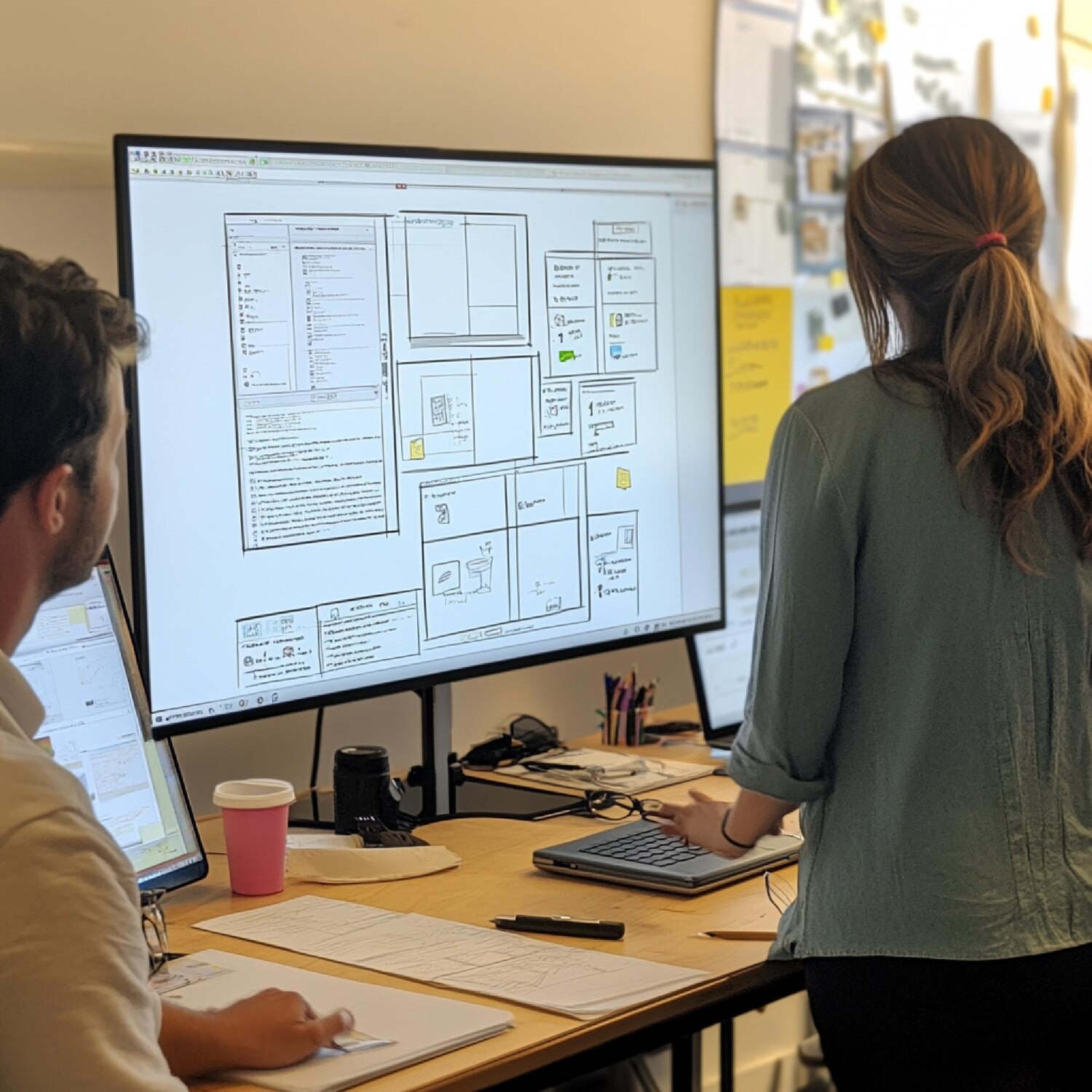
Use a three-column worksheet: capability fit, change velocity, and total cost of ownership. Score SaaS options and in-house builds on each dimension. Capability fit measures how closely a tool matches your critical flows without excessive workarounds. Change velocity captures how fast you can adapt: do you control the roadmap, or are you waiting on a vendor? TCO must include not just subscription or build costs, but also switching risk, data lock-in, and integration overhead.
There’s also a sequencing trick. Buy to learn; build to scale. For early-stage discovery, stand up a workflow using best-in-class services to validate demand. Once you’ve proven the economics and learned the nuances, replace the constraining piece with a targeted custom service. You won’t waste the early spend if you deliberately design adapters and keep ownership of the data model. Custom software development here acts as a scalpel—precise, evolutionary, and tied to evidence, not a blank-slate bet.
Scoping Without Guesswork: Outcome-First Roadmaps
Good scope begins with a measurable outcome, not a backlog. Frame the first release around the smallest slice that proves a business result: shorten onboarding from seven days to two, raise quote-to-cash accuracy to 99.5%, or increase trial-to-paid by eight points. With the outcome clear, you can work backward to the minimum capabilities and guardrails needed to make it real—and nothing more.
A practical pattern is to define a “walking skeleton”: one thin, end-to-end path that exercises identity, core logic, data storage, and audit. It’s intentionally humble but fully real, typically stitched with ready-made components where possible. That skeleton exposes integration friction, performance constraints, and data shape questions before you invest in breadth. Once proven, expand sideways by optimizing inputs and outputs around the validated slice.
Roadmaps should be timeboxed and hypothesis-driven. State the assumption, define the metric, set the window. If you don’t hit the number, change an input—not just add features. When design work is required to hit the outcome, pair your engineers with product designers early; good teams co-evolve flow and system boundaries. If you need outside help to accelerate vision or execution, blend discovery and delivery with a partner who can take you from interface to production, such as the cross-functional teams behind website design and development projects that transition directly into scalable builds.
Architecture Choices That Age Well
Fashion changes quickly in our industry; operational truths do not. Favor architectures that minimize coupling, make failures visible, and discourage cleverness in the critical path. Your core domain should be boring in the best way—predictable, observable, and easy to reason about under stress. Patterns like ports-and-adapters, event-driven boundaries where latency tolerance exists, and a clear domain model give you the agility to swap infrastructure without rewriting business logic.
Resist microservices for their own sake. Start modular, not distributed. Split when operational pain or independent scaling needs justify it. The fastest teams draw their seams around change rates and ownership, not purely by entity. When you do split, invest in contracts: versioned APIs, schema evolution, and consumer-driven tests. These make integrations more than just hopeful glue; they become reliable conduits for change. If integrations are central to your initiative, lean on an experienced partner in automation and integrations to reduce surprises.
For commerce or content-heavy experiences, avoid reinventing undifferentiated capability. A composable approach—pairing a headless CMS or commerce engine with custom orchestration—keeps you fast and flexible. Evaluate solutions that align with your product’s growth path, and bring in focused expertise from e-commerce solutions teams who have seen the edge cases. Above all, ensure your observability story (tracing, logs, metrics) is a first-class citizen; you can’t scale what you can’t see.
Delivery Cadence: Ship Value Every Two Weeks
Cadence is a strategy. A two-week ship rhythm forces decisions, reveals ambiguity, and keeps stakeholders engaged with working software instead of documents. The goal isn’t velocity theater; it’s to surface learning loops where each increment reduces risk and improves the economics. Plan sprints around demonstrable value—something a real user can touch, approve, or reject—not internal scaffolding that only engineers can appreciate.
Short cycles require clear definitions of done. Production-ready means instrumented, documented enough for handoff, and safe to operate. Feature flags and progressive delivery let you decouple deploy from release, shrink blast radius, and gather evidence before going broad. When work spans sprints, carve vertical slices that cut through UI, services, and data. Horizontal layers drag; vertical slices ship.
Rituals matter, but keep them lightweight. Replace status meetings with dashboards and short demos. Automate quality gates in CI/CD so teams focus on learning instead of ceremony. If your organization is new to continuous delivery, start with one pilot stream and publish its metrics. Referencing the broader movement, practices under the DevOps umbrella were born from hard operational lessons: reduce handoffs, amplify feedback, and create safe-to-fail environments. Custom software development thrives when delivery is reliable enough to make small bets, often.
Risk Management in Custom Software Development
Most risk in custom software development hides in ambiguous requirements, brittle integrations, and untested failure modes. Attack these early. Write down assumptions as testable statements and instrument the system to validate them. Bad news is a gift when it arrives early and cheaply. Good news unsupported by data is a trap.
Security isn’t a later phase; it’s a posture. Establish secure defaults—least privilege, encrypted transit and rest, dependency tracking—and automate them. Map your practices to recognized guidance such as the NIST Secure Software Development Framework so leadership understands how compliance and pragmatism align. A light threat model per epic is often enough to prevent footguns: who might abuse this capability, how would they do it, and what low-friction guardrail reduces the risk?
Integration risk deserves its own plan. External APIs change, rate limits bite, and sandbox environments lie. Mitigate with contract tests, retries with backoff, idempotency keys, and circuit breakers. Operationally, monitor for partial failures—stuck jobs, out-of-order events, and data drift—and page on symptoms the business cares about, not just technical thresholds. Finally, run regular disaster “table reads” where leaders rehearse action under stress: what do we roll back, who communicates to customers, and how do we verify data integrity? Familiarity lowers cortisol; teams perform better when the first incident isn’t their first rodeo.
Integrations, Data, and the Hidden Complexity Tax
Integrations are rarely hard because of code. They’re hard because every upstream system encodes a different worldview. Fields with the same name mean different things, eventual consistency collides with batch processes, and security models conflict. Treat each integration as a product with a lifecycle—versioning, monitoring, deprecation—and budget for the operational work that begins after launch.
Data is where complexity accumulates. Normalize where you must, but don’t turn your warehouse into a shrine. Embrace schemas that reflect reality as it is observed, not as it should be. Build guardrails against data drift and backfills. When ingesting events, record causality and origin so you can reconcile and replay without guesswork. If this sounds like heavy lifting, it is—and it’s exactly where experienced teams pay off. Bringing in a partner focused on automation and integrations can prevent months of rework.
Operationally, treat integration failures as first-class citizens in your UX. Expose retriable states and non-retriable errors to operators with clear actions. Don’t hide behind “contact support” modals. Build dashboards that show backlog health, synchronization lags, and reconciliation status. When auditors call—or when a customer challenges a bill—you’ll need not just the data, but the story of how it moved through your system. That narrative is the difference between a nuisance ticket and a reputation event.
Measuring Impact: From Telemetry to Boardroom
Executives care about cause and effect. Your job is to translate commits into commercial impact with a clear chain of evidence. Start with product telemetry: instrument funnels, cycle times, error budgets, and adoption. Tie those signals to business KPIs—conversion lift, churn reduction, unit economics. The precision of your story matters more than its extravagance. A small, statistically sound shift beats a dashboard firehose every time.
Define a measurement plan per outcome before a line of code is written. Include leading indicators (engagement with a new workflow), lagging indicators (revenue, cost), and guardrails (support tickets, SLA breaches). Run A/B where feasible. Where you can’t, design quasi-experiments: phased rollouts, matched cohorts, or pre/post with seasonality adjustments. Package findings into short memos that decision-makers can scan in five minutes.
Don’t overlook platform health. Observe error rates, latency percentiles, and deployment stability; these correlate with your ability to ship. If measurement tooling is thin, invest early. Partnering with a team focused on analytics and performance is often the cheapest way to shorten feedback loops. As patterns emerge, codify them into playbooks so new teams inherit proven tactics instead of reinventing measurement on every initiative.
Choosing a Partner for Custom Software Development
Picking a partner is less about logos and more about fit to your risk, culture, and velocity. Look for teams that talk in hypotheses and outcomes, not backlogs and burndown. Ask for artifacts: decision records, architecture primers, and migration plans. You want proof of thinking, not just code. Strong partners will challenge scope, propose smaller first releases, and explain integration risks without scaring you into paralysis.
Breadth matters when the solution spans interface, systems, and go-to-market. Evaluate whether a partner can move from concept to launch with cohesive ownership—brand and UX through to infrastructure. Partnerships that begin with a clear visual and product language often accelerate alignment; experienced studios offering logo and visual identity alongside website design and development can set the tone for cohesive products. For core builds, confirm they have a point of view on composable stacks and have shipped real custom development work where integrations, data, and scale weren’t afterthoughts. If commerce is on your roadmap, ensure they’ve delivered production-grade e-commerce solutions with clean handoffs to operations.
Finally, insist on transparency. You’re not buying magic; you’re buying a disciplined process that turns ambiguity into software that moves a metric. Demand weekly demos, shared dashboards, and clear narratives about risk and trade-offs. The right partner will make your team stronger and leave behind assets—code, patterns, and practices—that continue paying dividends long after the statement of work ends.