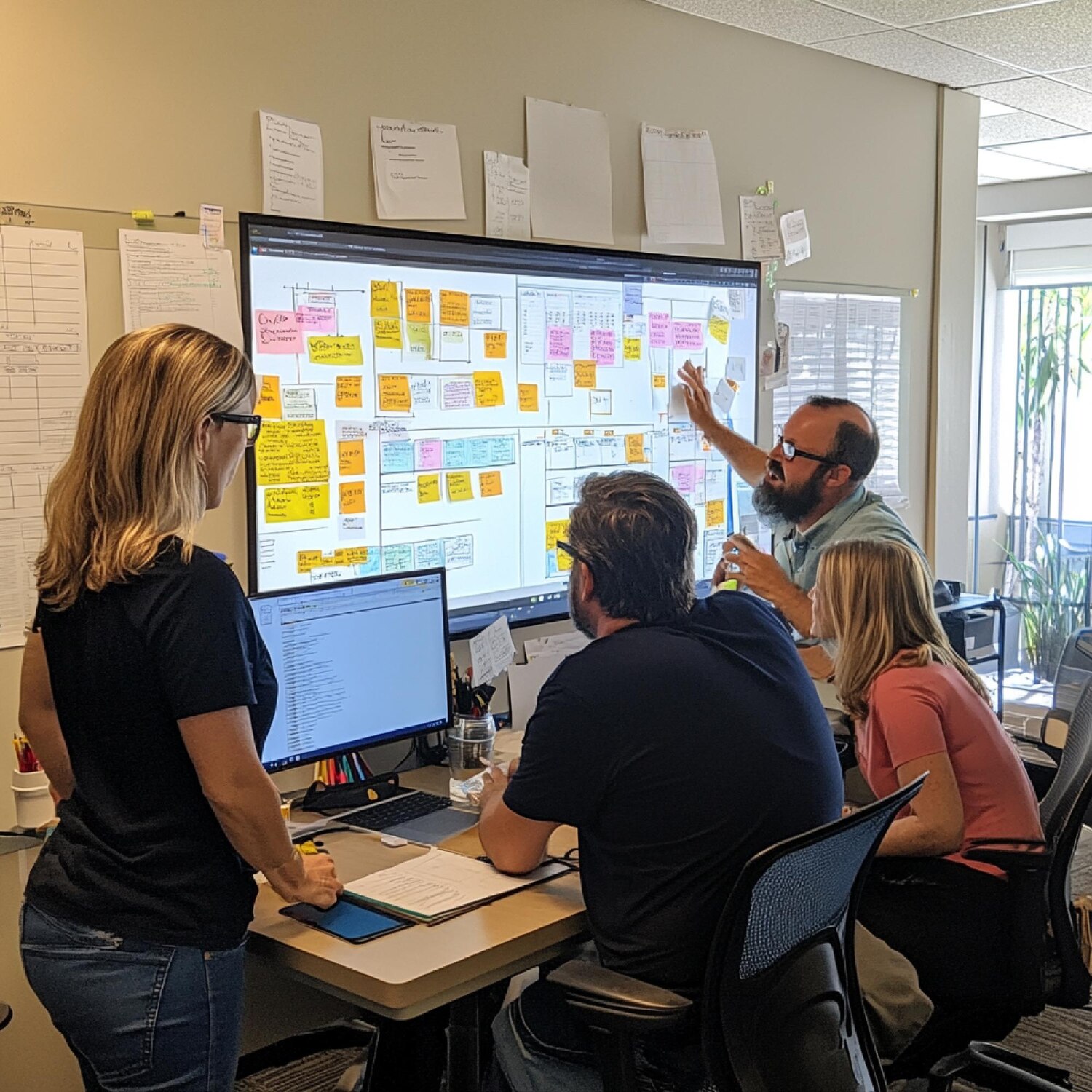
Replatforming your store isn’t a technology decision. It’s a commercial bet with a recovery window, operational consequences, and brand-level risk. When I talk about an e-commerce replatforming strategy, I’m talking about a plan that can survive board scrutiny, stabilize cash flow during the transition, and still leave enough fuel in the tank for your team to execute. Tooling matters. Process matters more. Results matter most.
I’ve led and rescued enough migrations to know what consistently separates the smooth landings from the cratered ones. The short version: scope with ruthless clarity, choose architectures that match your operating model (not your aspirations), protect data like it’s revenue (because it is), and instrument everything from day one. If you get those four right, the rest gets easier. If you don’t, no platform on earth will save you.
When to replatform: triggers, timing, and trade-offs
Most teams wait too long. Revenue is fine until it isn’t; suddenly the discounting you used to win now just protects share. If checkout friction climbs, mobile sessions crawl, or promotions demand brittle workarounds, your system is already taxing growth. Market shifts, not vendor roadmaps, should trigger an e-commerce replatforming strategy. Watch margin leakage from manual ops, rising total cost of ownership from plugin sprawl, and lead times that push campaign windows from days to weeks. Those are the early warnings.
Timing is a second-order decision tied to merchandising calendars and supply chain realities. Launching in Q4 is a rookie move unless you have a bulletproof rollback and proven load profiles. Align your program around slower demand windows and lock critical changes (pricing models, fulfillment SLAs) 60–90 days pre-cutover. An honest assessment of internal bandwidth also matters. If your top engineers are concurrently rebuilding the catalog or overhauling attribution, your replatforming clock just got longer.
The key trade-off is control versus focus. A composable stack can fit your business like a tailored suit, with the billable hours to match. A SaaS-led approach trims customization but shortens the path to value. Don’t decide in the abstract. Tie platform choice to 12 months of planned commercial moves—new markets, subscriptions, B2B portals, headcount plans—and score each alternative against those moves. If your team can’t maintain it on a Tuesday at 2 a.m., it isn’t a strategy. It’s a liability.
E-commerce replatforming strategy: from wishlist to scope
Replatforming fails when it tries to be a wish-fulfillment exercise. The discipline is in translating a chaotic wishlist into a bounded scope with business outcomes. Start by ranking objectives that affect revenue and risk: conversion improvement, faster launches, fewer stockouts, lower support volume, catalog velocity. Build a scorecard and weight each by impact and effort. Then map required capabilities to concrete deliverables and a realistic timeline. That scorecard becomes the backbone of your e-commerce replatforming strategy.
Don’t spec a spaceship if you only need lift. I use a three-tier scope framing:
Must-haves: Capabilities without which you cannot trade safely or legally. Think PCI-compliant checkout, tax/VAT accuracy, essential integrations (ERP, WMS, PSP), and order orchestration.
Should-haves: Differentiators that move KPIs in the first 90 days—improved search relevance, streamlined PDPs, offer engine, basic personalization, and a robust CMS for content velocity.
Could-haves: Enhancements that compound later—advanced loyalty, complex bundles, headless experiments. They’re valid, just not launch-critical.
Lock must-haves early and defend them. If stakeholders add features mid-flight, something of equal weight comes out. Enforce a “business case or backlog” rule. Keep documentation simple but not flimsy: a one-page scope, a RAID log (risks, assumptions, issues, dependencies), and a living RACI that clarifies who decides, who informs, and who actually does the work. For design and build execution, consider a partner who can carry accountability across UX, build, and launch; a services team like website design and development plus e-commerce solutions under one roof shortens feedback loops and minimizes handoff errors.
Build, buy, or hybrid: choosing the right platform
There’s no universal “best” platform; there’s only fit. If your model prizes speed to market, limited engineering headcount, and consistent operating costs, a SaaS-first stack (Shopify/Shopify Plus, BigCommerce) often wins. Native features cover 80% of needs, app ecosystems fill most gaps, and the operational simplicity is a force multiplier. You trade off deep control for stability and velocity. For many growth brands, that trade is worth it.
If you need fine-grained control over complex catalogs, multi-region compliance, or B2B contracts, a self-hosted or PaaS platform like Adobe Commerce (Magento) puts you closer to the metal. That control comes with maintenance debt and demands genuine engineering rigor. A hybrid (headless on a SaaS commerce core) can work when you demand bespoke experience layers but don’t want to own the entire transactional stack. Just remember: composable isn’t a free lunch; you’re buying an integration program as much as a platform.
Evaluate total cost of ownership over 36 months, not sticker price. Include licenses, apps, custom development, observability, infrastructure, data pipelines, and the “shadow work” of governance. Measure platform fit against your organizational shape: how your teams ship, who owns the backlog, and what skill sets you’ll actually have a year from now. Score vendors on documentation quality and API depth rather than demos. Pretty dashboards don’t move orders; stable APIs do. When in doubt, pilot a narrow slice—real SKUs, real traffic—before signing multi-year deals.
Data migration without drama
Catalogs, customers, and order histories are the arteries of your business. Treat migration like a regulated activity. Start with canonical data models. Document how product types, variants, options, and attributes map to the target system. Normalize where you can, but avoid overfitting to today’s edge cases that box you in tomorrow. SKU-level redirects are not optional; organic equity evaporates without them. For customers, separate marketing consents from transactional records and preserve provenance for audit.
Run staged test migrations early, not at the eleventh hour. I prefer three passes: a thin slice to validate mappings, a broad non-prod import to pressure-test volume and performance, and a full dress rehearsal with anonymized PII. Track deltas between runs, close issues, and re-run until errors are boring. Data ownership during freeze windows must be explicit. If orders are still landing on the legacy platform, design a cutover path for in-flight orders, refunds, and returns. Finance will care—align your settlement windows accordingly.
Security and compliance aren’t paperwork; they’re risk multipliers. Minimize who touches PII and rotate credentials after each migration run. Enforce consistent IDs for products and customers where possible, or design an internal ID reference to resolve joins across systems. For content, build a content freeze window and maintain a parallel queue of post-launch content drops. The fastest route to a stable day-one is a strict change lock, a well-documented rollback, and an e-commerce replatforming strategy that refuses to negotiate with chaos.
E-commerce replatforming strategy risks and how to mitigate them
Every migration inherits four classes of risk: scope creep, integration brittleness, performance regressions, and organizational fatigue. Scope creep dies under governance. If your steering group lacks teeth, decisions drift and the launch date moves right. Establish a weekly change board with an SLA for yes/no decisions and force economic framing: ROI, cost of delay, and risk. Your e-commerce replatforming strategy either protects the launch window or it doesn’t. Make it explicit.
Integration brittleness is predictable. Third-party dependencies fail at the worst moment. Wrap external calls with timeouts and circuit breakers. Build dead-letter queues for webhook failures and a replay mechanism so orders don’t fall into a black hole. Test with vendor sandbox data that resembles production, not toy payloads. Performance regressions often hide in personalization and search. Measure from the user’s device using RUM. If Time to First Byte climbs or your Core Web Vitals slip, conversion will too. Treat performance budgets like financial budgets: capped and enforced.
Organizational fatigue sneaks up. Teams run hot for months and make poor decisions at the end. Plan a hypercare rotation that’s sustainable, not heroic. Budget for a stabilization sprint post-launch and keep discovery work off the critical path. Keep leadership close to reality with a one-page dashboard—scope burndown, defect trends, checkout success, and page speed. If a risk burns down to green on the chart, kill it in the RAID log so the team sees real progress. Momentum is a mitigation strategy.
Experience design that converts and the brand work behind it
Design starts with constraints, not concepts. A high-converting storefront is opinionated about hierarchy, loading order, and microcopy. Product detail pages should favor clarity over cleverness. Use progressive disclosure for complex attributes and keep price and key benefits inside the first viewport on mobile. On checkout, remove decorative content and chase down every field that isn’t strictly necessary. The evidence has been consistent for years; the Nielsen Norman Group’s checkout research aligns with what we see in the field—fewer steps, better defaults, and trust signals that don’t interrupt flow.
Brand alignment isn’t a paint job. Typography choices impact readability and load; color systems affect accessibility and error-state clarity. If you need a brand refresh to unify the experience, couple it with the build through a partner who can carry both, such as logo and visual identity plus website design and development. UI kits in Figma that mirror component libraries in code reduce drift and speed velocity across sprints.
Content velocity is underrated. Your e-commerce replatforming strategy should protect for a CMS workflow that non-technical teams can drive. Landing pages, campaign modules, and promo banners shouldn’t require a dev ticket. Establish content models early and build preview environments that mirror production data. Finally, design with the performance budget in hand. Image formats, third-party scripts, and client-side personalization are conversion tax if left unchecked. Fewer resources, better sequencing, higher revenue.
Integrations, automation, and the plumbing that makes money flow
Order flow is a system, not a feature. Platforms come and go; your integration fabric is the durable core. Start by mapping every event from add-to-cart to delivery: payment auth, fraud checks, tax calculation, fulfillment allocation, shipping labels, notifications, and returns. For each integration, define SLAs, idempotency guarantees, and error-handling playbooks. If a vendor can’t give you a webhook retry policy or a schema versioning plan, expect production pain.
Automation pays back in months when you aim it at coordination debt. Auto-cancel unpaid orders after defined windows, push tracking numbers to customers the moment carriers ingest parcels, and sync inventory deltas in near real time to avoid oversells. Use message queues where speed matters and scheduled jobs where consistency is king. For non-differentiating glue code, a team like automation and integrations can accelerate delivery while keeping observability in view. Build dashboards that surface stuck jobs, webhook backlogs, and retry storms before customers feel them.
Financial accuracy is the last mile. Tax engines, multi-currency rounding, and settlement recon matter when auditors arrive. Validate that captured funds equal dispatched orders across gateways and reconcile payouts by day and currency. A resilient e-commerce replatforming strategy doesn’t bury these details; it elevates them. For shipping, precompute rate tables for common baskets and cache them to avoid provider flakiness at checkout. Where possible, use stateless, versioned functions for third-party calls so you can roll back integrations without redeploying your core.
Analytics, performance, and observability from day one
If you can’t observe it, you can’t improve it. Instrument your storefront, checkout, and integrations with a single source of behavioral truth and keep it clean. Decide on your analytics foundation and harden consent flows before you worry about dashboards. Track business-critical events server-side where you can: view_item, add_to_cart, begin_checkout, purchase, refunds, returns. Client-side analytics can complement but shouldn’t be the sole source. Back all this with observability: logs with correlation IDs, distributed tracing for critical flows, and uptime checks on every endpoint you don’t control.
Performance is a product feature, not a dev vanity metric. Start with a budget and enforce it in CI. Watch LCP, INP, and CLS to safeguard Core Web Vitals. Use lazy loading and code splitting, but prefer less JavaScript over clever JavaScript. Measure real users, not only synthetic. At replatform time, side-by-side comparisons against legacy pages reveal quick wins—critical CSS extraction, preconnects to payment and CDN domains, and image pipeline hardening. If you need help building the instrumentation and reporting muscle, a specialist team in analytics and performance can set guardrails that keep teams honest.
Finally, treat analytics schemas as contracts. Document event names, required properties, and version them. When marketing wants a new parameter, ship it behind a versioned flag and update downstream consumers deliberately. Your e-commerce replatforming strategy should include a measurement plan aligned to OKRs. If a feature launches without a tracked hypothesis, it’s a guess, not a bet. Decisions get better when you wire the loop between data and backlog prioritization.
Testing, launch, and hypercare: how to land the plane
Most failures aren’t mysterious; they’re untested paths under load. Build a matrix that covers devices, payment types, shipping scenarios, promotions, logged-in/logged-out states, and error paths. Test with production-like data and real payment tokens in sandbox mode. Force 429s and 500s from your critical vendors and confirm customer experience degrades gracefully. Shadow production traffic to staging if your platform allows it. Track defect discovery rates; if they aren’t trending down two sprints before launch, your date is wishful thinking.
Plan launch like an operation. Freeze changes a week prior except for P0 defects. Staff a war room with named owners for checkout, integrations, content, and infra. Define go/no-go criteria beyond uptime—checkout success rate, error budget burn, average response time, and RUM-based page performance. Secure a rollback plan that’s rehearsed, not theoretical. Maintain a runbook that documents how to re-enable the legacy site, how to reroute DNS, and how to handle orders that straddle cutover windows.
Hypercare isn’t a vibe; it’s a schedule. Run 24–72 hours of heightened coverage with published response times and escalation paths. Then shift to normal operations with a backlog of post-launch fixes and improvements. If you worked with a partner for build and launch, keep them engaged through hypercare. Teams offering end-to-end e-commerce solutions can keep context hot, cut MTTR, and help triage issues before customers do. A disciplined e-commerce replatforming strategy lands the plane without heroics.
After launch: roadmap, governance, and continuous improvement
Day two decides whether the investment compounds. Establish a cadence for experimentation that doesn’t destabilize the stack. A/B test high-traffic templates first—PDP, PLP, and cart. Tie experiments to hypotheses and use clean segments so wins aren’t mirages. Feed learnings into a quarterly roadmap that balances debt, optimization, and new bets. Keep a rolling list of integration upgrades and vendor renegotiations; costs creep when attention drifts.
Governance should be lightweight and real. A monthly architecture review prevents point-solution sprawl. Security reviews guard against token leakage and permissions drift. Marketing and product must align on campaign windows and release trains. Where your differentiation lives in code, invest in maintainable extensions and internal libraries; for everything else, prefer configuration or partner delivery. If specialized engineering is required, keep velocity with custom development that fits your platform’s extension model, not fights it.
Finally, audit the original business case at 30, 90, and 180 days. Measure conversion delta, deployment cadence, average incident duration, and ops hours saved. If the needle isn’t moving, find the constraint and fix it with the same urgency you brought to launch. An e-commerce replatforming strategy that survives contact with reality is iterative by design. It doesn’t celebrate cutover as an endpoint. It treats it as the start of a better operating system for growth.
Technical debt management isn’t a housekeeping chore. It’s a survival discipline. When I coach product and engineering leaders, I see the same pattern: teams sprint faster, but release velocity drops, outages creep in, and every change costs more than last quarter. That’s not failure; it’s compound interest on past decisions. Debt appears when we trade future options for short-term wins. Managing it well means you set terms on that loan, instead of letting the loan set terms on you.
Executives don’t want lectures about code smells or nostalgia for the rewrite-that-never-happened. They want faster, safer delivery. They want risk reduced in ways that show up in the numbers. Treat technical debt management as portfolio risk. Quantify it, prioritize it, and retire it with the same seriousness you apply to features that drive revenue. Do that and you’ll unlock speed, retention, and fewer 2 a.m. incidents—without derailing the roadmap.
Why teams drown in debt (and why it’s not laziness)
Let’s drop the moralizing. Teams don’t fall into debt because they’re sloppy; they fall because incentives reward shipping, not stewardship. Sales lands a must-win deal, and your monolith grows a new branch of conditional logic. A vital launch date arrives, and you defer test coverage. Leadership pivots markets, and the architecture you had becomes the architecture you’re stuck with. None of these choices are irrational. They’re rational under pressure.
What turns pressure into peril is failing to make those trade-offs explicit. A grown-up practice names the shortcuts, tracks their costs, and sets a date to revisit them. When you skip that part, debt goes dark and multiplies. Soon, every small change touches three unrelated modules, the CI pipeline takes fifteen minutes on a good day, and the person who knew how the billing workflow “really” works just left for a startup.
There’s also a harsh truth: heroic engineers who “just fix it at night” become the thin thread holding the system together. That works until it doesn’t. Sustainable teams align on the rules of engagement. They define acceptable shortcuts, outline the repayment plan, and protect time to execute it. Manage the narrative, too. Executives hear “refactor” as cost. Frame it as reliability, margin, and speed. Then back it with data and deadlines so leadership can say yes without guessing.
Technical debt management as portfolio risk
Executives understand portfolios: multiple bets, shifting risk, clear returns. Apply that lens to technical debt management. Catalog major liabilities as investable items with hypotheses about payoff. A gnarly service with 20% monthly incident probability is a different risk profile than a styling framework mismatch that slows new UI work. Both matter; one actively bleeds reliability, the other quietly taxes velocity.
Group debt into risk classes—availability, security, scalability, developer-experience, and cost-of-change. For each, set a target risk appetite. Maybe your fintech can tolerate modest UI friction, but it cannot tolerate auth fragility. That framing unlocks prioritization that actually sticks in leadership meetings. You’re no longer asking for “time to clean up code.” You’re proposing to rebalance risk exposure in line with strategy.
Every item in the portfolio needs a simple investment memo: problem statement, measurable impact, proposed treatment, expected outcome, and time box. Keep it two pages or less. If the impact can’t be measured today, define the telemetry needed to measure it tomorrow. Then tune your cadence. Revisit the portfolio monthly for status, quarterly for big swings, and before major roadmap shifts. When product strategy changes, so should the risk portfolio.
Finally, avoid absolutism. Some debt is strategic. A temporary interface adapter during a merger might be the price of speed. Call it out, cap the exposure, and set a sunset date. Portfolios require active management; so does debt. If you aren’t closing the loop, you’re not managing—you’re collecting liabilities and hoping tomorrow’s revenue will cover the interest.
Quantifying debt: metrics that survive scrutiny
Finance doesn’t approve budgets based on vibes, and neither should engineering. Quantify debt with measures that link to delivery outcomes. Start with cost-of-change: track lead time from code commit to production for a representative sample of changes. If lead time rises while story complexity stays flat, your development surface has friction. Instrument flaky tests and unstable services; a test failure rate over a threshold tells a clearer story than a bug bucket.
Look at rework. Measure how often stories reopen due to hidden dependencies or regressions. Map hotspots using production error rates and time-to-restore when incidents hit. Then translate that data into money. If a recurring incident burns eight engineer-hours per week, multiply by fully loaded cost. If a slow CI adds ten minutes to every commit across a team of twenty, the monthly expense is not hypothetical—it’s visible in hours you never get back.
Data is useless if it’s trapped. Pipe metrics into an accessible dashboard alongside product KPIs. Reliability and velocity should live where executives already look. If you lack the instrumentation, prioritize it first; visibility pays for itself. Teams without baseline telemetry can lean on a partner focused on performance analytics such as Analytics & Performance services to set up robust measurement and alerting. Don’t wait for a migration to do this.
Caveat: avoid vanity metrics. Cyclomatic complexity and code coverage have their place, but they must connect to outcomes. Coverage that prevents regressions matters; the number alone doesn’t. Align measures with goals executives care about—fewer incidents, faster releases, happier customers—and the business will meet you where you are.
Prioritization frameworks that leadership actually respects
Most frameworks crumble when the board wants a date. Keep yours sharp and simple. Triage debt by impact to revenue, risk to reliability, and speed of delivery. Add effort and uncertainty to reflect real-world complexity. Then make the decision lines explicit. If an item scores high on risk and low on effort, it’s a priority this quarter. If it’s high on effort and medium on impact, bundle it with adjacent feature work to amortize cost.
Time-box discovery for high-uncertainty items. A one- or two-week spike with clear exit criteria prevents endless analysis. Where systems sprawl across third-party tools, consider targeted automation. Tight, well-scoped integrations often convert invisible toil into reliable pipelines. If you’re missing connective tissue, a focused pass with Automation & Integrations can turn constant human glue into software you can measure and trust.
Rank using a short list:
Blast radius: How many customers or teams are affected when this breaks?
Recurrence: How often does the issue surface within a quarter?
Latency tax: How much cycle time does it add to common changes?
Operational load: How many manual steps exist because this isn’t fixed?
Strategic alignment: Does solving it unlock a near-term roadmap objective?
Once ranked, constrain WIP. Two or three debt streams in flight beat seven that never finish. Tie each to a crisp milestone and publish status in the same venue as feature work. When priorities shift—and they will—update the board with the trade you’re making. Great prioritization survives pressure because the rules were agreed before the fire drill.
Designing a pragmatic repayment plan
Blanket refactors rarely survive contact with a sales quarter. Build layered plans that deliver value along the way. Start by separating remediation into three buckets: surgical fixes, enabling work, and structural upgrades. Surgical fixes reduce operational pain immediately—stabilizing an endpoint, removing a flaky test suite, or unblocking deployments. Enabling work unlocks speed—improving local dev environments, tightening CI, or adding contract tests. Structural upgrades take real time—modularizing a core service, introducing a message bus, or decoupling front-end and backend release trains.
Choose horizons. In 30 days, deliver visible relief to on-call rotations and release friction. In 90 days, remove a major blocker to roadmap items. In 180 days, retire a class of incidents tied to brittle architecture. Each horizon should have names, owners, and measurable targets. Publish it. Visibility fosters resilience when product asks for an unplanned feature; you can show what slips and what risk you accept.
When gaps cross domains—design, backend, data—organize cross-functional crews for limited windows. Don’t spin up permanent tiger teams that drift; rotate expertise in and out with clear briefs. If an upgrade intersects a strategic bet, consider external help to accelerate safely. For bespoke platform moves or service extractions, experienced partners in Custom Development can de-risk gnarly transitions and leave behind maintainable scaffolding.
Above all, tie each tranche of repayment to a benefit you can demonstrate soon after. Show a drop in MTTR, a reduction in cycle time, or a supported customer scenario that used to require manual work. Wins compound; so does trust.
Embedding debt work into delivery without drama
Debt doesn’t need a parade; it needs a routine. Bake it into the delivery system. Dedicated capacity is a blunt tool but effective: reserve a non-negotiable 15–20% of engineering time for platform work and debt reduction. If that number makes leadership nervous, pilot it on one team for a quarter with clear measures. Show improved release cadence or fewer incidents, then scale it.
Use lightweight governance. Every sprint, ensure the top of the backlog shows small, high-leverage fixes—observability gaps, flaky tests, or repeated deployment steps you can automate. Pair this with an explicit error budget for reliability. If incidents burn the budget, new feature flow slows until stability is restored. That rule should be boring and automatic, not a debate in Slack.
Simplify the local developer experience. A fifteen-minute setup delay blooms into weeks of lost time over a year. Invest in templates, scripts, and golden paths that guide teams into the paved road. When the paved road is missing, upgrade it. Consider outside support on modernization that blends UX, CMS, and performance concerns, such as Website Design & Development. The fastest runtime won’t matter if authors can’t ship content or the design system fights the codebase.
Finally, integrate automation where human hands repeat steps. From data syncs to release gates, consolidating glue work into robust pipelines pays immediate dividends. If your landscape is a web of SaaS and internal services, a focused pass with Automation & Integrations can eliminate a surprising amount of invisible toil. Debt shrinks both by deleting problems and by deleting handoffs.
Architecture choices that reduce future debt
Architecture is where you make or dodge the next five years of debt. Favor seams. Clear contracts between services, teams, and UI layers contain blast radius and simplify change. You don’t need microservices to achieve this; you need modular boundaries and disciplined ownership. Start by isolating volatility—feature flags for experiments, adapters around external APIs, and anti-corruption layers for legacy systems.
Beware the “platform in my head.” Institutional knowledge trapped with a few seniors is a debt magnet. Codify patterns as code templates, not wikis. Define paved paths for data flows, auth, logging, and testing. When your product involves complex transaction flows—subscriptions, taxes, or marketplaces—tackle the ecosystem holistically. If commerce is strategic, align platform debt retirement with future-proof capabilities through experienced partners in E‑commerce Solutions. When you outgrow starter stacks, choose evolvable foundations, not the most fashionable diagram.
Risk lies in integration boundaries, too. Design idempotent operations and back-pressure strategies long before peak load hits. Use contracts and consumer-driven tests to decouple release trains. For unique constraints or heavy legacy, bring in battle-tested guidance via Custom Development rather than improvising under deadline. Good architecture is less about tech flavor and more about enabling small, reversible steps. The compounding effect of reversible steps is the cheapest debt insurance you can buy.
One more lever: shared design language. A coherent design system reduces churn from UI inconsistencies and divergent components. Standardized tokens and components lower the cost of change, which is core to managing debt over time.
Technical debt management in roadmaps and budgets
Budget season shouldn’t turn into a ghost story about past sins. Fold technical debt management into planning the same way you plan growth bets. Present a slate of debt initiatives with outcomes tied to core KPIs—release frequency, defect rate, NPS, or support ticket volume. Bundle enabling work directly with related features so value lands together. When you size features, include the cost of doing it the paved-road way, not a drop-in hack you’ll rip out later.
Make the trade-offs visible. If the company wants an ambitious Q3 launch, propose the debt you’ll accept temporarily and the date you’ll refinance it. Documenting that intent protects the team when memory fades. Where visual and brand consistency affect build speed—particularly in content-heavy sites—investing in the design system pays off. Consolidate tokens, patterns, and accessibility from the start. If your brand work is scattered across tools and teams, align it with support from Logo & Visual Identity so product and engineering aren’t re-litigating UI every sprint.
Spreadsheets still rule the room. Translate risk reduction into dollar impact using simple, transparent math. Fewer incidents reduce on-call costs and churn. Faster releases cut opportunity cost. Show both hard and soft savings, but be honest about assumptions. Executives don’t need certainty; they need clarity, confidence, and credible updates. When your numbers tie to outcomes they already measure, budgets follow.
When to refinance versus retire systems
Not all debt deserves the same fate. Sometimes you refinance: improve observability, add tests, and isolate pain points to buy another year or two. Other times you retire: decommission a service, replace a brittle vendor, or re-platform a decayed core. The hard part is spotting when incremental fixes stop paying back. Signals include a rising MTTR despite patching, rising cognitive load for new hires, or a dependency graph that blocks feature teams for weeks.
To choose wisely, frame options as experiments with explicit thresholds. “We’ll attempt modular extraction of orders by quarter’s end. If we fail to reach X% coverage and pass Y performance gates, we pivot to replacement.” That reduces sunk-cost bias and speeds up decisions. During mergers or market pivots, expect more replacements. During steady-state growth, expect more refinancing.
When the decision involves migration risk, pull in people who have cut this trail. Re-platforming demands choreography across data, auth, SEO, and customer experience. The cost of getting it wrong is real. Structured engagements in Website Design & Development and deeper Custom Development help reduce risk while keeping delivery moving. The point isn’t purity. It’s to pick the path with the best risk-adjusted return for the next two planning cycles, then revisit as reality changes.
One final test: if you’re ashamed to put the plan on a slide for the board, the plan isn’t ready. Sunlight and metrics keep you honest.
Executive reporting: turn debt into narrative and numbers
Great reporting makes technical leaders predictable partners. Package your story as a before/after narrative with supporting metrics. Start with baselines: average lead time, deployment frequency, change failure rate, time to restore, and a handful of business-aligned measures like conversion or support tickets tied to defects. Then show the arc. “We funded these three initiatives. Lead time dropped 22%. Incidents tied to checkout fell from weekly to monthly. On-call hours per engineer decreased by 35%.”
Anchor language to risk and return. Executives don’t need to hear about dependency injection; they need to hear that risk to Q4 revenue from platform incidents moved from high to mild. If your telemetry is thin, fix that early with a focused push. Combining engineering signals with business dashboards via Analytics & Performance gives you one place to point when questions come.
Keep the vocabulary consistent with industry definitions so your claims stand up. The term “technical debt” itself has a long history; when in doubt, anchor to reputable sources like Wikipedia’s overview of technical debt to align on terminology. Then close with what’s next. Show the pipeline of debt work and the business outcomes it will unlock: reliability for the holiday surge, expansion into new regions, or faster onboarding for partners. You’re not asking for indulgence; you’re offering a disciplined way to buy speed and stability at a discount.
Handled this way, technical debt management becomes an engine for advantage. The organization learns to trade wisely, measure honestly, and turn yesterday’s shortcuts into tomorrow’s speed.
Redesigns are expensive bets. Done well, they unlock growth and align teams. Done wrong, they reset your metrics and burn months of runway. I’ve led dozens of high-stakes rebuilds across B2B, SaaS, and commerce. Patterns repeat. The winning move isn’t prettier visuals; it’s a disciplined website redesign strategy that treats the site as a product with measurable outcomes, not a once-a-decade makeover. Stakeholders want momentum, speed, and zero surprises. The reality: you can have two of those unless you replace opinion with evidence and keep scope on a short leash.
What follows is the strategy I wish more teams used—practical, opinionated, and tested in production. It prioritizes outcomes over artifacts, systems over one-off pages, and governance over heroics. Expect trade-offs. Expect a migration plan that won’t torch your SEO. Most of all, expect clarity on what to do now, next, and never.
Why most redesigns fail (and how to avoid the expensive reset)
Big-bang launches feel decisive, yet they often ship risk at scale. Teams chase stakeholder wishlist items, inflate scope, and let aesthetic refreshes masquerade as strategy. Two months post-launch, conversions dip, search traffic wobbles, and leadership asks why the new site “feels slower.” The failure mode is predictable: redesigns centered on taste, not evidence.
There’s a better path. Start with outcomes, constraints, and a cadence of incremental risk. A credible website redesign strategy recognizes that the site is a living product with dependencies, historical equity, and operational realities. It’s not a greenfield art project. Treat SEO as an asset with a balance sheet. Treat performance budgets as hard limits, not suggestions. And treat content authors as first-class users, because bottlenecked publishing will kill momentum faster than poor color contrast.
Most “failures” aren’t technical—they’re governance failures. No owner for redirects. No change-management plan for content teams. No alignment on decision criteria when design and data conflict. Fix that upstream: define who decides, how we measure, and what we won’t do. You’ll ship faster by removing ambiguity, not by adding people.
Website Redesign Strategy: Outcomes Before Layouts
Let’s be blunt: if you can’t answer “what needle will this move?” you’re decorating. Set outcomes before layouts because layouts follow intent. Prioritize three outcomes—no more. Common candidates: increase demo requests by 20%, reduce time-to-content-publish to under one hour, and improve Lighthouse performance to 90+ on mobile. If your desired outcome is “better brand perception,” translate it into measurable signals like higher assisted conversions or improved time-to-first-interaction on key pages.
With outcomes set, define constraints. Agree on a performance budget, a maximum tech surface area, and an authoring SLA. Constraints protect speed and quality. They also make trade-offs explicit. For example, if you want page experiences under two seconds on middling mobile devices, that constrains your frontend stack, media strategy, and personalization ambitions.
Next, set decision criteria. When stakeholders disagree, how do we decide? Use a tie-breaker hierarchy: data beats opinion, accessibility beats sparkle, and simplicity beats novelty unless the outcome demands otherwise. Your website redesign strategy lives and dies by these rules. They feel rigid until you watch them accelerate decisions.
Finally, define phases. Ship the conversion-critical flow first (home → product/service detail → conversion). Ship brand polish alongside the flow, not before. Treat everything else as an enhancement backlog, not launch-critical. That phasing keeps your roadmap safe and helps you spot regressions before they multiply.
Research and discovery: data before declarations
Discovery is less about artifacts and more about removing guesswork. Start with a baseline of analytics, search queries, top entry and exit pages, and conversion paths. Pull six to twelve months of data if you can. Identify which pages carry organic equity and which simply occupy menu real estate. Overlay performance metrics to see where slowness intersects with revenue or lead intent. You’re hunting for leverage points, not a 90-slide report.
Talk to sales and support. Their frontline patterns reveal messaging gaps and objections your site can preempt. Then interview a handful of users for each key task: evaluate, understand pricing, compare to competitors, and request a demo or purchase. Keep it short and surgical. You don’t need a lab to learn that your pricing page is cognitive quicksand.
Audit content freshness and authority. Which pieces attract links? Which are stale and cannibalizing better material? Mark candidates for consolidation and redirection rather than reflexively porting every post. For accessibility and standards alignment, review core requirements against resources like the W3C WCAG guidelines. Alignment here isn’t optional; it’s table stakes for usability and legal risk.
End discovery by capturing hypotheses: “If we simplify the pricing grid and reduce F-pattern scanning, we’ll improve clickthrough to ‘Talk to Sales’ by 15%.” These hypotheses fuel experiments later. Tight discoveries take one to three weeks and give your website redesign strategy an evidence backbone. If you need help instrumenting or analyzing, lean on analytics and performance specialists to avoid blind spots.
Information architecture and content model: structure that scales
Information architecture is where most redesigns quietly succeed or quietly fail. It’s not your menu labels; it’s the logic of how users find, understand, and act. Start by mapping tasks, not departments. Prospects don’t care how you’re organized internally. They care about solving their problem with minimal cognitive load. Your IA should route them through the core moments: grasping the value, validating credibility, comparing options, and converting.
A durable content model is the companion to a clear IA. Define content types (case study, product detail, service page, integration, FAQ, resource) and their fields early. Those fields become your CMS schema and your design system tokens. If the model is vague, authors will hack content to fit designs and developers will hardcode exceptions. That’s how websites rot. Model first, then design templates around it.
Keep the IA shallow where it matters. Two or three levels deep is plenty for most sites. For heavy catalogs or documentation hubs, invest in faceted navigation and robust search rather than endless nesting. Build redirection maps as you restructure; protect your top URLs and set canonical references to avoid duplicate content issues.
If you anticipate modular growth or complex product narratives, component-driven templates are your friend. Pair your model with a maintainable component library so pages can be assembled without bespoke code each time. When you’re ready to implement, partners with strong custom development and website design and development chops will save you months and reduce long-term upkeep.
Visual identity and design systems that serve outcomes
A rebrand can elevate or derail a project depending on timing. If the core brand is shifting, clarify what’s stable (voice, values, logo fundamentals) and what’s in play (color, type, art direction). Then build a design system that protects accessibility and performance while expressing the brand. System, not playlist. Define tokens (spacing, color, type scales), component states, and content patterns before chasing new page ideas.
Design should push hard on clarity and restraint. Teams that win set rules like “no more than two font families,” “SVG for all icons,” and “images under a hard cap unless a story demands otherwise.” Those constraints make your outcomes more achievable. They also reduce regressions. Use a grid and typographic scales that flex gracefully between breakpoints. Nobody converts on a site that looks theatrical on desktop and cramped on mobile.
If your brand work needs fresh legs, treat it as a parallel track with tight integration. The right partner for logo and visual identity can codify a durable system that translates beautifully to the web. Don’t over-animate. Motion should reinforce comprehension and feedback, not add latency. And remember, the best visual redesigns serve comprehension first: contrast that meets standards, spacing that aids scanning, and imagery that clarifies outcomes instead of filling space.
Before sign-off, validate designs against your performance budget. If the concept can’t hit 90+ Lighthouse on mobile with real content, iterate. Every pixel carries cost, and your website redesign strategy should treat design as a means to measurable business ends, not a gallery.
Technical foundation: performance, accessibility, and maintainability
Fancy frameworks won’t save a poor architecture. Start with the delivery model: SSR for indexable, fast first-render pages; static generation where content publishes in batches; client-side interactivity when it adds value. Keep the frontend light. Third-party scripts are the usual culprits—instruments only what you need and load defer or server-side where feasible. Agree on budgets for JavaScript, CSS, and images. Then enforce them in CI.
Accessibility isn’t a chore you bolt on; it’s engineering quality. Semantic HTML, logical focus order, ARIA where appropriate, and contrast ratios that meet the guidelines. Do it because it’s right, and because it reduces regressions. Performance and accessibility tend to move together when engineering is disciplined.
On the CMS side, prioritize content modeling, authoring UX, and role-based permissions. If publishing requires a developer, you’ve built a museum, not a product. Integrations—CRM, marketing automation, search—should use stable APIs and clear error handling. Keep sensitive secrets off the client. For complex requirements or unusual workflows, bring in teams skilled at custom development and pragmatic automation and integrations.
Finally, instrument observability: logging, tracing, uptime, and real-user monitoring, not just synthetic tests. Tie releases to dashboards. If performance dips or error rates climb after a deploy, roll back quickly. Your website redesign strategy should include a reliability playbook, not just a design file and a CMS login.
E-commerce Website Redesign Strategy: From Catalog to Cart
Commerce teams often start with theme shopping and end with conversion hangovers. Catalogs need a structure that mirrors how customers decide—by use case, by compatibility, by benefit—not just by SKU taxonomy. Start with the jobs your customers are trying to accomplish and shape navigation around those paths. Product cards should tell a story: credible imagery, key differentiators, social proof, and clear next steps.
Speed is money in commerce. Compress and prefetch aggressively, lazy-load below-the-fold assets, and keep PDP scripts tight. Personalization can help, but only if the experience remains fast. If the page shudders under the weight of recommendation logic, you’re losing carts. Measure “time to add-to-cart” as a first-class metric.
Checkout deserves its own design and technical attention. Reduce steps, minimize distractions, and support wallet payments where applicable. Validate shipping costs early to prevent surprise drop-off. On mobile, use platform-native affordances—autocomplete, numeric keyboards, and clear error states. Feeds to marketplaces or ads should be robust and validated to avoid silent revenue loss.
When you need platform expertise, work with a partner for e-commerce solutions who can balance platform conventions with custom UX wins. And keep a direct line between merchandising and content ops so promotional storytelling appears where intent spikes. Treat the commerce track as part of your broader website redesign strategy, not as a bolt-on store with its own rules.
Content operations: speed to publish, quality by default
Content is the engine that keeps a redesign relevant after launch. If publishing is slow or brittle, your site decays. Start by defining roles: creators, editors, approvers, translators, and owners for each content type. Then standardize templates and guidelines so quality scales without micromanagement. Include tone, voice, and structural patterns—problem framing, proof, and next step—that match your conversion goals.
Shorten the path from idea to published. Authoring UX matters as much as frontend UX. If your CMS requires six clicks for a common task, fix it. Simple automations—like automatic image optimization, link validation, and scheduled publishing—keep momentum high. Integrate your CRM and marketing stack to reuse content blocks across channels when it makes sense. A straightforward connection via automation and integrations can turn content into campaigns without copy-paste purgatory.
Governance prevents drift. Set sunset policies for time-sensitive material and require owners for evergreen pages. Keep a changelog for top-converting flows so design changes aren’t accidental experiments. And give content teams clear visibility into performance with dashboards built on analytics and performance foundations. Your website redesign strategy should assume that content will change weekly—because it should.
Website Redesign Strategy in practice: mapping scope to sprints
Strategy dies without sequencing. Map outcomes to sprints with ruthless focus. In Sprint 1, ship the fastest path to value—home, one core product/service page, and a conversion surface (form or checkout). Sprint 2 hardens performance, accessibility, and authoring workflows. Sprint 3 expands to supporting pages and begins targeted experiments on pricing, navigation labels, or CTA placement. Keep a hard rule: no net-new page types during stabilizing sprints.
Scope control protects quality. Establish a “parking lot” for good ideas that don’t serve the current outcome. Review it weekly and roll items forward only when there’s capacity. Use feature flags to stage components without exposing unfinished work. Avoid interleaving redesign and replatform unless there’s no choice; if you must, sandbox risks and insulate the conversion path from platform churn.
Most importantly, define quality gates. Nothing ships until it passes performance, accessibility, and analytics instrumentation checks. You’re not being strict to be strict—you’re protecting compounding velocity. Teams that uphold these gates ship faster by eliminating rework. That’s not theory; it’s muscle memory. This is where a disciplined website redesign strategy earns its keep.
Analytics, measurement, and experimentation: the compounding edge
If you can’t measure it, you’re guessing expensively. Start with a clean analytics architecture: events for key interactions, consistent naming, and robust consent handling. Build funnels that match your outcomes and verify data integrity before drawing conclusions. Track both leading indicators (clicks on key elements, scroll depth to critical content) and lagging ones (form submissions, purchases). Use source and campaign data responsibly; messy attribution creates false heroes.
Experimentation should be purposeful. Not every page needs an A/B test, but high-impact surfaces do—pricing, navigation, PDPs, and forms. Define hypotheses from discovery, set minimum detectable effect sizes, and commit to ending tests when the math says you’re done. Too many teams call tests early. If you need a refresher on the basics, even a neutral overview like Wikipedia’s A/B testing article can help align teams on terminology.
Operationally, wire analytics into CI. If a release strips tracking attributes or breaks event integrity, fail the build. Create dashboards that leadership actually checks: one screen for conversion, one for performance, one for content velocity. Tie these to your outcomes so wins are visible and regressions obvious. Partners focused on analytics and performance can harden the stack and prevent silent failures.
Finally, build a monthly rhythm: review experiments, archive learnings, and forecast the next set of bets. The point isn’t to run more tests; it’s to make fewer, better decisions. That’s where your website redesign strategy compounds into durable advantage.
Migration, redirects, and SEO: protect your equity
Sites earn trust over years; migration can vaporize it overnight. Inventory every indexable URL and map it to the new structure with one-to-one redirects where possible. Avoid multi-hop chains and keep the redirect file lean and maintainable. Canonicals should reflect the new reality, not legacy guesses. For content consolidation, migrate the strongest page and fold others into it, preserving relevant sections and updating internal links.
Pre-launch, crawl both the staging site and the old site. Fix 404s, ensure hreflang and metadata carry over correctly, and validate structured data. Post-launch, monitor log files and Search Console for crawl anomalies. Don’t panic over short-term fluctuation; you’re watching for patterns. Protect your top-performing pages with extra vigilance during the first few weeks.
Technical SEO is inseparable from performance and accessibility. CLS, LCP, and TBT are not vanity metrics—they correlate with conversion. Set budgets for largest-interactive elements and image sizes, and audit templates regularly. When in doubt, keep it simple. Over-engineering navigation or templating usually backfires. If you need help running a clean migration, bring in a crew seasoned in website design and development who have actually carried equity across platforms.
Launch, rollout, and the first 90 days
Big-bang launches invite big surprises. A phased rollout reduces risk and reveals issues in the wild. Start with lower-traffic cohorts or specific geos. Monitor conversions, performance, and error rates in real time. If you see regressions, roll back decisively and fix forward. Canary releases aren’t just for apps; they’re perfect for web rollouts.
In the first two weeks, fix the essentials: broken links, slow templates, tracking gaps, and content typos. Weeks three to six are for tightening core flows and shipping your first research-backed experiments. By week twelve, you should have a stable baseline and a backlog of prioritized enhancements. Capture post-launch learnings in a brief—what surprised you, what validated your hypotheses, and where your website redesign strategy needs tuning.
Keep the team small and nimble during this window. Decisions should happen daily, not in biweekly ceremonies. Close the loop with sales and support to see if the site improved lead quality or reduced repetitive questions. If you’ve instrumented properly and staffed smartly—using partners where needed for automation and integrations or custom development—the first 90 days set the tone for a site that keeps getting better, not one that waits for a 2028 refresh.
Who to involve and when: the lean, accountable roster
Too many voices slow you down; too few create blind spots. Aim for a lean, accountable roster. Product owns outcomes and prioritization. Design owns usability, brand fidelity, and accessibility. Engineering owns performance, reliability, and maintainability. Content owns clarity and velocity. Analytics owns truth. Marketing and sales act as domain experts, not final arbiters. Legal checks risk, not taste.
Vendor selection should follow gaps, not fashion. If your component system is weak, bring in senior website design and development support. If your data layer is brittle, add analytics and performance expertise. For complex catalog or checkout needs, lean on e-commerce solutions. Decide quickly, set clear deliverables, and avoid overlapping mandates.
Most importantly, set a single decision-maker for cross-discipline conflicts. Consensus is a luxury you can’t always afford. When product, design, and data disagree, your decision criteria and business outcomes should resolve it. Your website redesign strategy is only as strong as your ability to decide, ship, and learn. Keep the team small, the feedback loops tight, and the accountability visible.
Sustain and evolve: making continuous improvement the default
A redesign that doesn’t evolve becomes a time capsule. Set a cadence for improvement that’s boring in the best way. Quarterly roadmap reviews, monthly experiment summaries, and weekly maintenance windows keep entropy at bay. Treat the backlog as a living document; prune aggressively. If an item doesn’t map to outcomes or remove a recurring pain, it’s clutter.
Re-run performance and accessibility audits monthly on key templates. Standards drift when nobody’s watching. Refresh your content inventory quarterly and sunset what no longer serves. Schedule usability checks twice a year with five to eight participants to catch small papercuts before they turn into support tickets. Keep your design system under version control and document changes so authors and engineers stay in sync.
Finally, train the team. New hires should learn the system quickly, and veterans should be able to onboard anyone in days. If gaps remain, bring in specialists across visual identity, custom development, or integrations to shore up weak spots. The point is simple: your website redesign strategy should make continuous improvement feel inevitable, not aspirational.
Most redesigns die of good intentions. Committees form, mood boards bloom, and demos dazzle—then the calendar and budget quietly revolt. A website redesign strategy is not a prettier homepage; it’s a disciplined way to de-risk change, fund the outcomes that matter, and leave your systems and teams healthier than you found them. I’ve led and rescued more than a few, and the pattern is always the same: clarity beats volume, decision speed beats consensus theater, and momentum beats perfection.
In practical terms, a credible approach starts with evidence, protects critical path decisions, and ensures you can ship increments that actually move numbers. It’s not glamorous. It is measurable. If you crave glossy before/after shots, this won’t be that. If you want a durable path to better conversion, faster delivery, and easier iteration, read on.
Website Redesign Strategy: What Decision-Makers Forget
Executives often conflate “redesign” with “repaint.” Visuals matter, but they don’t absolve slow pages, brittle integrations, or a content model that can’t flex with the business. The first miss is underestimating operational drag: ad hoc workflows, analytics you can’t trust, and a CMS that encourages one-off pages. A serious website redesign strategy faces these head-on, even if it’s less photogenic than a new hero banner.
Another blind spot: decision latency. Projects slip not because engineers can’t code but because choices linger. Pre-authorize a playbook for “good enough” decisions—how to pick patterns, when to escalate, who breaks ties. Documentation beats memory; rubrics beat debates. You’ll ship faster with fewer surprises.
Finally, remember the portfolio view. The website touches sales, support, recruiting, and brand. If none of those groups has budget or accountability in your plan, risk migrates to launch week. Bring them in early, assign measurable outcomes, and ensure the runway includes training, QA, and content readiness—not just code complete.
If you internalize anything from this section, make it this: aesthetics should ride shotgun to outcomes. A clean design with sluggish performance won’t lift conversion. A perfect Figma file won’t fix orphaned SKUs or orphaned analytics. Treat the website as a product, not a project, and your website redesign strategy immediately gets sharper.
Outcomes Over Outputs: Goals, Constraints, and Metrics
Set outcomes first, or every later argument becomes subjective. Define the business change you need: qualified pipeline, average order value, trial starts, self-serve help resolution. Then translate those into website metrics you actually control—task completion, funnel conversion, speed indexes, and content findability. Your goals must be falsifiable, measurable, and tied to real revenue or cost.
Constraints deserve equal ceremony. Identify legal, brand, security, accessibility, and platform boundaries you won’t cross. Constraints don’t kill creativity; they channel it. When trade-offs get heated, the constraint checklist is your moderator. Make it visible, and make it enforceable.
Metrics should mix leading and lagging signals. Don’t wait three months for pipeline reports to see if a checkout rewrite worked. Watch micro-conversions, scroll depth, and time-to-first-interaction in near real time. Pair those with qualitative checks—task-based tests and snippet-level copy validation—so you can detect why numbers move.
Instrument early. Stub analytics events in the first increment so you can see what’s breaking and what’s promising. If your telemetry is stale or unreliable, fix that before you scale. When you’re ready to go deeper on instrumentation and insights, align with a partner that lives in this data, like the analytics and performance work detailed at Analytics & Performance.
One more guardrail: codify a risk budget. Commit to experiments, but cap exposure. A sober website redesign strategy prizes reversible decisions and keeps an escape hatch open when a bet underperforms.
Evidence-Driven Discovery That De‑Risks Scope
Discovery is not a stakeholder wish list; it’s a diagnostic. Start by interrogating behavior. Pull funnel analytics, search logs, site speed reports, and error traces. Watch session replays to catch real friction. Correlate with support tickets and sales objections so research mirrors reality. You are curating confidence, not compiling artifacts.
Next, look under the hood. Inventory the content model, templates, third-party scripts, and critical integrations. Identify what can be salvaged versus retired. Map data flows for forms, identity, payments, and marketing automation. The more entangled your tech, the more your plan should budget for simplification. You’ll rarely regret deleting a dependency that never should have been there.
Then test assumptions with lightweight trials. Pilot a new navigation structure as a controlled A/B anywhere it’s safe to do so. Trial an alternative hero message on lower-traffic pages. Validate copy with quick task-based tests before you wire a whole system around it. For research that leads directly to build-ready insights, combine analytics, moderated tests, and instrumented prototypes.
Finally, align constraints with opportunities. If your CMS undermines structured content, plan for a model refactor during the rebuild. If your team dreads deployments, invest in CI/CD quality gates now, not after code freeze. The best website redesign strategy is a series of small, validated bets stitched into a coherent roadmap.
When discovery exposes integration landmines, don’t punt—budget for it. Systematic automation and clean handshakes across tools can be scoped with partners experienced in connecting platforms; see Automation & Integrations for the kind of work that keeps marketing fast without making engineering miserable.
Building a Website Redesign Strategy Roadmap
Roadmaps should preserve options while committing to outcomes. Instead of a monolith, define increments that are valuable on their own: a speed-focused performance sprint, a navigation update, a checkout refactor, a new pricing page, and a structured content migration by template. Each increment must include acceptance criteria tied to the metrics you set earlier.
Sequence for impact and risk reduction. Performance and analytics foundations pay off across everything else, so pull them forward. Content modeling should precede visual polish. In e-commerce, cart and checkout research often deserves its own track because improvements there compound revenue fast. Your website redesign strategy becomes less risky when the roadmap makes dependencies explicit.
Make decisions visible. Maintain a one-page “decision register” that records the choice, options considered, owners, rationale, and date. It spares you from re-litigating old debates and accelerates onboarding when new voices join midstream.
Budget for two things execs frequently skip: content operations and enablement. A high-velocity site needs templates, governance, and training so non-technical teams can ship without pinging engineering for every comma change. If you need help establishing a durable base, the team services at Website Design & Development can provide a pragmatic pattern library and editorial workflow that won’t fall apart under real use.
Close with a contingency cushion and a kill switch per increment. Nothing protects trust like the ability to pause a bet that isn’t paying off, then reallocate capacity to what is.
Architecture Choices: CMS, Headless, and E‑commerce
Architecture follows content and operations, not the other way around. If you publish frequently, need multichannel reuse, and care about page speed, headless often wins. If governance is light and your team prefers an all-in-one authoring experience, a modern monolith may be perfectly sensible. The right call blends business cadence, developer ergonomics, and integration complexity.
For commerce-heavy sites, your platform should serve your catalog structure and checkout requirements first. Composability helps you pick best-in-class search, promotions, and payments without overcommitting to a single vendor. But composability is not a strategy on its own; you still need guardrails for release management, observability, and cost control. When decisions require a custom fit, engage specialists who live with these trade-offs daily—see Custom Development and E‑commerce Solutions for patterns that avoid accidental complexity.
Integration posture matters as much as the platform. Plan for identity, analytics, marketing automation, and ERP/OMS connections from day one. Favor event-driven designs and contract tests so swapping vendors later won’t torch your roadmap. A durable website redesign strategy considers the cost to change, not just the cost to build.
Finally, treat performance as a requirement, not a phase. Set budgets for bundle size, image weight, third-party tags, and render-blocking resources. Tie them to CI gates that reject regressions. You’ll win SEO, conversion, and user trust in one stroke.
Experience, Content, and Brand Work That Converts
Great UX is the result of crisp decisions about tasks and trade-offs, not just a beautiful palette. Start with information architecture that mirrors how customers think, not how your org chart is drawn. Map top tasks and align navigation, search, and content types around them. When in doubt, fewer choices are better than many indistinguishable ones.
Content is a product. Structure it so you can reuse fragments (benefits, specs, FAQs, CTAs) across pages without duplication. That implies a content model and a publishing workflow designed for speed. If your team needs a firm foundation for templates, patterns, and interaction design, partner with a group that blends craft with delivery, like Website Design & Development.
Brand and credibility cues do heavy lifting. Social proof near CTAs, clear pricing, and unambiguous policies reduce friction. Visual identity should support readability and hierarchy before ornamentation. When a brand update is part of the program, engage identity specialists who won’t sacrifice usability; see Logo & Visual Identity for pragmatic approaches that translate to components, not just PDFs.
Don’t forget the microcopy. Clarity beats cleverness at the exact moment someone is anxious about a card form or a trial signup. A serious website redesign strategy treats microcopy as a lever to reduce uncertainty and increase completion.
Finally, test your way into certainty. Lightweight usability tests paired with analytics will reveal where design intent and user reality diverge. You’ll avoid redesign roulette and build confidence increment by increment.
Execution Model: Teams, Cadence, and Accountability
How you work will define how fast you ship. Cross-functional pods—design, engineering, content, QA, and product—reduce handoffs and finger-pointing. Decision rights must be explicit, with a single accountable owner for each increment. Weekly demos make progress visible and prevent surprises.
Cadence should be rhythmic and sober. Two-week sprints with a monthly release train keeps pressure on quality while preserving momentum. Integrate performance checks and accessibility audits into Definition of Done so quality isn’t deferred. If your deployments are stressful, automate what hurts and raise the floor with preflight checks. Practical automation help is outlined at Automation & Integrations.
Governance keeps you out of committee purgatory. A steering group sets outcomes and budget but doesn’t micromanage increments. Working groups own execution and present trade-offs with data. When decisions stall, use a tie-break protocol that favors reversible choices and time-boxes debate.
Hiring and partnering choices matter. If your core team lacks specific skills—complex migrations, performance engineering, e‑commerce flows—bring in specialists for the risky parts instead of over-staffing everywhere. A robust website redesign strategy is honest about what your team can carry without burning out.
Lastly, protect morale. Celebrate increments that hit their metric, and run blameless postmortems when they don’t. Nothing fuels delivery like teams who feel trusted and unblocked.
Migration and Launch Without the 2 a.m. Fire Drill
Most launch drama is preventable. Start with a content migration plan that’s mechanical, not heroic. Inventory current pages, map them to new templates, and define redirects before anyone touches DNS. Automate extraction and transformation wherever possible so your editors aren’t pasting into forms at midnight.
Dry runs are your friend. Stand up a staging environment with production-like data and integrate analytics, tag managers, and consent tools there first. Practice the go-live sequence with a rollback plan you’ve actually tested. A calm launch is a function of rehearsals, not luck.
Redirect strategy deserves its own checklist. Map high-traffic URLs with human review, then programmatic rules for the rest. Monitor 404s and soft 404s live during launch week. Fix them fast, and search engines will follow your lead. A disciplined website redesign strategy treats redirects like contracts with customers and robots alike.
Don’t skimp on performance at launch. Pre-generate critical pages, optimize images, and defer nonessential scripts. Establish real-time monitoring for uptime and Core Web Vitals so you can catch regressions early. If commerce is involved, load-test checkout in production-like conditions with feature flags ready to dial back non-essential features.
After DNS cutover, freeze non-critical changes for a few days. Let data settle, fix the top issues, and communicate clearly with stakeholders about what’s next. Calm beats chaos every time.
Measurement, Iteration, and Change Management
Launch is the starting line. Keep a rolling scorecard with the outcomes you set: conversion by segment, task completion, load times, and support deflection. Pair that with a weekly “insights and actions” ritual—two slides, ten minutes, one decision. The discipline matters more than the tool.
Experiment thoughtfully. Not every question needs a randomized trial, but when stakes are high, treat A/B testing as a first-class citizen with guardrails for sample size and duration. Focus on changes you can explain, not just ones that nudge a vanity metric. Instrumentation detail and performance monitoring should evolve alongside your roadmap; for help building a durable measurement spine, align with Analytics & Performance.
Change management is the unglamorous hero. Train editors and marketers on the new workflows, not only the new UI. Publish playbooks for creating pages, launching campaigns, and handling redirects. Keep a public changelog so stakeholders see momentum and know when to expect change.
As patterns stabilize, document them in a living system library with code, usage examples, and content guidelines. Designers get consistency, engineers get reuse, and editors get confidence. That compounding effect is how a website redesign strategy turns from a one-time event into a repeatable operating model.
Finally, keep the backlog honest. Retire ideas that no longer matter, elevate ones with evidence, and protect capacity for refactors that reduce future pain. Iteration is only sustainable when you invest in the platform as much as the pages on it.
Risk, Compliance, and Accessibility as Accelerators
Risk work accelerates you when it’s built-in, not bolted on. Treat privacy, security, and accessibility as product requirements with owners and budgets. You’ll move faster because you won’t be refactoring sensitive flows after the fact or negotiating with legal on the eve of a launch.
Accessibility is a trust multiplier. Bake WCAG standards into your design system and test with automated tools plus human audits. Clear focus states, semantic markup, and keyboard navigation aren’t extras; they’re table stakes. Faster sites with clear content help every user, not just those with assistive technologies.
Compliance becomes manageable when you reduce novelty. Prefer vetted components and patterns over bespoke experiments in sensitive areas like forms, payments, and consent. Create a small set of approved flows and update them centrally. You’ll save time and reduce risk without sacrificing brand expression.
Document the risk posture for each increment: what’s changing, what’s not, and the rollback plan. The more you normalize this discipline, the less intimidating change becomes. A durable website redesign strategy treats risk like any other requirement—measured, owned, and accounted for in the roadmap.
None of this slows creativity. It frees it by keeping the boring parts boring, so your team can focus on the work customers actually feel.
If you’ve been handed the mandate to “lead the digital shift,” you already know the easy part is building a slide deck. The hard part is building a digital transformation roadmap that actually ships, survives executive reshuffles, and creates measurable lift in revenue, margin, and customer experience. I’ve led programs in organizations from high-growth scale-ups to risk-averse enterprises, and the pattern is consistent: technology is rarely the blocker. Alignment, sequencing, and accountability are. This is not a theoretical playbook—it’s a field guide for operators who need to deliver.
Why your digital transformation roadmap fails before it starts
Most roadmaps die in the first quarter, not the fourth. The root cause is usually a mismatch between ambition and operating reality. Leaders declare sweeping goals without constraining scope, success metrics, or the decision rights needed to unblock the work. Then the organization punts real choices (decommissioning legacy tools, reprioritizing portfolios, changing incentives) to “Phase 2,” which never arrives. The result is a potted plant transformation—something that looks alive for a while but isn’t growing roots.
Here’s the blunt truth: a digital transformation roadmap is not a list of projects. It’s a sequence of capability bets that compound. If your first wave doesn’t build leverage for the second, you’re running a fancy to-do list. The first order of business is to narrow the aperture. Pick a business-critical value stream (e.g., quote-to-cash for B2B, browse-to-buy for DTC) and define outcome targets that matter: cycle time, conversion, average order value, renewal rate, NPS linked to revenue—metrics you can measure weekly. If you can’t instrument it, you can’t transform it.
Equally important: reduce governance latency. Most organizations lose 30–60 days per quarter to decision drag. Clarify who decides on architecture exceptions, vendor choices, and backlog priorities. Create a published, lightweight path for escalations that resolves in days, not months. If the steering committee only meets monthly and requires pre-reads two weeks in advance, you’ve already halved your delivery velocity.
Finally, de-risk early by making your first wins visible to the business. For example, if e-commerce checkout completion is bleeding, ship a two-sprint experiment that removes friction on mobile and measure lift. Publicize the outcome. Momentum is a governance tool—use it to buy the political capital for deeper platform work and process change.
Start with outcomes, not platforms: shaping intent and governance
When a program opens with platform selection, it usually closes with buyer’s remorse. Start with outcomes and the boundaries you’re willing to accept. If the CFO wants margin expansion, your north star might be self-service adoption and cost-to-serve reductions. If the CEO wants growth, you may prioritize speed-to-market and experimentation throughput. The platform is a means to those ends, and your roadmap should pressure-test whether the platform choices accelerate the outcomes or act as friction.
To make outcomes real, you need to publish your measurement contract. Define the 5–7 critical metrics (leading and lagging) that you’ll track across every epic. Tie each epic to a forecasted impact range and a confidence level. Then commit to kill, pivot, or scale decisions at pre-set intervals. This reframes governance from “reporting up” to “managing the portfolio like a product.” It’s also the moment to decide what you won’t do this year. Under-committing publicly and over-delivering quietly is not cowardice; it’s an operating edge.
KPIs, OKRs, and the unit of progress
Pick a unit of progress that the business respects. OKRs are fine if they’re outcome-oriented, not output theater. KPIs are effective when they flow from the value stream and ladder to financials. The mistake is mixing them into a soup of overlapping goals. Keep one layer of strategic OKRs (annual), one layer of operational KPIs (weekly), and a cadence that forces reality checks each quarter. Your roadmap should explicitly say how each bet touches those metrics and what evidence will graduate it to scale.
This is also where you stand up the operating mechanisms. Establish a cross-functional triad—product, engineering, and an empowered business owner—to jointly own outcomes. If your organization needs outside help to accelerate, align that help with outcome pods, not siloed workstreams. For example, if you need high-quality conversion analytics and performance tuning, a specialist pod aligned with a clear hypothesis can be invaluable; consider partnering with teams like those behind analytics and performance services to ensure you’re instrumenting the right signals from day one.
Architecture that survives scale: sequencing capabilities, not projects
If the roadmap is the story, architecture is the grammar. Good grammar makes complex sentences readable. Survivable architecture is not about hyperscale patterns for their own sake; it’s about sequencing capabilities so that each wave reduces marginal effort for the next. A common failure pattern is standing up a headless CMS, microservices, and an event bus all at once, then discovering that content governance and data contracts were the real bottlenecks. Another is picking the right tools but wiring them with point-to-point hacks that ossify before the next release.
Start by mapping business capabilities to technical capabilities with explicit dependencies. For example, “personalized merchandising” depends on identity resolution, catalog enrichment, real-time analytics, and experimentation. You don’t need them perfect to start, but you must decide what “good enough” looks like at each stage and how you’ll iterate. Build the capability runway for identity and data contracts before you chase advanced personalization; otherwise, you’ll ship heavy, expensive experiments that never generalize.
Building blocks that actually compound
Focus on three compounding building blocks early: domain-aligned APIs with clear SLAs, a shared event taxonomy with governance, and a design system that enforces usability and performance baselines. APIs and events are how teams collaborate at scale; a design system is how the brand and UX stay coherent across surfaces. Investing here makes the rest faster. If your team is thin on integration depth, this is the right moment to engage experts who live in the seams—teams that do automation and integrations as a core discipline can help you avoid the “quick wins” that turn into long-term debt.
Prioritize decommissioning. Every new capability should tee up a retirement of something legacy within the quarter. If you’re adding services without turning old ones off, you’re paying the complexity tax twice. Publish a kill list and hold the team accountable to it.
The operating model: who owns what and how decisions get made
Great teams don’t happen by accident; they’re designed. Your operating model should make decision-making boringly clear. Create a lean ownership map: who owns the customer journey, who owns the product portfolio, who owns architecture, who owns data quality. If everything is shared, nothing is owned. Use a RACI if you must, but I prefer a simpler list of names next to outcomes and systems—they’re either green, at risk, or in trouble.
Decide on funding. Project-based funding punishes learning and encourages output theater. Product-based funding, with clear outcome mandates and runway for iteration, creates accountability without whiplash. If your finance team needs a bridge, do both for a year: earmark operational spend for product teams, then layer on investment epics with measurable ROI gates. Publish the criteria; hold yourself to them.
Decision rights and escalation
Define who can accept risk and at what level. A product director should be able to trade scope for time within a quarter; an architecture council should define non-negotiables like security and data privacy; the executive sponsor should own cross-portfolio trade-offs. The escalation path should be documented, time-boxed, and visible. Nothing destroys momentum like escalation by rumor.
Finally, architect for collaboration. Co-locate decision-makers for critical moments, even if the team is remote-first. The fastest programs I’ve seen create “burst windows” where the right cross-functional leaders meet daily for 15 minutes during turning points—platform cutovers, peak promotions, or major feature releases. Velocity is more about synchronized attention than raw effort.
Data as a product: measurement, analytics, and ruthless feedback loops
Transformation succeeds at the speed of feedback. If you can’t see the effect of a change within days, you’re navigating by sentiment. Treat data as a product with its own roadmap: reliable collection, well-defined contracts, discoverable models, and self-serve access. This is not just about dashboards; it’s about closing the loop from hypothesis to decision to observed impact in the shortest possible cycle.
Stand up a minimum viable analytics stack early: event collection with a clean schema, identity stitching that respects privacy, and a metrics layer that business teams trust. Too many programs hand metrics definition to a vendor or bury it inside BI tooling. Keep definitions in the open, model them in code, and version them like any other asset. If you need help rationalizing this layer, align with specialists who emphasize performance tuning and instrumentation; services focused on analytics and performance can accelerate this foundation and prevent measurement drift later.
Experimentation that pays for itself
Formalize your experimentation protocol: hypotheses, guardrails, stopping rules. Make it easy to run small, cheap tests that can graduate to platform work. Couple feature flags with clear ownership and a deprecation culture—stale flags are hidden debt. Instrument your web surfaces for speed and usability from the first sprint; performance is a growth feature. If your web presence needs a rebuild to meet that bar, partner with a team that treats speed, UX, and DX as first-class citizens—see website design and development services that prioritize measurable outcomes, not just aesthetics.
Finally, create a weekly business review that everyone respects. Keep it short, force clarity, and anchor it around the metrics that matter. Celebrate experiments that disproved a bad hypothesis—they just saved you money.
Buying vs. building: a pragmatic approach to custom development and integrations
There’s no ideology here—build when it differentiates, buy when it doesn’t, and integrate so the seams don’t show to customers. The bad outcomes happen at the edges: over-customizing commodity platforms, or under-investing in the glue code and orchestration that make your stack coherent. In practice, that means buying the backbone (commerce engine, CRM, content platform) where standards are mature, then building the interfaces and unique workflows that deliver your strategy.
Custom development should target the moments of truth in your value stream—quoting logic, pricing strategies, allocation rules, personalization, or post-purchase experiences where your differentiation lives. Where you buy, commit to the vendor’s mental model. If you’re going headless, accept the complexity tax you’re taking on and budget accordingly for integration and governance. Where you integrate, invest in testable contracts and automation early; it’s cheaper than debugging production after a campaign launch.
When internal capacity is thin or timelines are aggressive, augment with outside expertise that can slot into your triads without slowing you down. Outcome-aligned partners who do custom development and automation and integrations professionally can save months of trial-and-error and reduce the entropy that creeps into fast-moving programs.
Customer-facing surfaces: web, e-commerce, and brand coherence
Your customers don’t experience your org chart; they experience your surfaces. If your web, mobile, and in-store moments feel like they were built by different companies, your transformation isn’t landing. Start by aligning the brand system and the design system—logo, visual identity, typography, color, and interaction patterns should reinforce each other and serve performance, not fight it. I’ve seen 20% conversion lifts just from cleaning up accessibility, navigation clarity, and performance on key landing pages.
On web and marketing sites, obsess over speed-to-meaning. Reduce render-blocking assets, simplify content hierarchies, and make mobile first-class. If you’re rebuilding or modernizing, align with a team that treats the site as a product with measurable goals; high-velocity partners in website design and development can help you move from discussion to deployment quickly. Ensure your visual language is grounded in your strategy, not a trend—if you need to tighten the brand, consider expert support in logo and visual identity to create coherence across touchpoints.
On commerce, fight complexity at the edges. Standardize catalog, pricing, and promotions where possible. Pick a commerce platform that supports your business model and commit to its guardrails. Then invest in the experience layers—content, search, merchandising, checkout—that drive your economics. If you’re launching or scaling online sales, it’s worth partnering with specialists who ship outcomes, not just storefronts; teams focused on e-commerce solutions can help align platform choices with unit economics and operational realities.
Connecting brand promise to operational truth
The best brand promise is operational truth delivered consistently. Don’t promise “two-day shipping” if your allocation and fulfillment logic can’t deliver it in peak season. Tie marketing claims to systems capabilities early; it will force the hard conversations when they’re still cheap to have.
Change management that sticks: skills, incentives, and culture
Tools don’t change behavior—habits do. You can ship the perfect platform, but if incentives nudge teams toward local optimizations, your roadmap will stall. Start by treating change management as a core workstream, not a communications plan. Identify the small number of role changes that matter (who approves pricing exceptions, who can change a product page, who can push a feature flag) and make those changes visible, trained, and reinforced. Clarify what “good” looks like with examples and real scenarios.
Invest in skills early. Upskill product managers in experimentation, engineers in observability, marketers in data literacy, and operations teams in service ownership. The cost of training is trivial compared to the cost of rework and the attrition that follows frustration. Also: adjust incentives. If the sales team is rewarded only for bookings, don’t expect them to champion friction-reducing self-service. If engineering is rewarded only for throughput, don’t expect them to invest in reliability. Align KPIs with the behavior you want to see.
Finally, build rituals that make the new normal stick: weekly demos that showcase small wins, architecture office hours that answer real questions, and AMAs with leadership that address the trade-offs openly. For a neutral primer on the discipline behind this, the overview on change management is a useful reference point, though your implementation should be tailored to your culture and constraints.
Governance and cadence: steering without strangling innovation
Good governance is a speed feature. Bad governance is a traffic jam with better reporting. Your aim is to create a cadence where decisions land just-in-time, risks are surfaced early, and teams can move without fear of surprise reversals. That starts with time-boxed reviews anchored on outcomes, not slide decks. Every review should answer the same questions: What did we try? What did we learn? What will we do next? What help do we need? If you can’t answer those in 15 minutes, your roadmap is bloated or your metrics are fuzzy.
Establish a predictable quarterly and monthly drumbeat with crisp boundaries. Quarterly: strategy validation, portfolio rebalancing, major dependency decisions. Monthly: health checks on metrics, key risks, and any scope trade-offs. Weekly: operational dashboards, block removal, and quick escalations. Keep attendance tight—decision-makers only—and publish outcomes within 24 hours. The more you can codify these rhythms, the less you need ad hoc heroics.
Risk, compliance, and the guardrails that enable speed
Security, privacy, and regulatory compliance are not the enemies of speed; unpredictability is. Agree on non-negotiables early, document them in language teams understand, and template the work (threat models, DPIAs, data retention) so it’s repeatable. Automate checks where possible and keep humans focused on judgment. When teams know the rules and the escalation path, they can move quickly without fear of rework.
Bake in budgets for maintenance and debt paydown. If you don’t fund reliability, you’ll fund outages. If you don’t fund refactoring, you’ll fund attrition. Make the costs visible, tie them to business outcomes (customer trust, conversion, support burden), and protect the time to do them right.
From roadmap to reality: a 90-day operating plan that earns the next 90
Every transformation earns the next quarter. Here’s a pragmatic first 90-day plan that I’ve used to good effect. Week 1–2: pick the value stream, define the top metrics, and appoint the triad owners. Week 3–4: instrument the baseline, document your first three hypotheses with expected impact, and set up the cadence. Week 5–8: ship two visible improvements on your customer surface and one platform enablement that accelerates the next wave (e.g., event schema v1). Week 9–10: kill something legacy and publish the before/after. Week 11–12: run the first portfolio review—scale the winner, pivot the maybe, kill the loser. Then repeat.
Along the way, be ruthless about time thieves. If a decision takes more than a week, surface it. If an epic drifts, re-scope it. If a platform choice is blocking real outcomes, get the right people in a room and decide. The art here is to manage energy and attention, not just schedules. People follow momentum—feed it with real wins and real talk.
Choosing partners and proving value
Pick partners who are comfortable being measured by your outcomes and who can embed into your cadence without creating parallel processes. Whether you need design, build, or analytics help, tie their work to your roadmap’s capabilities. The best partners bring leverage: they shorten your learning curve, leave behind systems and practices you can own, and help you scale from “good idea” to “business as usual.” If you need a team that can execute across web experience, data, and integration seams, evaluate offerings like website design and development, custom development, automation and integrations, and analytics and performance to cover the end-to-end flow, and bring in visual identity support when you need to tighten the brand system.
At the end of the day, your digital transformation roadmap is only as good as the behavior it enables and the business results it produces. Keep the plan short, the outcomes loud, and the feedback fast. Do that, and you’ll find the roadmap isn’t a document; it’s the way your organization learns to win.