

Design That Sells: Lessons from Real Conversion Projects

Pretty websites don’t keep the lights on. Outcomes do. Over the past decade I’ve repeatedly watched teams spend quarters polishing visuals, only to see the same flatline in sign-ups, leads, or sales after launch. The difference between a site that flatters and a site that sells is a discipline: conversion-focused web design. It isn’t a bag of hacks. It’s a way to make decisions, structure pages, and prioritize trade-offs so every pixel and millisecond helps a visitor say “yes.”
If you want to stop gambling with vanity redesigns, you need to wire strategy into structure, copy, performance, and measurement. What follows is the approach I take in production when there’s real money on the line. It’s opinionated, field-tested, and blunt about the constraints that matter. Ignore the parts that don’t fit—just don’t drift back to decorating. Decoration doesn’t compound, decisions do.
What conversion-focused web design really means
Let’s set terms. conversion-focused web design is not “more CTAs and brighter buttons.” It’s the systematic removal of friction and doubt along the shortest believable path to value. Good conversion work treats attention as a scarce, expensive resource and designs an honest exchange: we ask for a click, signup, demo request, or checkout, and we earn it with clarity, proof, and timing. That’s why the best-converting sites often feel calmer than their competitors. They’re not louder; they’re clearer.
In practice, that means three things. First, intent alignment: your navigation, page hierarchy, and copy must reflect the jobs visitors are trying to get done, not your org chart. Second, risk reduction: real proof (case studies, quantified results, recognizable logos, transparent pricing cues) beats clever rhetoric. Third, velocity: fast pages, accessible UI, and straightforward flows. Design choices that “wow” designers but slow comprehension or interaction are expensive indulgences. When I prioritize, I move through this cascade: Can a first-time visitor understand the value in one screen? Can they find the next step without thinking? Can they take it without friction? If any answer is “no,” I don’t pixel-push; I fix the flow.
Diagnosing friction across the journey
Before you change anything, find where visitors give up. I start with a simple path audit: define your top three acquisition paths, then follow each through the site like a mystery shopper. Note where expectations set by ads or search snippets break. Compare bounce and exit rates, but don’t stop there—watch sessions. The patterns are loud when you look: hunting for pricing that’s hidden, hovering over vague CTAs, failing form validations, rage-clicking sliders. Layer this with event logs and a few curated user interviews. Ten sessions watched with intent will tell you more than a thousand “Best Practices” checklists.
Friction rarely lives in one place. It compounds through micro-decisions: unlabeled form fields, “clever” menu labels, thin content around sensitive objections (security, integration effort, total cost). Document each friction point and classify it: clarity, proof, performance, or confidence. This taxonomy keeps you from treating everything like a visual problem. When analytics show technical bottlenecks—CLS shifts, laggy interactivity, server TTFB—treat them as conversion problems, not just dev chores. If you don’t have the instrumentation to see this clearly, invest in it. A proper setup anchored in meaningful events and page groupings is part of the job; if you need help, bring in a team that lives in analytics and performance workstreams like this.

Information architecture that sells
Most IA mistakes start with internal labels. Visitors don’t care about how your company is structured; they care about the path to value. I start IA by mapping the top three intents: evaluate quickly, validate deeply, and transact. For B2B, that might translate to Overview, Proof, and Buy/Contact. For e‑commerce, it’s Category, Product, and Checkout. The navigation should mirror the journey, not cram every department’s link into the top bar. Secondary menus, contextual links, and clear footers can carry the long tail; the header should do the heavy lifting for first-time visitors.
On-page structure follows the same principle: within one viewport, set the promise, show the proof, and offer the next step. Use progressive disclosure. Put dense technical specs or legal detail behind toggles, anchor links, or tabs, but never hide pricing cues or key reassurance. IA is also about scale. As your site grows, you’ll need consistent content types and templated patterns. When we build out a site end-to-end, we lock this in early through a componentized approach so every page reinforces the mental map. If you’re moving from a patchwork of pages to a coherent system, a full website design and development engagement is usually where IA meets engineering reality—and that’s where conversion gains stop being accidental.
Writing copy that converts without the hype
Copy is where most sites give away the game. Bloated headlines, vague benefit statements, and empty adjectives smooth over the truth: the value proposition isn’t clear. Start with voice-of-customer language harvested from calls, support tickets, reviews, and competitor gaps. Mirror the words buyers actually use to describe pains and outcomes. Then structure every page around a short hierarchy: problem in their words, outcome in their words, how it works (short), proof, action. If a sentence can be cut without changing meaning, cut it. If a claim can be measured, measure it. “Faster onboarding” is fluff; “live in 7 days, not 7 weeks” is a promise.
Hype corrodes trust at the exact moment you need commitment. Avoid weasel words like “seamless” and “robust” unless you can describe what makes them real. Write your CTAs like commitments with low regret: “See pricing,” “Start free,” “Get a technical demo,” not “Learn more” twelve times. Answer the uncomfortable questions early—total cost of ownership, integration work, data security, contract terms. Good copy behaves like a great salesperson: it lets the buyer stay in control, anticipates objections, and closes cleanly. When copy and IA do their jobs, design stops straining to compensate. That’s when conversion rates start to climb for the right reasons.
Visual systems that reduce risk and increase credibility
Visual design is a credibility machine when it’s anchored in restraint and consistency. I look for a stable system: typography that prioritizes legibility, a palette with clear semantic intent (action, warning, highlight), and components that handle real content gracefully. Resist decorative trends that fight comprehension—oversized hero type that hides key proof, parallax that jitters on scroll, low-contrast text that photographs well but reads poorly. Your visitors are pattern-matching risk. They’re asking, “Does this feel like a company that can deliver?” Cohesive visuals answer “yes” before copy even loads.
Brand matters here, but alignment to outcomes matters more. If your mark and UI don’t sing from the same sheet, unify them. That’s often the right moment for a focused visual identity refresh that prioritizes digital expression. Constrain expressive moments to where they create memory without stealing attention from action. Bring real product and customer artifacts into the system: dashboards, packaging, workflows. They beat abstract shapes every time. If your brand assets are thin, collaborate with a group that can rebuild them for the web without derailing conversion work. A service like logo and visual identity becomes a conversion lever when it clarifies hierarchy and trust markers instead of chasing novelty.
Speed, accessibility, and technical SEO as conversion enablers
Performance isn’t an engineering vanity metric; it’s a conversion rate multiplier. Every extra half-second on first input delay or layout shift at the moment of decision shakes confidence. Treat Core Web Vitals like design constraints, not afterthoughts. I set a performance budget in discovery, then choose stacks, images, and interactions that respect it. Ship only what the page needs, defer the rest, and prefer platform features over heavy libraries. When a hero video costs you 20 points of LCP for a barely noticeable mood lift, that’s not brand—it’s friction.
Accessibility overlaps directly with conversion. Clear focus states, keyboard-friendly flows, respectful error handling, and meaningful alt text all help real buyers complete tasks faster. Technical SEO helps the right people find the right pages with the right expectations. That alignment reduces pogo-sticking and increases motivated traffic. When we instrument performance and crawl health properly, we see a consistent pattern: faster, cleaner pages persuade more people. If your team lacks the telemetry or time to maintain this discipline, work with specialists who live in it; our analytics and performance practice exists for exactly this reason. Earn the click with search intent, keep the click with speed and clarity, and you’ll earn the action.
Experimentation, analytics, and making decisions you can defend
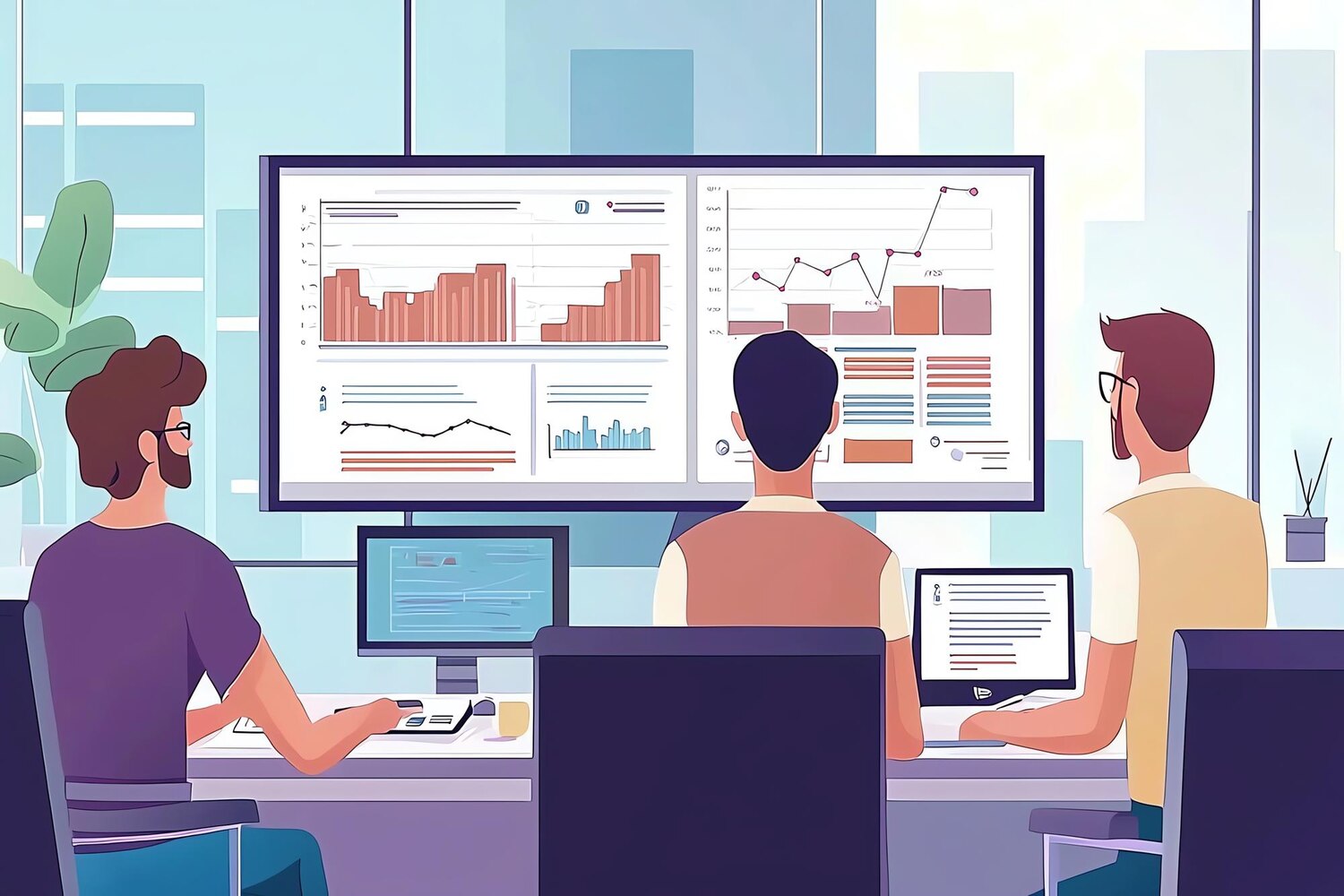
Testing is not a confetti cannon. It’s where you prove your instincts and keep your team honest. I limit concurrent experiments to what you can measure cleanly, define a single success metric per test, and predeclare a stop rule. Don’t chase micro-lifts you can’t reproduce; they’re noise. And don’t call wins at 60% confidence because the chart looks pretty—read up on statistical significance and minimum detectable effect, or use a platform that enforces rigor. Run tests long enough to cover seasonality and day-of-week swings. If your traffic is low, test bigger hypotheses (layout, offer, flow), not button hex codes.
After the decision, memorialize the learning. I keep a living doc of experiments with screenshots, audience notes, hypotheses, and outcomes. That institutional memory prevents the “we tried that once” folklore that kills velocity. Tie experiments to the conversion funnel you mapped earlier so results roll up into revenue impact, not just percentage changes. If you’re in a phase where building an experimentation culture feels heavy, start smaller: instrument key actions, monitor leading indicators (scroll depth on value sections, click-through to pricing), and set a monthly review cadence. You’ll create a rhythm where wins compound and losses teach. That’s conversion-focused web design in practice, not in theory.
conversion-focused web design in practice: two real-world scenarios
To make this tangible, let’s talk about two patterns I see often. First, B2B SaaS with a free trial. Most of these sites drown buyers in features and hide pricing until late. We flip the script: one-screen promise, three killer outcomes, bold proof (logos plus quantified case studies), then two clear paths—“Start free” and “See pricing.” Strip the homepage of anything that doesn’t earn those two clicks. On the pricing page, promote the most common success plan with honest guardrails. In the trial flow, prefill and reduce form fields, show progress clearly, and end with a thank-you page that offers a next-step activation (templates, onboarding call). That one reshuffle routinely lifts trial starts double digits.
Second, e‑commerce with bloated nav and weak product detail pages. I compress the mega-menu into intent-based categories, add real-time filters that don’t jank, and put trust markers high: shipping, returns, and reviews before the fold. On PDPs, lead with the “why” (use case images, short benefit bullets), then details and spec tables. Tighten checkout: guest path first, autofill, no dark patterns. If your platform is fighting you, invest in better plumbing; an engagement focused on e‑commerce solutions pays back quickly when it removes systemic friction. Both scenarios are just different doors to the same room: meet intent, reduce risk, speed the path to yes.
Handoffs that don’t leak value: design, dev, and ops
Great concepts die in handoff when teams ship artifacts, not agreements. I treat the design system as a contract: tokens, components, usage rules, and content states documented in a living source (Figma plus code, Storybook if possible). Each component includes behavior under stress: long labels, errors, loading, and empty. Developers shouldn’t guess; designers shouldn’t hand-wave. Connect prototypes to data early so assumptions break in staging, not in production. And if your release cadence is monthly, your conversion cadence will be too. Aim for continuous delivery of small, measurable changes.
Integration work is where speed becomes durable. Your site doesn’t live alone; it rides on CMS, CRM, payment, and analytics stacks. Connect them with care and automation. Event schemas should be versioned; transformations should be tested. If your forms drop leads into a black hole, or analytics fire inconsistently, you’re volunteering to lose revenue. Invest in the boring glue with a partner who treats it as first-class—our automation and integrations and custom development practices exist to close those seams so conversion work reaches customers intact.
The governance that keeps results compounding
Conversion wins fade when nobody tends the garden. Establish a lightweight governance model: an owner for the funnel, a monthly metrics review, and a backlog ranked by revenue impact and effort. Treat the site like a product with a roadmap, not a quarterly marketing chore. I use a simple operating rhythm: instrument, review, decide, ship, learn. That cycle shrinks decision time and turns arguments into experiments. The opposite rhythm—debate, delay, big-bang redesign—burns calendar and trust.
Guard your system from entropy. New pages should use existing components unless there’s a measured reason to add one. Content debt should be paid down every sprint: prune outdated posts, consolidate cannibalized pages, fix dead ends in navigation. When leadership demands a flashier homepage, point to the funnel and ask what part of the journey it meaningfully improves. conversion-focused web design is a practice, not a launch event. Companies that internalize that truth keep growing while others relaunch the same problems every two years with fresh paint.
conversion-focused web design as a buying criterion
If you’re hiring help, select for teams that talk about decisions, not dribbble shots. Ask how they tie IA to analytics, how they test copy, how they set performance budgets, how they hand off to engineering, and how they measure post-launch. Review case studies for evidence of behavior change, not just traffic growth. Probe their stance on accessibility and whether they’ll say no to anti-patterns that sabotage conversion for aesthetics. The right partner will be transparent about constraints, show you their test logs, and design to your margins.
When our studio scopes an engagement, we frame it around business outcomes and the systems that produce them. If you need soup-to-nuts execution, a comprehensive website design and development program aligns stakeholders and ships a coherent stack. If your stack is ready but connective tissue is brittle, we emphasize automation and integrations. If product complexity is the blocker, we shift weight to custom development. The buyer who anchors the conversation in conversion discipline, not page counts, gets compounding returns.
Roadmapping, scope, and pricing for outcomes
Roadmaps should be honest about sequence and risk. Start where the leak is largest and the fix is feasible. I scope work in legs: Discovery (intent map, IA draft, measurement plan), Foundation (system, templates, copy), and Acceleration (experiments, refinements, performance hardening). Each leg has a conversion hypothesis and target metrics tied to funnel stages. Budget builds around those legs, not a random tally of screens. That structure keeps stakeholders aligned on why decisions exist—and makes “can we add this?” a prioritization discussion, not a tug-of-war.
Pricing follows the same logic. Flat fees for well-understood legs, retainers for steady experimentation and upkeep. Tie incentives to learnings and impact, not vanity metrics. And leave room for the unglamorous work that moves numbers: data hygiene, form refactors, content pruning, asset compression. At the end of the day, conversion-focused web design is a promise to your buyers and to your balance sheet. Respect their time, respect your margins, and build a system that helps both. When you’re ready to make that shift stick, bring in specialists who’ll measure, argue with data, and ship relentlessly until the graph moves—and then keep going.