

Digital Transformation Roadmap That Actually Ships Results

Most digital initiatives fail for the same reasons: vague goals, slideware roadmaps, and no operating rhythm to turn strategy into shipped value. I’ve led transformations in organizations ranging from regulated enterprises to VC-backed scale-ups, and the difference between motion and progress always came down to one artifact done right—a digital transformation roadmap that’s built around measurable outcomes, sequenced capability bets, and a cadence that survives executive churn. The tool is only as good as the discipline behind it, but the right structure increases the odds you’ll deliver compounding wins rather than another expensive reset.
In this guide, I’ll outline how senior practitioners shape a digital transformation roadmap that actually works in messy reality. We’ll start with definitions that matter, map outcomes to capabilities (not pet projects), pick architectures that age well, de-risk legacy modernization, pin customer experience to the front of every decision, and make analytics our steering mechanism. Expect hard-earned opinions, trade-offs, and templates you can put to work in your next planning quarter.
What a Digital Transformation Roadmap Must and Must Not Be
A digital transformation roadmap is not a wish list, nor a compliance exercise to please the board. It’s a working contract that translates strategy into a sequence of capability releases with assigned owners, budgeted risks, and observable business effects. When the roadmap is healthy, teams can point to shipped increments that ladder up to outcomes, not just busy Gantt charts. When it’s sick, you’ll see politicking over priority, roll-ups that hide delivery risk, and a steady drift away from customer impact.
Non-negotiables of a real roadmap
First, anchor every stream to one business outcome measured by a small set of leading and lagging indicators. “Increase digital revenue by 15%” is a valid anchor; “move to headless CMS” is not. Second, define the smallest capability units that could prove or disprove your bet. If “personalized offers” is the bet, the first slice might be a single cohort with a simple propensity model and a feature flag, not a company-wide engine. Third, put names and dates next to the work. A stream without accountable owners is theater, not transformation. Finally, require every stream to publish change risks and rollback paths. No rollback, no production release.
Anti-patterns to avoid
Beware of architecture-as-destination roadmaps. “Migrate to microservices” can be a smart tactic but rarely a customer-visible outcome on its own. Watch for vanity metrics—story points completed, tickets closed, environments provisioned. Those are health signals, not outcomes. Avoid piecemeal tooling sprees masquerading as strategy. A collection of powerful platforms does not equal a coherent capability if integration and workflow design are skipped. And resist quarterly “re-baselining” that silently drops the most important bets because they’re hard. Deal with complexity; don’t spreadsheet it away.
Mapping Outcomes to Capabilities, Not Projects
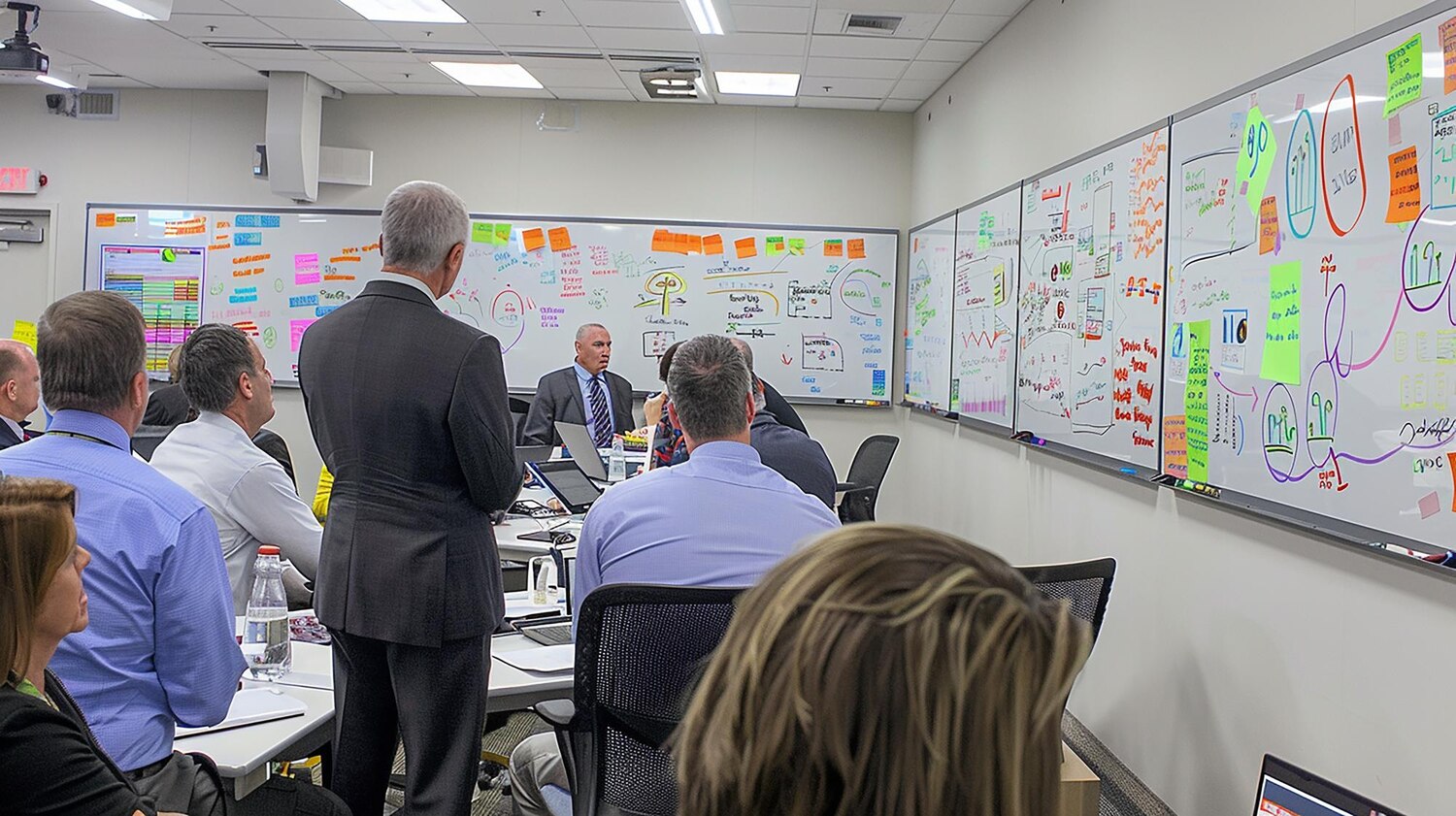
On paper, projects look tidy; in production, they fracture. Useful roadmaps map outcomes to capabilities—repeatable muscles that the organization can flex and scale—rather than to one-off projects. Start by defining the measurable business outcomes, then derive the capabilities you must gain or upgrade to achieve them. Backlogs get built at the capability level, not the slide deck level. You’ll find that this approach naturally supports reuse, accelerates sequencing decisions, and ties spend to impact more transparently.
Define value metrics that force clarity
Outcomes without metrics are opinions. Pick 1–2 leading indicators and 1 lagging indicator per outcome. If your goal is higher conversion from mobile, leading indicators might include time-to-first-interaction and scroll depth on key templates; the lagging indicator is revenue per session. Instrument your baseline early, then publish a simple scorecard weekly. Consider professional support for baseline and performance dashboards—an analytics partner like analytics and performance services can help you wire up dashboards that leaders and squads actually use, not just admire once a quarter.
Build a capability heatmap
List the capabilities your outcomes require—experiment execution, identity resolution, real-time personalization, content velocity, payment orchestration, event analytics, and so on. Rate current maturity on a scale (e.g., Nonexistent, Emerging, Repeatable, Scalable). Color the heatmap, then choose the two or three capability upgrades that would move multiple outcomes at once. For example, investing in event-driven architecture and a consented customer data layer often unlocks marketing agility, CX personalization, and analytics quality in one move. Capabilities localize dependencies and highlight integration points you must design, often through targeted automation and integrations work.
Architecture Choices That Age Well
I don’t care how excited your team is about the latest framework if the architecture can’t support your operating model in 18 months. Roadmaps collapse when early tech choices create friction that compounds with each release. The goal is architecture that lets you earn options over time—swapping components as you learn, integrating new partners without replatforming, and scaling hot paths without rewriting everything.
Buy, build, or blend—decide like an owner
Binary “buy vs. build” debates miss the point. The right answer blends managed services for undifferentiated heavy lifting, judicious custom code for your secret sauce, and integration glue between them. If your advantage is a bespoke booking flow with complex pricing logic, invest in custom development there. For identity, payments, or content delivery, reach for mature platforms and spend your energy designing seams and contracts. Product engineering leaders should push for platform APIs that are boring, well-documented, and observable. If an integration can’t tell you what it’s doing in production, it’s a liability, not leverage.
Platform thinking over point solutions
Favor architectures that produce reusable platforms inside your organization—design systems, event pipelines, checkout modules—so each subsequent product gets faster. A practical example: stand up an event backbone with clear schemas and data contracts. Pipe customer events to analytics, marketing automation, and service operations through this backbone rather than point-to-point integrations. It reduces coupling, simplifies consent enforcement, and accelerates new capability launches. When in doubt, invest in the connective tissue—CI/CD, observability, and integration automation—often with help from automation and integrations expertise. A defensible architecture is one that future teams can change safely without asking permission from every other system.
From Legacy to Leverage: Sequenced Delivery
Transformation is rarely greenfield. Legacies keep the business alive while you’re trying to change it, so the question is how to sequence safely. The best pattern I’ve found is incremental, interface-first modernization that lets new capabilities wrap and slowly replace legacy functions. You create leverage by turning risky rewrites into a series of shippable steps that pay for themselves as they go.
The strangler fig in practice
Martin Fowler’s Strangler Fig pattern remains a workhorse for a reason. You stand up a proxy layer, route a narrow subset of traffic to a newly built service, and expand coverage as confidence grows. Each slice has real users and real impact, which lets you validate assumptions early. It also provides a natural structure for feature flags, A/B tests, and rollback. Your digital transformation roadmap should call out strangler slices by name—what’s the boundary, what’s the measurable win, who owns the cutover, and where’s the kill switch?
Phase risk deliberately
Not all risks should be addressed first. Sequence the work so early phases buy you visibility and control. For example, put an observability layer across legacy apps before you refactor their core. Add a service contract layer before breaking databases apart. Introduce idempotent operations and retries before scaling queue consumers. This is how you dodge the trap of “one big bang release” and instead create a cadence of wins the business can see and trust.
Customer Experience as the Forcing Function
When programs drift, bring customer experience back to the front of the room. It’s the forcing function that aligns design, engineering, and go-to-market. I’ve seen roadmaps recover simply by mapping the top three customer journeys and tying every capability bet to a visible improvement on those journeys. It keeps priorities honest. It also anchors high-level architecture conversations in tangible service quality: page response times on critical paths, content freshness, support handoff speed, and frictionless payment flows.
Blueprint the service, not just the screens
Service blueprints are unglamorous and absolutely crucial. They show the customer-facing steps alongside backstage systems, teams, and SLAs. You’ll quickly see where one slow batch job torpedoes the experience or where missing context forces customers to repeat information. Update the blueprint with every major release. If your team lacks the bandwidth, bring in website design and development partners who work as part of your product squad rather than throwing designs over a wall.
Design systems and brand consistency
A solid design system is not decoration; it’s a velocity engine. It reduces decision thrash, speeds development, and creates trust through consistency. Tie your system back to your brand spine—logo, typography, color, and tone—with help from logo and visual identity experts who understand component-driven development. The payoff is faster iteration with fewer regressions and a UX that feels intentionally crafted, not stitched together. Most importantly, it prevents the roadmap from fragmenting into parallel design languages across teams.
E-commerce Roadmaps Without Replatform Trauma
E-commerce transformations are notorious for derailments. Replatforming promises speed, but the hidden costs live in data, edge cases, and operational change. A better path is a staged program that treats checkouts, product data, promotions, and fulfillment as separable capabilities, each with its own maturity curve. You progressively move hot paths to a modern stack while isolating legacy gravity to where it hurts least.
Lead with data-first migration
Before touching the cart, stabilize product and customer data. Normalize attributes, define SKU strategies, and put governance around pricing and promotions. Build a clean product information pipeline that feeds both old and new channels. With that foundation, your experiments on PDPs, search, and checkout produce reliable insights. If your team needs seasoned hands for the messy middle, collaborate with e-commerce solutions specialists who have navigated payment gateways, tax oddities, and international shipping rules in production.
Composable commerce without chaos
Composable architectures shine when you have strong integration practices. Start with a small nucleus—catalog, pricing, cart, payments—with clear interfaces. Pick vendors for undifferentiated capabilities, and wrap them with your own domain logic where it matters. Add an orchestration layer to stitch promotions, inventory, and fulfillment without hard-coding flows inside front-ends. Keep your digital transformation roadmap explicit about vendor lock-in risks and exit paths: what’s the plan if a component sunsets or costs explode? Options are strategy.
Analytics-Driven Steering for Your Digital Transformation Roadmap
Show me your telemetry and I’ll predict whether your roadmap will survive contact with reality. Analytics isn’t a reporting function; it’s the steering wheel. You need instrumentation you trust, a crisp decision cadence, and a vocabulary that leaders and squads share. When data is late, noisy, or siloed, transformations drift into gut calls and politics. When instrumentation is a first-class citizen, teams ship with confidence and know when to pivot.

North-star, guardrails, and operating rhythm
Pick a north-star metric per product (e.g., weekly active buyers) and give teams freedom to drive it within guardrails (e.g., LCP under 2.5s, error rates under 1%). Build an operating rhythm around a weekly review: outcomes dashboard, recent releases, experiment readouts, and upcoming bets. Keep it boring and predictable. Make sure engineering leaders own the performance picture end-to-end, not just product managers. If you don’t have the muscle for instrumentation and dashboards, consider a partner for analytics and performance to harden tracking, speed up insights, and keep governance sane.
Keeping the digital transformation roadmap honest
Good data protects you from your own narrative. Instrument every roadmap capability with a hypothesis and a success threshold. Publish results—even the uncomfortable ones. Roll back features that don’t perform, and feed lessons learned into the next slice. Tag events by capability stream so you can view progress through the exact lens your roadmap uses. This turns the roadmap from a static promise into a living portfolio you can rebalance when signals change.
Operating Model, Talent, and Governance
Great roadmaps die in weak operating models. If funding, talent, and governance don’t evolve along with the stack, friction will eat your returns. Structure your teams around value streams, not systems, and give them the cross-functional expertise needed to ship without begging other departments for basics. Wrap it in lightweight governance that scales decisions, not meetings.
Team topology and skills
Orient teams around outcomes: acquisition, conversion, post-purchase experience, platform enablement. Staff each team with product, design, engineering, data, and QA so they can own their slice end-to-end. Platform teams should provide paved roads—CI/CD templates, observability, standard auth patterns—that product teams adopt by default. When specialist help is needed, bring in targeted partners for custom development spikes or for automation and integrations where plumbing expertise accelerates value.
Funding and governance that reward outcomes
Stop annual project funding with premature scope lock. Move to rolling, outcome-based funding where streams earn more investment when they demonstrate traction against KPIs. Governance should be lean and data-first: a monthly portfolio review that inspects outcome scorecards, risk registers, and architectural decisions with teeth. Use guardrails (security, privacy, performance budgets) to prevent costly surprises without micro-managing teams. Your digital transformation roadmap should explicitly call out how it interfaces with governance—what gets reviewed, by whom, and what decisions can be made at the team level without escalation. That clarity is what keeps delivery momentum intact when priorities shift.
Close strong by making the roadmap a living artifact. Tie it to your dashboards, your release notes, and your team rituals. Print it big, put it on the wall, and let it change as you learn. If it doesn’t evolve, it’s not a roadmap—it’s a story you told yourself once. Ship the next slice, measure it, and adjust. That’s how transformation compounds.