

AI Platform Engineering: A Pragmatic Playbook for 2026
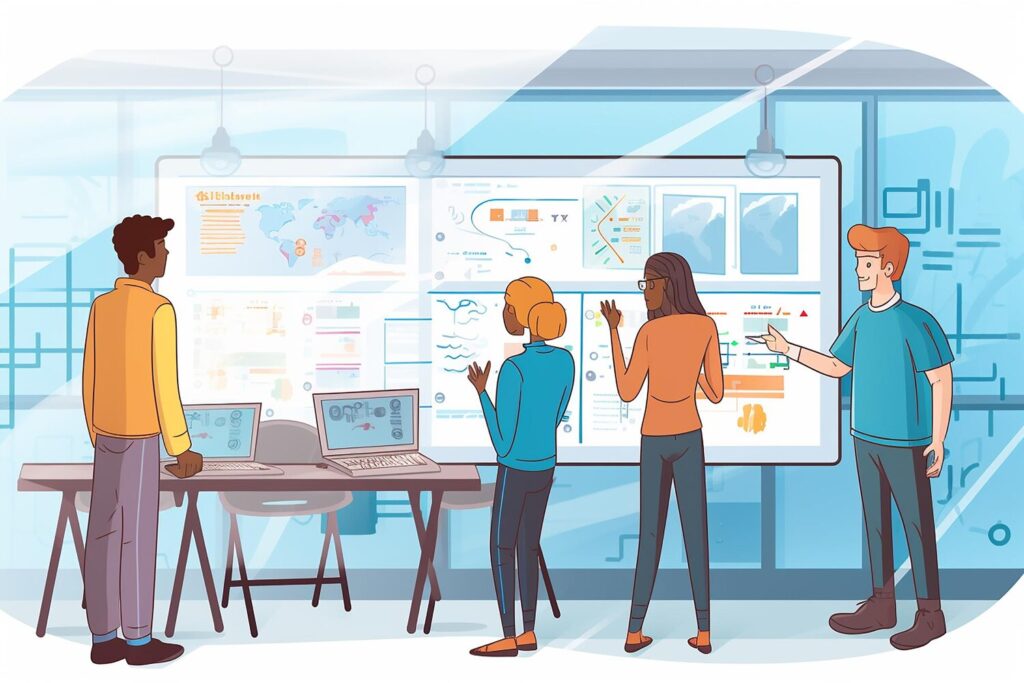
It’s tempting to treat AI initiatives like one-off experiments. Harder, but far more valuable, is turning them into repeatable, governed capabilities that deliver business outcomes at scale. That requires AI platform engineering—a discipline that blends software engineering, data systems, model operations, and product strategy into something enterprises can actually run. I’ve spent the last few years shipping AI systems in production for regulated and unregulated environments. The patterns that work are consistent; so are the traps. If you’re tired of demos that don’t convert into durable ROI, this playbook will help you design the platform—not just the model.
Why AI Platform Engineering Matters Now
AI adoption has broken out of the lab. Leaders are pushing for copilots in back-office workflows, smarter search across knowledge bases, and AI-driven personalization in digital channels. Without AI platform engineering, every new use case becomes an artisanal build: different tooling, duplicated integrations, inconsistent security, and opaque costs. After three or four such projects, the organization has created an unmaintainable zoo. That’s the moment many companies call for a “platform,” usually after paying the complexity tax. Getting ahead of that moment is cheaper and safer.
From projects to products
Executives often ask for a “quick POC” to prove value. Proof is fine, but value at scale comes from hardening shared components: data access patterns, prompt and model registries, policy enforcement, and standardized orchestration. Treat each use case as a product that consumes platform capabilities. Productization forces you to define SLAs, observability, and support boundaries. It also compels cost allocation and lifecycle planning, which are impossible in a loose collection of experiments.
The three non-negotiables
Three truths shape the agenda. First, data gravity beats model gravity; your platform must respect where data lives and how it’s governed. Second, safety and compliance are not optional; retrofit is always more expensive than design-time controls. Third, economics will decide your fate; an AI solution that looks magical but costs more than it saves will be decommissioned. AI platform engineering gives you the levers—architecture, governance, and FinOps—to navigate these truths without stalling innovation.
Defining the Minimum Viable AI Platform
Leaders over-specify early platforms. They chase completeness and end up with shelfware. An effective minimum viable AI platform (MVAP) focuses on a small set of paved paths for the most common patterns: retrieval-augmented generation (RAG), structured prediction with fine-tuned models, and classification or ranking. If those three are served, most enterprise use cases have a place to land without bespoke builds.
Capabilities, not tools
Choose the smallest set of capabilities that unlock multiple use cases. In practice, that means: a model gateway supporting proprietary and open models; a prompt and template registry with versioning; a secure data layer with connectors to sanctioned sources; an orchestration layer for chaining steps; and observability hooks that trace data, prompts, and inference outcomes. Don’t confuse a vendor catalog with a capability map. Tools change faster than the capabilities you need.
Where services fit
Few teams can assemble the MVAP alone. Strategic partners can shorten time-to-value by wiring the fundamentals: API gateways, event buses, and integration patterns. If you need custom pipelines or middleware to tie AI services to your domain systems, consider partnering with specialists in custom development who can harden the platform codebase while your team defines operating standards. Likewise, the value of AI balloons when it’s embedded into real workflows. Bridging SaaS, CRMs, and ERPs through a robust integration layer is critical; it’s often faster to engage a team experienced in automation and integrations so your internal talent can focus on governance and productization.
Golden paths and clear contracts
Document one golden path per pattern, including reference implementations. Make the path concrete: code scaffolds, IaC modules, and CLI templates that spin up a new service in minutes. Define API contracts for inputs, outputs, and errors. Those contracts are your guardrail against entropy. The measure of MVAP success is frictionless reuse; if a team can stand up a compliant RAG service in a day, you’re on the right track.
Architecture Choices for AI Platform Engineering
Architecture work in AI is less about picking a cloud and more about orchestrating moving parts under evolving constraints. The right choices reflect your data topology, risk posture, and speed-to-market needs. Centralization brings control; federation brings scale. You’ll need both over time, but starting centralized often wins because governance can keep pace with adoption.
Model access and abstraction
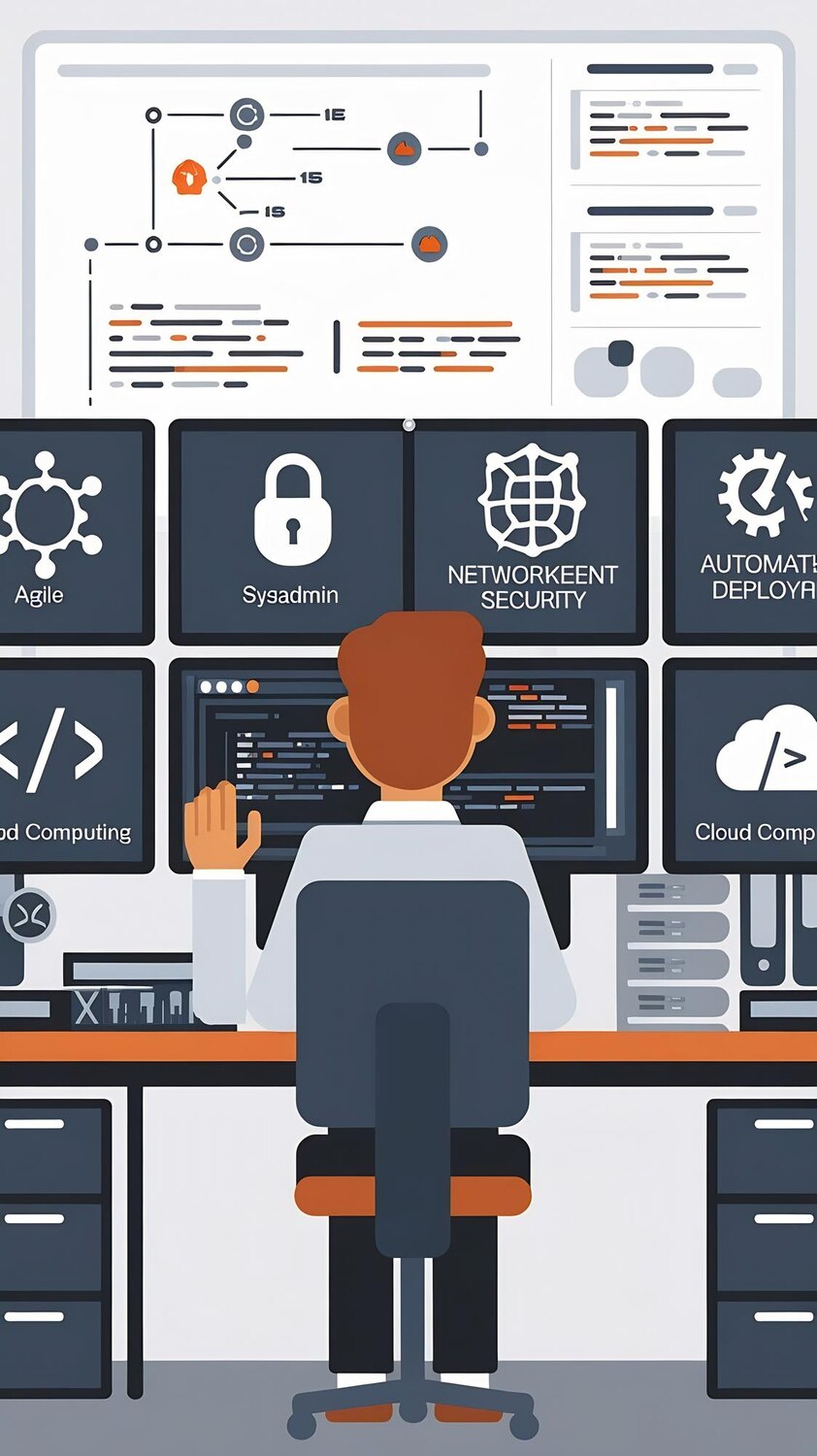
Build a model gateway that standardizes access to commercial, open-source, and proprietary models via a stable API. The gateway should handle routing, retries, safety filtering, and analytics. Abstraction is not lock-in if you design for extension; it’s insurance against model churn. You’ll switch models as costs, capabilities, and licenses shift. With a gateway, swapping models becomes a configuration change rather than a sprint.
RAG as a first-class citizen
Most enterprise value today comes from retrieval-augmented generation. Architect RAG with explicit components: chunkers and embedders, a vector store, a metadata store, and a retrieval planner. Avoid monoliths that hide these parts. Instrument each stage so you can see where quality falls. The difference between a good RAG system and a great one is usually in chunking strategies, metadata hygiene, and retrieval parameters, not in the base model.
Surface design and integration
AI experiences need thoughtful surfaces—copilots in back-office apps, customer-facing search, or agentic automations. A strong platform meets product teams where they ship. If you’re building new digital experiences around AI, consider working with a team focused on website design and development to ensure the UI and latency profile honor the constraints of inference at scale. The best architecture can still fail if the surface encourages prompts that trigger worst-case paths or if the UX hides uncertainty that users need to see.
Data Foundations: Contracts, Lineage, and Governance
Data issues derail AI platforms more than any modeling choice. Governance has to be designed into the foundation, not added after a compliance audit. Start with data contracts that describe fields, formats, semantics, and owner responsibilities. Then enforce them at every ingress point. A broken contract in a dataset that feeds your embeddings pipeline will quietly degrade retrieval quality until a high-stakes incident exposes the problem.
Lineage and observability as first-class features
Instrument lineage from raw sources to features, embeddings, and prompts. Trace a user response all the way back to the data that influenced it. When a regulator asks how an answer was formed, you need to produce an explicable chain. Lineage also accelerates debugging. If answer quality dips, you’ll quickly learn whether it was chunking, embedding drift, or a retriever configuration change.
Security zones and PII handling
Segment your platform into trust zones. Keep sensitive corp data in a sealed enclave with model endpoints that don’t leak context. Introduce data loss prevention checks, prompt scrubbing, and policy-aware redaction before data leaves the safe zone. Also, don’t forget downstream logs. Observability systems can become compliance liabilities if they capture PII in traces. Storage policies and retention windows should be explicit.
Analytics isn’t optional
Without rigorous analytics, “quality” becomes a debate. Establish dashboards that track precision/recall proxies for RAG, hallucination rates, escalation to human, and time-to-first-value. If you’re building this discipline, working with a team focused on analytics and performance can help unify telemetry across apps, pipelines, and inference layers. The goal is end-to-end visibility with consistent KPIs so product and platform teams argue from the same evidence.
Safety, Risk, and Guardrails in Production AI
Safety for AI systems is a layered defense, not a single filter. Expect adversarial prompts, jailbreak attempts, and data exfiltration probes. Expect accidental misuse too. A credible approach combines policy, process, and technical controls aligned with frameworks like the NIST AI Risk Management Framework. AI platform engineering is where these controls become operational reality.
Policy in code
Codify who can access which models, which data scopes, and which capabilities (write, execute, export). Policy-as-code makes audits repeatable. Integrate with your identity provider for role-based access, and add attribute-based controls for finer granularity. If a model isn’t approved for PII, block that route at the gateway, not in a slide deck. Tie approvals to CI/CD so deploying a new prompt template or retrieval policy requires the right sign-offs.
Content safety and red-teaming
Layer safety classifiers before and after inference. Pre-filter prompts for prohibited content; post-filter responses for toxicity, sensitive data leakage, and compliance violations. Then run scheduled red-team exercises with automated adversarial prompts. Capture failures as test cases that become part of your regression suite. Safety improves fastest when it’s integrated into the dev loop, not treated as a quarterly audit.
Human-in-the-loop for high stakes
In domains like healthcare, finance, and legal, route high-risk or low-confidence outputs to human review. Build queues, SLAs, and feedback capture into your platform so supervision data becomes training or retrieval signals. Your best safety mechanism might be a well-designed escalation path with clear ownership, supported by precise logging.
Cost, Performance, and the FinOps of AI
Great demos often conceal fragile economics. Token costs accumulate, embedding pipelines bloat, and background jobs quietly burn cash. Treat cost as a first-class metric alongside accuracy and latency. The right FinOps discipline means you know per-use-case unit economics, you can forecast, and you can renegotiate or re-architect before the invoice hurts.

Measure what matters
Track spend by model, by use case, and by customer segment. Attribute costs to individual prompts and routes so teams can see the price of complexity. Latency should be bucketed by percentile, not averages, because user experience is defined by outliers. Tie all of this to value proxies—tickets deflected, leads converted, hours saved—so optimization has business context.
Design for graceful degradation
Build multi-tier routing: cheaper small models for low-confidence or low-stakes prompts, and premium models only when necessary. Cache aggressively with signatures that respect privacy. Introduce early answer strategies that return partial results fast while background processes finish heavier retrieval. The point isn’t just to cut costs; it’s to deliver consistent experiences under load and budget constraints.
Procurement and architecture handshakes
Negotiate model and GPU pricing with usage patterns in mind. Sometimes an architectural tweak—like batching embeddings or consolidating long-tail requests—does more for cost than any discount. Other times, dedicated capacity beats on-demand. Your AI platform engineering function should own a monthly FinOps review where procurement, engineering, and product look at the same telemetry and decide together.
Building the Team: Roles, RACI, and Operating Model
Technology without the right team shape stalls. The platform needs a cross-functional crew that can design, run, and evolve capabilities while product teams build use cases on top. You’re not staffing a research lab; you’re staffing a product and operations unit with a high change rate.
Core roles and accountabilities
Platform lead owns the roadmap and outcomes. Staff engineers own architecture and paved paths. Data engineers own ingestion, contracts, and feature pipelines. ML engineers own model evaluation, prompt engineering, and registries. Security engineers own policy, identity, and threat modeling. SREs own reliability, observability, and incident response. A product manager turns platform features into something internal customers can adopt, with documentation and change management.
RACI that prevents thrash
Ownership must be explicit, not assumed. Clearly define who approves new model routes, who validates safety templates, and who is responsible for triaging quality regressions, and document those decisions. Once roles are clear, automate as much of the flow as possible so approvals are enforced through code review or CI checks rather than ad-hoc conversations. A strong RACI doesn’t slow teams down; it eliminates rework, reduces ambiguity, and breaks blame cycles before they start.
Culture and craftsmanship
Hire for engineering fundamentals, not buzzword mastery. People who can decompose systems, write clean interfaces, and reason about data and failure modes will adapt as the model ecosystem evolves. Encourage incident write-ups, lunch-and-learn demos, and shared templates. Craftsmanship scales better than heroics.
Delivery Playbook: From Pilot to Scale
Shipping one AI use case is easy; standing up ten is an operating model. Treat delivery as a well-defined pipeline that starts with problem selection and ends with measured impact. The steps are familiar, but the sequencing and artifacts matter more here than in typical app dev.
Selection, scoping, and success criteria
Pick use cases with data readiness, clear value hypotheses, and an identifiable decision-maker. Define what “good” looks like: a time-to-first-value target, a deflection rate, or revenue uplift. For customer-facing surfaces—search, recommendations, or guided shopping—coordinate closely with digital product teams. If you’re extending commerce flows, align with specialists in e-commerce solutions to ensure model outputs translate into real conversion lifts, not just shiny UI.
Designing the surface and the brand
AI output needs context and trust signals: confidence badges, expand-to-see-sources, and escape hatches to human channels. Microcopy and visual cues carry the brand promise into these interactions. If your brand voice and identity aren’t expressed in the assistant, it feels alien. Partnering with a team trained in logo and visual identity can help codify tone, visual affordances, and guardrail messaging that match your brand while setting realistic expectations.
From alpha to general availability
Run tight alphas with employees or friendly customers. Capture qualitative and quantitative feedback. Iterate in days, not weeks. Move to a private beta with guardrails dialed in and instrumentation complete. Only go GA when SLAs are credible, escalation paths exist, and your FinOps dashboards confirm sustainability. Embed platform engineers with product teams for the first two launches to harden the paved paths.
Operating the Platform: Observability, Incidents, and Upgrades
After launch, the work shifts from build to run. Models change, upstream schemas evolve, and user behavior drifts. A platform without operational discipline will rot. You need robust observability, crisp incident response, and a predictable upgrade cadence that doesn’t break dependent products.
What to watch and how
Instrument at four layers: data pipelines, embedding/RAG pipelines, inference routes, and product outcomes. Set SLOs for latency and quality proxies at each layer. Alert on error budgets, not just raw failures, so noise doesn’t numb the team. Tie logs, traces, and metrics to a single correlation ID that follows a request from edge to response.
Incident playbooks and drills
Not every degradation warrants a full-scale incident. Define severities and playbooks with decision trees: roll back a model version, route to a safer model, or degrade gracefully to non-AI paths. Run tabletop exercises that simulate data poisoning, model endpoint failures, and escalating costs. Every drill should end with ticketed actions and documentation updates.
Upgrades without breakage
Models and SDKs will update relentlessly. Shield product teams by providing compatibility shims and deprecation windows. Announce breaking changes with clear migration guides and code mods where possible. A disciplined release train—monthly minor updates and quarterly majors—prevents surprise outages.
Measuring Impact: KPIs That Survive the CFO
AI programs that live past year one can defend their budgets. The rest become “innovation” line items that vanish during planning. Design your metric stack so finance, operations, and product all see the same value story, tied back to the costs you carefully manage.
North stars and guardrails
Choose a single north-star metric per use case that maps to revenue, margin, or risk—conversion uplift, case resolution speed, or fraud recall at a fixed precision. Pair it with guardrail metrics that protect user trust: hallucination rate, escalation rate, and response time. If your north star improves while a guardrail degrades, you haven’t succeeded; you’ve shifted risk.
Attribution and counterfactuals
Establish counterfactual baselines. A/B test when possible; where you can’t, use difference-in-differences or matched cohorts. Invest early in analytics foundations so you’re not arguing with anecdotes. If your team needs support to get rigorous about measurement and performance engineering, bring in experts in analytics and performance to harmonize instrumentation across the platform and product layers.
Storytelling without the fluff
Executives don’t need model details; they need a narrative supported by numbers. Connect platform investments to faster time-to-market, lower support costs, and reduced risk exposure. Show the compounding effect: each new use case ships faster and safer because the platform absorbs complexity. That compounding is the signature of a well-run AI platform engineering effort.
What I’d Do First in a New Org
Assuming a reasonably modern cloud setup and scattered experiments, I’d start with a 90-day plan: inventory data sources and access patterns, choose a minimal toolchain, pave one RAG path, and deliver two thin-slice use cases that share components. In parallel, stand up basic FinOps and safety reviews. By day 90, the organization should see a working platform, not a roadmap slide.
The thin-slice launches
Pick one internal knowledge assistant and one customer-facing retrieval experience. Reuse the same chunking and embedding pipelines, gateway, and observability. Ship with confidence badges and sources, plus a hard escape hatch to human channels. Document every piece and turn it into a template.
The sustainability loop
End the 90 days with a backlog of adoption requests, a monthly platform council, and a budget view that ties cost to value. If demand is lumpy, formalize intake and prioritization. Keep the platform small and useful; let usage reveal the next investments, not vendor hype.
AI isn’t magic; it’s engineering, product, and operations meeting reality. Put the platform at the center, and let that discipline carry you from demos to durable impact.