

Digital Analytics Strategy that Drives Real Decisions

Most teams don’t suffer from a data shortage. They suffer from a decision shortage. A digital analytics strategy is the antidote when it’s treated as a living operating system for how your organization asks questions, instruments products, interprets signals, and closes the loop back into execution. I’ve led analytics programs inside scale-ups and enterprises, and the pattern is consistent: great tooling without clear questions yields fancy charts and weak outcomes. Flip the order—questions first, events and benchmarks second, decisions third—and the results compound.
Analytics is a product, not a report. It has users, roadmaps, service levels, and feedback loops. If your dashboards don’t influence roadmaps, experiments, or customer messaging within two sprints, you don’t have analytics—you have decor. The goal of this piece is to describe how I build a digital analytics strategy that actually changes behavior: how to define north stars, design trustworthy event schemas, blend performance and product signals, and get from insight to shipped improvements without the usual politics and handoffs killing momentum.
Why most teams get analytics wrong (and how to fix it)
Dashboards are often commissioned to soothe anxiety rather than to drive action. Leaders feel disconnected from what’s happening in the product, and the reflex is to visualize everything. The intention is good; the execution invites noise. A sustainable digital analytics strategy starts by narrowing the aperture: specify the decisions you need to make, the behaviors you seek to influence, and the constraints you’re willing to accept. Shiny new vendors won’t fix a fuzzy problem statement. Precision in questions forces precision in instrumentation, modeling, and interpretation.
Another common failure: treating analytics as an afterthought layered onto an already-shipped product. When events, IDs, and performance telemetry are bolted on, you inherit ambiguous definitions, missing context, and inconsistent keys. Invest in data contracts before the first line of UI is built. If your product team is moving fast, partner early by embedding analytics acceptance criteria into user stories. You’ll avoid the expensive archaeology that arrives when your business depends on retrofitting meaning onto stale logs.
Finally, beware KPI theater. If a chart can move in the “right” direction via a trivial or cynical change, it’s a vanity metric masquerading as insight. Favor metrics that constrain behavior in a healthy way. If activation can’t rise without quality remaining stable or performance meeting Core Web Vitals standards, you’ve picked wisely. Good metrics are stubborn: they push back when you try to game them.
Digital Analytics Strategy: From questions to data
Strategy starts with a decision inventory. Catalog the recurring choices that leaders, product managers, marketers, and engineers face. For each, define the minimum viable dataset: entities, events, properties, and time windows required to choose confidently. Tie those to a measurement framework: a north star metric that mirrors customer value, supported by input metrics that teams can influence. With that foundation, your digital analytics strategy becomes a map from question to instrumented signal to dashboard to action, not an abstract wishlist.
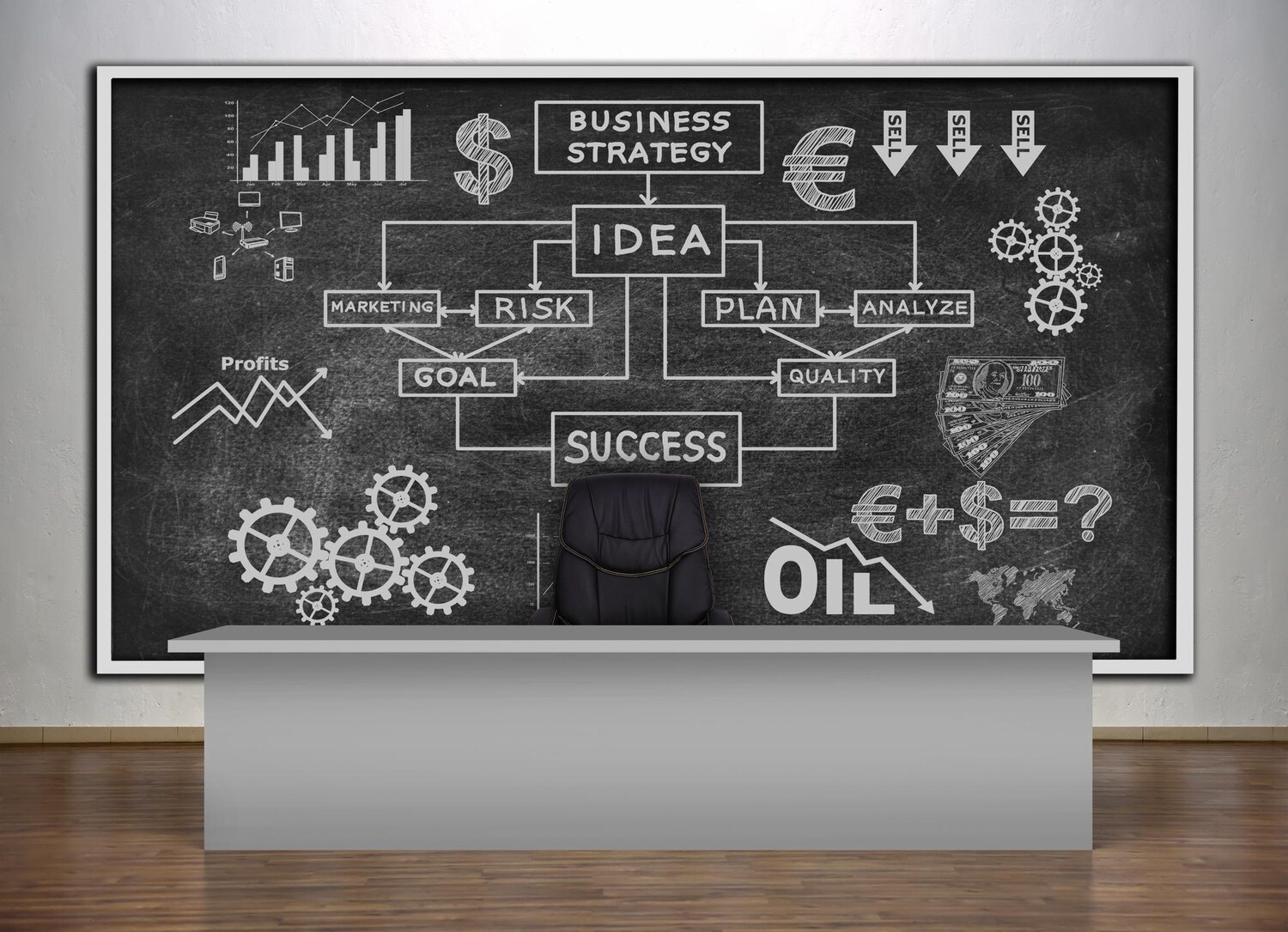
Build a canonical event taxonomy. Every event should belong to a small set of verbs aligned to user intent—Explore, Evaluate, Commit, Use, Return. Enforce consistent naming and required properties, including stable user IDs and session identifiers. This uniformity reduces friction across BI, experimentation, and attribution. It also shortens onboarding time for analysts and engineers, which matters if you want velocity without rework. Strength is in the shared language more than the tooling.
Define thresholds and guardrails up front. For example, agree on acceptable confidence intervals for experiments, performance budgets per route, and minimum sample sizes for channel analyses. Document them where work happens—PRDs, repos, and dashboards—so decisions don’t devolve into ad-hoc debates each sprint. The ability to execute repeatedly under pressure is what differentiates a tidy slide deck from a functional strategy. Precision in definitions is boring, and it’s also where the money is made.
Instrumentation that doesn’t break your product
Most tracking plans collapse under the weight of edge cases. Resist the temptation to capture every possible attribute. Track fewer events with richer properties and predictable schemas. Put event validation into CI/CD so broken payloads fail fast, and establish a versioning policy for schema changes. Developers respect instrumentation that behaves like code, not like a fragile append-only log. A lean, well-governed plan yields more truth than a sprawling mess.

Data quality is a product requirement. Treat missing or malformed identifiers as defects and triage them like any other bug. When you set SLAs for analytics uptime and event delivery, you’ve made an important cultural statement: insights are part of the core experience, not a nice-to-have. In practical terms, that means health checks for SDK initialization, retry logic for network failures, and explicit handling for consent states. Trust comes from predictability, not promises.
Integration strategy matters as much as event design. Route data through a reliable pipeline that supports replay and transformation. If you need automation to stitch systems, consider well-scoped integrations rather than brittle one-offs; pairing analytics with workflow tools can remove manual toil. Teams that want help connecting product telemetry with marketing or CRM data often turn to providers or partners focused on operational glue like automation and integrations. If custom logic or server-side tagging is warranted, bias toward testable, maintainable code using custom development practices that your engineering team can own.
Performance telemetry: Where speed and outcomes meet
Analytics without performance is vanity; performance without analytics is guesswork. Users tell you how they feel with bounce rates and conversion, but browsers tell you what happened under the hood. Pair user behavior with field data like Core Web Vitals to see how speed shapes outcomes. Start by defining per-route budgets for Largest Contentful Paint, Interaction to Next Paint, and Cumulative Layout Shift, then correlate those metrics with engagement and revenue. When performance dips, conversion sinks even if your UX is otherwise delightful.
Rely on field data over lab alone. Lab tools are useful for catching regressions before deploy, but real devices on real networks reveal the truth. Google’s overview of Core Web Vitals is a solid primer on thresholds and prioritization; use it to align teams on definitions and targets (web.dev/vitals). Accuracy in performance telemetry requires clean sampling, guardrails for bot traffic, and sufficient volume to avoid overfitting. Avoid chasing pixel-level improvements when the variance dwarfs the change.
Make performance visible where product decisions are made. Include vitals on feature dashboards and sprint readouts. If a new checkout flow improves usability but blows your LCP budget on mobile, don’t ship it. Trade-offs are inevitable; ignorance is optional. With a disciplined approach, performance becomes a design constraint that focuses creativity rather than a burden that slows teams.
Dashboards that drive action, not screen time
Dashboards exist to resolve uncertainty quickly. Good ones mimic the questions teams ask on a Tuesday morning, not the vanity goals presented at QBRs. Build layered views: an executive page with the north star and a handful of controllable input metrics, team pages for feature health and experiment outcomes, and diagnostic pages for debugging anomalies. Keep annotations front and center so spikes and dips have context—releases, campaigns, outages, pricing tests.
Choose defaults that reduce interpretation error. Use medians for skewed distributions, same-day comparisons with seasonality controls, and color scales that don’t mislead. Require owners. Every dashboard should list a name and channel where questions go. Remove any visualization that hasn’t influenced a decision in the last quarter. It’s harsh, but clutter is a tax on attention, and attention is scarce.
When you need help building durable reporting with performance and product signals in one place, align the work with a service mindset. Teams often bring in specialists who live in the overlap of measurement, engineering, and design. If you’re refreshing how data informs product and growth, consider a partner with clear ownership models like analytics and performance services, or pair it with website development to address UI and code issues that block insight.
Experimentation with guardrails (so you trust the result)
Experimentation is the most abused instrument in the analytics orchestra. Underpowered tests, moving targets, and novelty effects create false confidence. Start with power analysis to set sample sizes you’ll actually honor. Pre-register success criteria and expected side effects, including performance budgets and quality metrics. If a winning variant damages responsiveness or elevates error rates, it’s not a win. Experiments should expand value while preserving experience quality.
Stop peeking without correction. Sequential testing and Bayesian methods exist, but they demand discipline. If your team lacks statistical fluency, enforce fixed-horizon tests with clear stopping rules. Educate stakeholders on regression to the mean and novelty bias. A single week of uplift can evaporate once the early adopter segment cycles out. For a quick primer on the concept and its pitfalls, the overview on A/B testing is a reasonable starting point, though you’ll want to codify your own playbook.
Finally, treat experiments like products. Maintain a backlog, standardize guardrail metrics, and document results where product and marketing live. Success isn’t a slide; it’s a code change, a content update, or a new default in your platform. Close the loop by pushing learnings into design systems and onboarding flows. That’s how experimentation compounds rather than reinventing the wheel every quarter.
Scaling a Digital Analytics Strategy across teams
Scale fails when ownership blurs. Assign product analytics to product teams, not a central queue that becomes a blocker. A central group still matters, but as a platform and governance function: event standards, tooling, privacy, methodology, and training. Meanwhile, embed analysts where decisions happen. Close proximity shortens the feedback loop, which is where the value hides. Teams become fluent in the business language and the data model.
Codify data contracts. Changes to event schemas and identifiers should go through the same rigor as API changes. Use linting to catch violations and versioning to manage deprecations. When in doubt, add context rather than create parallel events. A clear process lets you scale without drowning in edge cases. It also makes vendors easier to swap because your implementation is cohesive rather than vendor-shaped.
Invest in enablement. A shared playbook for funnel analysis, cohorting, and performance debugging lifts the baseline competence and reduces analyst-as-switchboard syndrome. When teams need specialized help—say, stitching transactional systems to product telemetry for retail—bring in expertise built around commerce workflows like e-commerce solutions. Scale is less about more dashboards and more about more people capable of asking better questions and shipping changes based on the answers.
Privacy, consent, and the trust dividend
Great analytics honors user trust. Collect only what you need, document why, and give users meaningful control. Consent should be a first-class state in your data model, not a banner that closes itself. Tagging plans must respond to consent changes immediately, including disabling server-side destinations when required. Respect for privacy is not only regulatory hygiene; it’s a differentiator that keeps your brand credible when competitors overreach.
Minimize risk with defaults. Pseudonymize identifiers, isolate sensitive attributes, and tighten access to raw logs. A modern digital analytics strategy avoids personal data when aggregate or cohort-based analysis suffices. Privacy-aware measurement often improves quality, too, because it forces you to articulate what actually matters. When legal, security, and engineering collaborate early, you ship with confidence rather than scrambling after a complaint.
Operationalize compliance. Bake DPIAs and consent flows into release checklists, not reactive audits. Train teams on practical scenarios like how to handle support sessions, screenshots, and staging environments. Enforce retention policies and deletion pipelines you can demonstrate on demand. Compliance becomes routine rather than theater when it’s integrated into the way you build.
From insight to backlog: turning signals into shipped changes
Insights that don’t change the backlog are entertainment. Tie every dashboard widget and experiment result to a candidate action with an owner and a time horizon. Use decision memos that record the question, evidence, chosen action, and expected impact. These memos travel into sprint planning, where they’re broken into stories with analytics acceptance criteria. When you ship, you’ve already defined what success looks like and how you’ll measure it.
Automate the handoffs. Pipe alerts from anomaly detection into the same channels where engineering triages issues. Create tickets automatically when guardrail metrics break thresholds. If you lack connective tissue between tools, consider lightweight workflows that bridge systems so humans aren’t retyping the same context. Teams often implement these with focused automation and integrations work to reduce latency from detection to fix.
Sometimes the bottleneck is the product itself. Analytics reveals an information architecture problem, a sluggish route, or a brittle checkout. In those cases, analytics must ride alongside delivery—refactoring components, improving asset strategy, or redesigning flows. Pair measurement with the craftsmanship of shipping; partners who can address both, such as website design and development, remove the excuse gap between knowing and doing.
Commerce-specific nuances: marrying product, payment, and performance
Commerce data is messy in special ways. Carts mutate, inventory shifts, payment authorizations fail, and users move between devices. Your event model needs to reflect those realities: persistent cart IDs, robust deduplication for server and client events, and careful handling of partial refunds and chargebacks. Attribute at the order line when promotions vary by SKU, and keep performance telemetry tied to the exact templates that influence checkout speed.
Use cohort-based lifetime value rather than blending everyone into a single forecast. Acquisition channel, first-purchase category, and fulfillment speed predict LTV more reliably than last-click attribution ever will. Integrate marketing signals with product behavior and fulfillment data so you see the full loop from click to delivery to repeat. If the architecture is disjointed, partner with teams that know the operational and technical edge cases in retail, like e-commerce solutions aligned with analytics.
Optimize for speed where it pays. For marketplaces and stores, milliseconds at search and checkout are measurable revenue. Track vitals by route and device class, then prioritize fixes where conversion sensitivity to latency is highest. A precise digital analytics strategy doesn’t chase abstract scores; it focuses on the routes and audiences where faster truly equals richer outcomes.
Brand and messaging signals: the overlooked inputs
Not every critical signal is purely behavioral. Visual identity and messaging influence how users interpret friction and trust flows across sessions. Track the interplay between brand consistency, readability, and performance. If typography shifts increase layout shifts or late-loading assets cause jank, the perception of quality suffers even when features are the same. Marrying creative standards with performance budgets keeps trust intact.
Bring design into the measurement loop. Include brand changes in dashboard annotations and make creative variants part of experiment design, not a post-hoc explanation. When planning a redesign or new campaign, ensure your measurement plan is part of the creative brief, with event updates and performance expectations specified. If you need support tuning the system that shapes perception—logos, color systems, usage rules—coordinate with specialists who handle the full identity toolkit such as logo and visual identity work, then tie the results to analytics so you can judge impact.
Good brand analytics aren’t shallow sentiment scores. They connect perception shifts to behavior, like higher save rates, lower return-to-search, and smoother account creation. When brand, UX, and performance move together, your conversion math suddenly looks less mysterious.